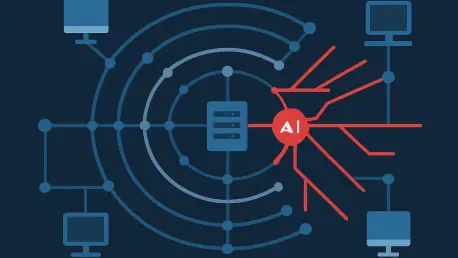

The uncontrolled proliferation of open-source AI agents like OpenClaw, which grew from a mere 1,000 to over 21,000 publicly exposed deployments in a single week, presents a stark security dilemma for business leaders. This explosive trend forces a difficult balance between embracing powerful innovation and confronting the severe risks of deploying these autonomous systems on corporate hardware. The allure of productivity gains is powerful, yet the underlying security architecture of these agents creates an entirely new class of vulnerabilities that traditional defenses are ill-equipped to handle. This analysis will dissect the rapid adoption of agentic AI, detail the specific security threats they introduce, present an expert-backed framework for safe evaluation, and provide a clear playbook for navigating the future of AI security.
The Viral Spread and Inherent Risks of Agentic AI
From Niche Project to Enterprise Threat
The trajectory of OpenClaw from a niche project to a significant enterprise concern has been alarmingly swift. Data from Censys tracking its public deployments chronicled a more than twenty-fold increase in just seven days, a testament to its viral appeal. More concerning, however, is Bitdefender’s telemetry, which confirmed that this growth was not confined to hobbyist servers. The data revealed a clear pattern of employees using single-line install commands to deploy these agents directly onto corporate machines, instantly granting them shell access, file system privileges, and inherited authentication tokens.
This rapid, grassroots adoption is not occurring in a vacuum. It is amplified by powerful market signals that normalize the use of agentic AI. The launch of OpenAI’s Codex application, which reached a million downloads in its first week, and sightings of Meta testing OpenClaw integration within its core AI platform codebase demonstrate a clear push toward agentic systems from industry giants. This momentum was further underscored by a high-profile Super Bowl ad from ai.com, which promoted a user-friendly wrapper for the same underlying OpenClaw technology, mainstreaming the concept for a global audience and accelerating its infiltration into professional environments.
Case Studies in Compromise
The theoretical risks of this trend have already materialized into documented security failures. One of the most severe is CVE-2026-25253, a one-click remote code execution (RCE) flaw with a CVSS score of 8.8. This vulnerability allows an attacker to steal authentication tokens through a single malicious link, achieving a full compromise of the agent’s gateway in milliseconds. A separate command injection vulnerability, tracked as CVE-2026-25157, enabled arbitrary command execution via the macOS SSH handler, creating another direct path for takeover.
The danger extends beyond the core agent into its broader ecosystem. A security analysis of the ClawHub marketplace, a repository for agent skills, discovered that 283 of the 3,984 skills examined—approximately 7.1% of the registry—contained critical flaws that exposed sensitive credentials in plaintext. A separate audit found that roughly 17% of the skills analyzed exhibited overtly malicious behavior. This ecosystem risk was starkly illustrated by the Moltbook data breach, where the AI agent social network built on OpenClaw infrastructure left its entire database publicly accessible due to a simple misconfiguration. The incident exposed 1.5 million API tokens and private agent messages, demonstrating how a single weak link can cascade into a catastrophic failure.
Expert Insights on a Fundamentally New Attack Surface
Security researcher Simon Willison has articulated the core danger of this technology with his concept of the “lethal trifecta” for AI agents: the combination of private data access, exposure to untrusted content, and the ability to communicate with external systems. OpenClaw and similar agents possess all three of these capabilities by design, creating a fundamentally new attack surface. When an agent can read a user’s private files, process a malicious email, and then send data to an external server, it becomes a perfect vector for sophisticated attacks that bypass traditional security controls.
This challenge is magnified by the stealthy nature of the exploits. Researchers at Giskard demonstrated how prompt injection attacks can exfiltrate credentials and API keys in a way that is virtually invisible to conventional enterprise security tools. An attack delivered via a summarized web page or a forwarded email can trigger data exfiltration that, to an endpoint detection and response (EDR) system or a firewall, looks identical to legitimate user activity. The security tools monitor process behavior, not the semantic content of the prompts driving the agent’s actions, leaving a critical blind spot.
Compounding these issues is a foundational architectural flaw: agents like OpenClaw bind to the network address 0.0.0.0 by default. This simple configuration detail exposes the unauthenticated administration panel to any network interface, not just the local machine. In many common deployment scenarios, such as running behind a reverse proxy on the same server, this effectively collapses the authentication boundary, allowing external traffic to be treated as if it originated locally. This creates a wide-open door for unauthorized access and control.
Forging a Secure Path Forward
The Core Problem of Local Testing
The primary danger of testing an autonomous agent on local corporate hardware is that the agent operates with the full privileges of its host user. A compromised agent does not need to escalate permissions; it instantly inherits shell access, read/write permissions for the entire file system, and all connected OAuth tokens for services like Slack, Gmail, and SharePoint. This means a single successful exploit grants an attacker the same level of access as the employee running the agent.
Prompt injection attacks exploit this trust model with devastating efficiency. When delivered through seemingly benign content like a summarized article or an email attachment, a malicious prompt can instruct the agent to exfiltrate sensitive data. To existing security tools, this activity is indistinguishable from the user performing their normal work, as the agent is using the user’s legitimate credentials and network access. The firewall sees an approved application making an outbound HTTPS request, and the EDR system sees a known process accessing expected files.
Further amplifying this risk is the agent’s default behavior of storing credentials and configuration data in plaintext files. These files, often located in predictable directories, become easy targets for commodity information-stealing malware that may already be present on an endpoint. Malware strains like RedLine, Lumma, and Vidar are actively configured to search for and exfiltrate these types of files, turning a local agent deployment into a readily available treasure trove of corporate credentials.
Isolate Contain and Control
The solution to this multifaceted problem lies in a strategy of isolation and containment through ephemeral sandboxing. The Cloudflare Moltworker framework provides a reference architecture for this approach, effectively decoupling the agent’s logic—its “brain”—from the execution environment. Instead of running on a sensitive corporate laptop, the agent’s processes execute inside an isolated, ephemeral micro-VM that is created for a specific task and destroyed upon its completion.
This architecture is built on four distinct layers. A Cloudflare Worker at the network edge handles routing and proxying requests. The OpenClaw runtime itself executes inside a sandboxed container, a secure micro-VM that prevents any access to the underlying host system. For persistence, such as conversation history, encrypted R2 object storage is used, keeping data secure and separate from the execution environment. Finally, Cloudflare Access enforces a Zero Trust authentication model on every route to the agent’s administrative interface, ensuring that only verified users can access its controls.
The primary security benefit of this model is containment. An agent hijacked through a sophisticated prompt injection attack is trapped within a temporary container with no access to the local corporate network, user files, or other system resources. When the container terminates, the attack surface is completely destroyed. There is no persistent foothold for an attacker to pivot from and no plaintext credentials stored on a local machine to steal. This model fundamentally changes the security equation from detection to prevention.
An Actionable Guide to Building an Evaluation Sandbox
Establishing a secure evaluation instance can be accomplished in a few focused steps, without requiring extensive prior experience with cloud platforms. The initial step involves configuring storage and billing by setting up a basic Cloudflare account. The second step is to generate the necessary API tokens and deploy the agent using the provided repository, a process that triggers the creation of the sandboxed container. The third, and most critical, step is enabling Zero Trust authentication to protect the administrative user interface, eliminating the risk of exposed control panels. The final step is to connect a test messaging channel, such as a disposable Telegram account, to interact with the agent in its isolated environment.
Once the sandbox is operational, a disciplined 30-day stress-testing protocol should be followed using only throwaway identities and synthetic data. The objective is to observe the agent’s behavior—how it handles scheduling, summarization, and web research—without exposing any real corporate assets. This period allows for a thorough assessment of its functionality and security posture in a controlled setting where potential failures have no real-world consequences. This methodical approach is crucial for understanding credential handling and preventing the kind of plaintext data exposure common in default local installations.
Within this secure sandbox, security teams can conduct a series of adversarial tests that would be far too risky on production hardware. These tests should include sending the agent links containing prompt injection instructions to see if it follows them, testing for tool access escalation, and verifying the security of any installed skills from the ClawHub marketplace. Further tests should attempt to breach the container’s security boundary to confirm that the isolation holds. Documenting the results of these experiments provides the data needed to make an informed decision about the agent’s risks and benefits.
Conclusion: From Reactive Defense to Proactive AI Governance
The rapid and often unsafe adoption of autonomous agents established a new class of security risks that bypassed traditional defenses, demanding a fundamental shift in how organizations approach evaluation and deployment. It became clear that the old model of local testing on developer machines was no longer viable. The analysis revealed that a new paradigm, centered on isolated and ephemeral sandboxing, was required to safely harness the power of this technology without exposing the enterprise to unacceptable levels of risk.
The key takeaway was the urgent need for security leaders to establish a secure evaluation framework before the next viral AI agent emerged. By building this infrastructure proactively, organizations moved their security posture from being reactive to strategic. This playbook, forged in response to the challenges posed by early agents, provided a durable model for assessing any future agentic AI. The AI security framework built today determined whether an organization would successfully leverage the productivity gains of agentic AI or become another cautionary tale in the evolving landscape of cybersecurity.