
The software development industry is currently grappling with a significant disconnect between the promise and the reality of artificial intelligence, as the widely advertised 10x productivity revolution has failed to materialize for most organizations despite billions of dollars invested into AI coding tools. A growing disillusionment among engineering leaders points to a stark contrast between vendor hype and the modest on-the-ground reality, with academic research suggesting typical productivity gains are closer to a mere 20 percent. Challenging this status quo, the Silicon Valley startup Zencoder has launched Zenflow, a free desktop application that is not another AI model but an “AI orchestration tool.” The company posits that the fundamental flaw lies not in the AI’s intelligence but in the unstructured, chat-based interaction model developers are forced to use. Zenflow aims to replace this chaotic process with a disciplined, multi-agent framework designed to enforce engineering rigor, address reliability issues, and finally unlock the transformative productivity gains that have so far remained elusive in enterprise environments.
The Pitfalls of “Prompt Roulette”
According to Zencoder’s CEO, Andrew Filev, the central obstacle to realizing AI’s full potential in software engineering is the primitive way developers are forced to engage with highly advanced models from providers like OpenAI and Anthropic. He dismisses the standard method of typing prompts into a chat interface as “Prompt Roulette,” an approach that proves effective for simple, isolated tasks but breaks down completely when applied to the complex, multifaceted projects typical of enterprise development. This unstructured methodology, which he calls “vibe coding,” often creates more problems than it solves. Without a structured process, developers can easily integrate poorly understood or subtly flawed AI-generated code into their systems, leading to a significant accumulation of technical debt. Zencoder’s own engineering team served as a case study for this problem and its solution; the team reportedly achieved a twofold increase in development velocity over 12 months, not by adopting newer AI models, but by fundamentally restructuring its development processes around AI, a methodology now codified and made available through Zenflow.
The unreliability inherent in this ad-hoc prompting method frequently traps developers in a destructive and counterproductive pattern that Filev describes as the “death loop.” This frustrating cycle begins when a developer, hesitant to spend valuable time analyzing unfamiliar, machine-generated code, accepts an AI’s output without conducting a proper review and moves on to the next task. However, when a subsequent task fails due to a hidden flaw in that original, unverified code, the developer lacks the necessary context to debug the problem manually. They are left with little choice but to return to the AI, engaging in a frustrating cycle of re-prompting for fixes. This process ultimately wastes more time and energy than was initially saved, completely negating the tool’s intended benefit. The multi-agent verification system within Zenflow is specifically designed to break this loop by identifying and flagging potential issues before the code is ever committed, ensuring that a human developer is always working with a validated and trustworthy foundation.
Introducing the AI Orchestration Layer
Zenflow’s answer to this crisis of reliability is to replace the chaos of open-ended conversational AI with a structured “AI orchestration layer.” This sophisticated system is built upon a multi-agent framework that guides artificial intelligence through a disciplined and repeatable process, fundamentally reshaping the methodology of AI-assisted development. Instead of a free-form, unpredictable chat session, Zenflow provides a purpose-built system designed to produce predictable, high-quality, and scalable outcomes. The transition is analogous to an organization evolving from managing complex projects with individual to-do lists to adopting a comprehensive and structured project management platform. Filev draws a powerful parallel to his experience founding the project management company Wrike, noting that just as disparate lists fail to scale across a team, unstructured AI prompting cannot create the reliable results required for serious engineering work. Zenflow is designed to be that essential framework for AI-powered software development.
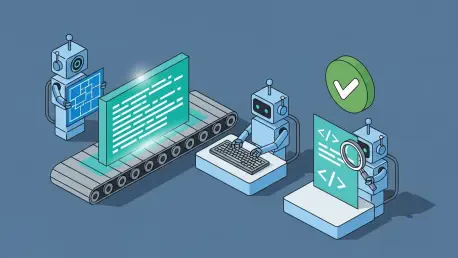
At the core of the Zenflow platform are two foundational principles that provide its structure: Structured Workflows and Spec-Driven Development. The platform moves beyond ad-hoc prompting by enforcing repeatable, defined sequences that guide AI agents through a consistent process of planning, implementation, testing, and reviewing. This creates what Zencoder calls an “engineering assembly line,” which ensures consistency and reliability across all tasks. To combat the common issue of “iteration drift”—where AI-generated code gradually deviates from the user’s original intent over several interactions—Zenflow mandates a spec-driven approach. Before any code is generated, the AI agents are required to first produce a detailed technical specification and then create a comprehensive, step-by-step implementation plan based on that specification. This methodology anchors the entire development process to a clear set of requirements, ensuring the final product remains fully aligned with the initial goal and validating Zencoder’s strategic vision.
A New Paradigm for Code Reliability
Arguably the most innovative and critical feature of Zenflow is its system of Multi-Agent Verification, which is engineered to address the pervasive problem of AI-generated “slop”—code that appears correct on the surface but contains hidden bugs or fails under real-world conditions. The platform deploys a unique system of cross-verification where AI models from different providers are strategically pitted against each other. For instance, an agent powered by an OpenAI model might be tasked with writing a piece of code, which is then automatically passed to a different agent running on Anthropic’s Claude for a thorough review and critique. Filev compares this process to seeking a second medical opinion, explaining that because models from the same family often share inherent biases and blind spots, using a model from a competitor proves to be a highly effective method for catching errors that would otherwise go unnoticed. This rigorous verification pipeline is central to making AI a truly reliable engineering tool.
This cross-provider verification strategy directly confronts the unreliability that has been the single biggest obstacle to AI adoption in serious engineering environments. By catching errors before the code is ever committed to a codebase, the system effectively breaks the “death loop” that ensnares so many developers. It ensures that a human engineer is always working from a validated and secure foundation, transforming the act of using AI from a risky gamble into a dependable professional practice. Zencoder claims that this verification pipeline can produce results on par with what might be expected from future models like “Claude 5 or GPT-6,” allowing developers to benefit from next-generation reliability today. Furthermore, this multi-provider approach gives Zencoder a unique competitive advantage over the frontier AI labs, which are naturally incentivized to only promote and utilize their own proprietary models, locking users into a single ecosystem.
Execution and Market Strategy
To further address practical workflow challenges faced by developers, Zenflow enables Parallel Execution, which allows multiple AI agents to run simultaneously in isolated, sandboxed environments. This architecture prevents agents from interfering with each other’s work and allows for the efficient parallelization of complex development tasks, significantly speeding up the overall process. The application provides a central command center for monitoring this entire fleet of agents, representing a significant user experience improvement over the current, clumsy practice of managing numerous separate terminal windows to interact with AI. This focus on a streamlined and powerful user interface is a key part of Zencoder’s strategy to deliver immediate, tangible value to engineering teams and differentiate itself from competitors who may focus more on the underlying model technology than on the daily usability of their tools.
Zencoder entered a fiercely competitive market, positioning Zenflow as an indispensable, model-agnostic orchestration platform. By supporting models from Anthropic, OpenAI, and Google Gemini, it established itself as a universal layer that could work with any provider a company chose, reflecting the enterprise reality of using multiple AI vendors. The company also emphasized its enterprise-readiness with certifications like SOC 2 Type II and ISO 27001, targeting regulated industries that could not use consumer-grade tools. Filev had contended that smaller, focused companies like Zencoder could innovate on user experience and application design faster than large AI labs, whose primary focus would always remain on core model development. He argued that the pressure on engineering leaders was to deliver substantial productivity gains immediately, and tools like Zenflow were the only way to achieve that in the near term. Ultimately, Zencoder bet that the AI coding industry would inevitably converge on the conclusion that raw model intelligence was not enough; the true value was unlocked by the application layer that made AI usable, reliable, and effective in a professional context.