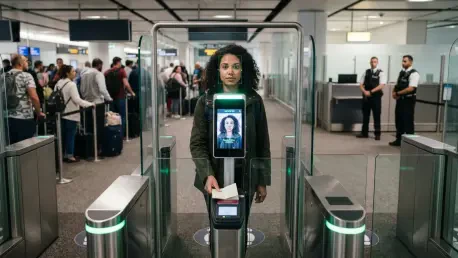

Legal experts argue that the United Kingdom is exploiting a lack of national legislation to implement intrusive surveillance technologies without adequate public or parliamentary debate. This rapid adoption marks a turning point in how the state manages its borders, shifting from manual inspections to a high-speed digital dragnet. Under current directives, the Home Office is deploying live facial recognition (LFR) systems across major transportation hubs and large public gatherings. These AI-powered cameras scan faces in real time, matching them against extensive watchlists of individuals who have overstayed their visas or those who are currently subject to deportation orders. By automating this process, the government seeks to minimize the friction of traditional enforcement methods, such as residential or workplace raids, which are often resource-intensive and socially disruptive. This shift represents a move toward a frictionless but deeply monitored public square.
Technical Integration: The Scale of Enforcement Upgrades
The transition into this high-tech enforcement era is fueled by a substantial increase in state resources directed toward immigration control. Home Secretary Shabana Mahmood has spearheaded a policy that includes a 60 percent rise in staffing levels and a twofold increase in total funding for enforcement activities throughout the current fiscal cycle. This influx of capital is specifically designed to facilitate tens of thousands of additional arrests and removals annually, utilizing the efficiency of AI to bridge the gap between policy and execution. This program has moved beyond the theoretical stage and is now in a formal delivery phase, following successful trials at the port of Holyhead in North Wales. During these initial phases, the system specifically targeted travelers arriving via the Common Travel Area, demonstrating its ability to isolate individuals with active immigration warrants without halting the flow of lawful traffic or requiring massive manual labor from officers.
Beyond ports and airports, the technical architecture of this initiative relies on sophisticated algorithms capable of processing thousands of biometric data points in seconds. This level of automation is intended to modernize a department that has historically struggled with a massive backlog of cases and limited field intelligence. By integrating live facial recognition into the existing security infrastructure of urban centers, the government can maintain a continuous, passive search for specific individuals without the need for active profiling by human agents. This approach is marketed as a more objective form of enforcement, as the software is programmed to look for specific biometric matches rather than relying on the subjective discretion of individual officers. However, the sheer volume of data being processed raises significant questions about the long-term storage of biometric information and the security protocols protecting this sensitive database from potential breaches or unauthorized access.
Ethical Dilemmas: Balancing Security and Civil Rights
Despite the perceived efficiency gains, the rollout has ignited a fierce debate among civil liberties advocates and regulatory experts who fear the erosion of public privacy. Organizations like the Open Rights Group and the Joint Council for the Welfare of Immigrants have consistently pointed out the “regulatory vacuum” in which these technologies currently operate. They argue that the speed of deployment has far outpaced the development of legal safeguards, leaving the public vulnerable to misidentification and racial bias. This concern is not merely theoretical; the Biometrics and Surveillance Camera Commissioner previously noted that his office was not adequately consulted during the planning stages of this immigration-specific application. Without a robust statutory framework, there is a risk that facial recognition will become a permanent fixture of public life without any clear boundaries on its use. The absence of specific parliamentary oversight for AI in the public sector creates a long-term precedent.
It was ultimately decided that moving forward responsibly required policymakers to prioritize the implementation of clear, enforceable guidelines that mandated regular audits of AI algorithms for accuracy and bias. These audits were conducted by third-party experts, and the findings were shared with the public to ensure a higher level of transparency. Furthermore, the establishment of specific zones where facial recognition was strictly prohibited served to protect the fundamental right to anonymity in the public sphere. Engaging in a more inclusive dialogue with civil society groups proved crucial for refining the ethical parameters of these systems. Rather than viewing technology as a total solution for immigration management, the state treated it as a tool that required human oversight and a strong ethical foundation. By institutionalizing these checks and balances, the government aimed to develop a model for AI-driven enforcement that balanced national security with individual privacy and ethics.