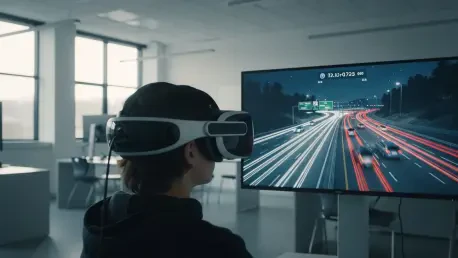

Tens of thousands of aspiring motorists across New Zealand find themselves stalled at the practical testing stage annually because of preventable mistakes such as failing to observe stop signs or mismanaging vehicle speeds. This persistent challenge has paved the way for innovative educational frameworks that leverage immersive technology to bridge the gap between theoretical knowledge and the high-pressure environment of the open road. At the forefront of this shift is Ashley Gore, the developer of MintEDVR, who envisions a curriculum where students master technical maneuvers in a digital space before ever igniting an internal combustion engine. By utilizing high-fidelity virtual reality simulations, learners can familiarize themselves with complex traffic patterns and spatial dynamics in a risk-free setting. This methodology aims to address the anxiety and financial burden often associated with traditional driver training, offering a controlled environment to build the necessary muscle memory and confidence.
Integrating Simulation Into Modern Driver Pedagogy
Technical Foundations: Mastering Maneuvers Through Digital Replication
The technical architecture of this virtual training system relies on high-definition VR headsets and intuitive handheld controllers to place the user directly into a simulated driver’s seat. Within this digital ecosystem, students engage with specifically designed modules that break down complex driving tasks into manageable, repeatable exercises. For instance, navigating the intricacies of a T-intersection or executing a precise parallel park can be practiced hundreds of times without the risk of property damage or physical injury. While the current interface utilizes joysticks rather than a traditional steering wheel and pedal set, the primary focus remains on developing cognitive awareness and a fundamental understanding of road rules. By isolating these technical elements, the software allows learners to focus entirely on the logic of the maneuver and the spatial requirements of the vehicle. This repetitive practice helps to solidify the procedural steps required for safe operation, ensuring that the student is better prepared for the physical nuances of a real automobile.
Financial Accessibility: Reducing Barriers to Professional Instruction
Beyond the technical advantages, the adoption of virtual reality in driver education addresses the significant financial hurdles that many young New Zealanders face when seeking professional instruction. A single session in the simulator costs approximately $15, a fraction of the price typically charged for an hour-long lesson with a certified driving instructor in a dual-controlled vehicle. This dramatic reduction in cost democratizes access to high-quality training, allowing students from diverse socioeconomic backgrounds to gain valuable experience that was previously restricted by high hourly rates. Furthermore, the flexibility of VR platforms means that training can be localized in community centers or schools, reducing the logistical challenges of scheduling on-road sessions during daylight hours or in heavy traffic. By lowering the entry barrier, the program encourages more comprehensive preparation, potentially leading to a higher first-time pass rate for the restricted and full license tests. This shift toward affordable, tech-driven learning represents a pragmatic response to the rising costs of traditional automotive training.
Navigating the Regulatory and Safety Landscape
The Debate: Official Recognition and Practical Limitations
Despite the clear advantages of simulation, a significant tension exists between tech innovators and the regulatory bodies responsible for maintaining road safety standards. Ashley Gore has actively advocated for these virtual reality sessions to be officially recognized as accredited driving hours, arguing that the cognitive skills gained are directly transferable to real-world scenarios. However, the New Zealand Transport Agency and the Automobile Association maintain a more conservative stance, emphasizing that there is no substitute for the unpredictable nature of actual traffic. Safety experts argue that a digital environment, no matter how sophisticated, cannot replicate the sensory feedback of a moving vehicle or the psychological weight of sharing the road with other motorists. There is also a concern that proficiency in a simulated setting could lead to dangerous levels of overconfidence among novice drivers. While the software provides an excellent foundation for understanding road rules and spatial geometry, officials remain skeptical about its ability to prepare a student for sudden, life-threatening hazards that require immediate, instinctive reactions.
Future Considerations: A Hybrid Approach to Licensing
As New Zealand implemented stricter licensing requirements, including longer mandatory learner periods for younger drivers, the role of supplemental technology became increasingly relevant for future planning. Stakeholders identified that the most effective path forward involved a hybrid model where virtual training served as a prerequisite for on-road lessons rather than a total replacement. This approach allowed instructors to focus on refined handling and hazard perception while the basic mechanics were mastered in the simulator. To ensure long-term success, developers were encouraged to integrate haptic feedback systems, such as physical steering wheels and pedals, to better align the virtual experience with real-world driving. Regulatory bodies also considered the creation of a standardized certification process for VR software to ensure that all modules met rigorous safety criteria. By treating simulation as a vital preparatory bridge, the industry moved toward a more comprehensive educational framework that prioritized both technical skill and psychological readiness. These efforts ensured that the transition from digital practice to physical driving was managed with the highest degree of safety and efficiency.