
The very fabric of the shopping experience is being rewoven as augmented reality transitions from a technological novelty into a powerful, mainstream business tool, fundamentally altering how consumers interact with products and brands. A comprehensive market analysis projects a staggering surge in the global AR in retail market, forecasting its value to skyrocket from USD 7.17 billion in 2025 to an astounding USD 60 billion by 2035, driven by an explosive compound annual growth rate of 23.7%. This transformative technology works by superimposing digital information, such as interactive 3D product models, directly onto a user’s view of the physical world. For the consumer, this means the ability to virtually place a new armchair in their living room to assess its fit and style or to try on a pair of sunglasses from the comfort of their home. For retailers, this capability is a game-changer, as it directly addresses and mitigates one of the biggest hurdles in online shopping: purchase hesitation. By empowering customers to visualize and interact with items in a familiar, real-world context before making a commitment, AR dramatically boosts buyer confidence, which in turn leads to higher conversion rates and a more satisfying customer journey.
The Driving Forces Behind AR’s Retail Revolution
Enhancing the Modern Shopper’s Journey
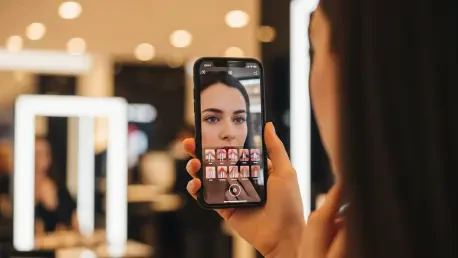
Today’s consumers expect far more than a simple transactional exchange; they seek immersive, interactive, and highly personalized shopping journeys that resonate with their individual needs and preferences. Augmented reality is uniquely positioned to meet this demand by providing innovative applications that transform the decision-making process into an engaging experience. A prime example is the rise of virtual try-on solutions, which have gained significant traction in industries like fashion, cosmetics, and eyewear. Using just their smartphone cameras, customers can see in real-time how a new lipstick shade complements their skin tone, how a particular style of jacket fits their frame, or how a pair of glasses suits their face shape. This not only adds a layer of convenience and fun but also provides a powerful tool for validation. Similarly, in the furniture and home décor sectors, AR allows users to virtually place life-sized 3D models of sofas, tables, or artwork within their own homes, enabling them to evaluate aesthetics, scale, and placement with a level of certainty previously impossible without a physical visit to a showroom. This interactive visualization empowers consumers, turning a potentially stressful purchase into a confident and creative endeavor.
The rapid proliferation and increasing sophistication of smartphones and tablets have created fertile ground for the widespread adoption of AR in retail. These devices, now nearly ubiquitous across the globe, serve as a ready-made, accessible platform for delivering rich AR experiences to the masses. As device manufacturers continue to integrate more powerful processors, advanced cameras, and specialized AR-enabled hardware and software features as standard, the barrier to entry for consumers has been virtually eliminated. This pervasive accessibility is a critical catalyst for market expansion, as retailers can deploy AR functionalities through their existing mobile apps without requiring customers to invest in specialized or expensive hardware. The convenience of using a device that is already an integral part of daily life makes AR not just a futuristic concept but a practical and immediately available tool that enhances the shopping experience for a broad and diverse consumer base, fueling its integration into mainstream retail strategies.
Bridging the Digital and Physical Worlds
Augmented reality serves as a vital and innovative bridge connecting the distinct realms of digital e-commerce and traditional physical retail, enabling businesses to forge a truly cohesive omnichannel strategy. For online platforms, AR effectively tackles the inherent limitation of being unable to provide a tangible product experience. It allows customers to virtually interact with products, reducing the uncertainty and perceived risk often associated with online purchasing. For instance, being able to see a detailed 3D model of a product from every angle can significantly close the gap between the digital representation and the physical item. Conversely, for brick-and-mortar stores, AR enriches the in-person experience in numerous ways. It can power interactive displays that provide dynamic product information, create engaging in-store marketing campaigns, or even offer efficient navigation to guide shoppers to specific aisles or items. By seamlessly integrating the digital and physical, AR helps retailers deliver a consistent, enhanced, and unified brand experience, regardless of where the customer chooses to shop.
The continuous evolution of AR’s capabilities is being significantly amplified by parallel advancements in complementary technologies, most notably Artificial Intelligence (AI), computer vision, and cloud computing. The synergy between AR and AI is creating a new paradigm of hyper-personalized retail. AI algorithms can analyze a user’s environment through their device’s camera and, in real time, provide sophisticated and contextually relevant product recommendations. For example, an AI could suggest a lamp that stylistically matches the existing furniture in a room. Computer vision technology is essential for accurate surface tracking and object recognition, which allows for more realistic and stable placement of virtual objects in the real world. Furthermore, cloud computing provides the necessary back-end power to process complex 3D renderings and vast product catalogs, ensuring a smooth and responsive user experience on mobile devices. This powerful technological convergence enables retailers to deliver increasingly intelligent, personalized, and visually stunning AR applications, further solidifying their value proposition and driving broader adoption across the industry.
Overcoming Barriers and Capitalizing on New Trends
Navigating Market Challenges
Despite its immense potential, the journey toward widespread AR implementation in retail is not without significant challenges that businesses must carefully navigate. One of the most prominent hurdles is the high implementation cost associated with developing, deploying, and maintaining high-quality AR applications. The investment required extends beyond just software development; it often includes the creation of detailed 3D product models, the procurement of powerful hardware for in-store experiences, and the recruitment of specialized talent with expertise in AR technologies. These financial commitments can present a considerable barrier to entry, particularly for small and medium-sized enterprises (SMEs) that may lack the capital to compete with larger corporations. Beyond cost, there are technical and user experience hurdles that can undermine the effectiveness of an AR initiative. Issues such as inaccurate rendering of virtual objects, slow performance or lag on certain devices, and a non-intuitive user interface can quickly lead to customer frustration, ultimately damaging brand perception rather than enhancing it. These technical pitfalls underscore the importance of rigorous testing and optimization to ensure a seamless and valuable user experience.
Another critical area of concern that retailers must address is consumer privacy and data security. By their very nature, many AR applications require access to a user’s camera and may collect a significant amount of data about their physical environment, personal preferences, and behavioral patterns. This raises legitimate questions about how this sensitive information is being collected, stored, and used. If retailers fail to address these concerns with complete transparency and robust, ethical data-handling practices, they risk eroding consumer trust, which is a foundational element of any successful customer relationship. A lack of trust can severely impede the adoption of AR technologies, regardless of their utility. Finally, there remains a notable awareness and adoption gap within the market. While technologically savvy demographics are often eager to embrace new innovations like AR, other consumer segments and more traditional retail establishments may exhibit resistance or a simple lack of understanding of the technology’s benefits. Overcoming this requires targeted educational marketing campaigns and clear demonstrations of value to encourage broader acceptance and integration of AR into the everyday shopping experience.
Pioneering the Next Wave of Innovation
The powerful synergy of augmented reality and artificial intelligence is ushering in an era of hyper-personalized shopping experiences that were once the realm of science fiction. This integration goes far beyond simple product visualization, creating an interactive and intelligent retail environment. AI algorithms can now power AR-driven virtual assistants that not only guide users through a product catalog but also offer personalized style advice based on real-time visual cues. Imagine an AR application that analyzes a user’s current outfit and suggests complementary accessories. Furthermore, sophisticated visual search tools are emerging, allowing consumers to simply point their phone’s camera at an object in the real world to find similar products available for purchase. This fusion of AI’s analytical prowess with AR’s immersive interface is creating a smarter, more intuitive, and deeply individualized shopping journey that anticipates customer needs and delivers tailored solutions with unprecedented precision.
Beyond personalization, several emerging trends are expanding the scope and impact of augmented reality in the retail sector. Social commerce is one of the most significant, with platforms like Instagram and Snapchat becoming powerful sales channels by integrating AR filters for virtual product try-ons. This allows brands to engage with consumers in a familiar and highly interactive social ecosystem, turning passive scrolling into an active shopping experience and driving sales directly from the app. Concurrently, a new frontier is opening up in the field of AR analytics. Retailers are now able to gather and analyze rich data on how consumers interact with virtual products—how long they view an item, which colors they prefer, or where in their homes they place virtual furniture. These invaluable insights can be used to optimize marketing strategies, refine future product designs, and improve inventory management. In addition, AR is increasingly being recognized as a tool to promote sustainability. By enabling virtual product testing and visualization, it can help reduce the need for physical product samples, minimize product returns—a major source of waste and logistical inefficiency—and thereby decrease the overall environmental footprint of the retail industry.
Deconstructing the Market Landscape
A Segmented View of the AR Ecosystem
To fully grasp the dynamics of the AR in retail market, it is essential to analyze its intricate structure, which is segmented across several key dimensions. In terms of technology, the market employs various approaches, with markerless AR gaining significant momentum. This technology, which does not require a physical marker or QR code to anchor digital content, offers superior flexibility and ease of use, making it ideal for mobile applications and dynamic in-store settings. Older, marker-based AR remains a relevant and cost-effective solution, particularly for catalog-based shopping experiences and targeted promotional campaigns. Other technologies, such as projection-based AR, which beams interactive light onto surfaces, and superimposition-based AR, which replaces an object’s real view with an augmented one, serve more niche but important applications within the retail space. This technological diversity allows retailers to choose the solution that best fits their specific goals and budget.
The market is also segmented by the types of devices used to access these experiences. Smartphones are currently the dominant device for consumer-facing AR, a direct result of their widespread availability and ever-improving capabilities. However, a new class of more specialized hardware is beginning to emerge, particularly in high-end retail environments. Devices like smart glasses and head-mounted displays (HMDs) offer the potential for deeply immersive, hands-free experiences that can transform both the customer journey and internal retail operations. The applications of AR in retail are similarly diverse and continually expanding. They range from the now-popular virtual try-ons for apparel and cosmetics to interactive AR mirrors in fitting rooms, dynamic 3D product visualizations that allow for customization, in-store navigation assistance to guide customers, and highly engaging marketing campaigns that bring products to life. Finally, key end-user industries leading the adoption of AR include fashion and apparel, furniture and home décor, cosmetics, consumer electronics, and even supermarkets, with each sector leveraging the technology to address unique customer pain points and create a distinct competitive advantage.
The Competitive and Regional Arena
The competitive landscape of the AR in retail market is characterized by a vibrant and dynamic ecosystem composed of a diverse array of players. This includes pure-play technology providers and specialized software developers that focus exclusively on creating AR solutions. Alongside these specialists are technology giants such as Google, Apple, and Microsoft, which provide the foundational platforms, development kits (like ARCore and ARKit), and hardware that underpin many of the AR experiences available today. On the adoption side, a growing number of forward-thinking retail and e-commerce brands are pioneering the use of AR to enhance their customer experience and differentiate themselves in a crowded marketplace. Leaders like IKEA, with its furniture visualization app, and Sephora, with its virtual makeup try-on, have set a high bar for what is possible. The most successful and innovative solutions often arise from strategic collaborations and partnerships between these technology innovators and retail leaders, a trend that is proving crucial for accelerating market growth and driving future innovation.
Geographically, the market exhibits distinct regional trends and growth patterns. North America currently holds the largest market share, a position driven by its high rates of consumer technology adoption, advanced retail infrastructure, and the strong presence of numerous key market players, from Silicon Valley tech firms to major retail corporations. Europe follows closely behind, with robust e-commerce markets in countries like the United Kingdom, Germany, and France fueling significant investment in AR solutions as a means of gaining a competitive edge. However, the Asia-Pacific region is projected to be the fastest-growing market over the forecast period. This rapid expansion is propelled by the region’s swiftly expanding retail sector, increasing smartphone penetration, particularly in massive markets like China and India, and a strong government and private sector focus on technological advancement. Meanwhile, Latin America, the Middle East, and Africa represent emerging markets with considerable untapped potential. As retail modernization and digital transformation continue to gain momentum in these regions, they are expected to become increasingly important contributors to the global growth of the AR in retail market.
A Future Forged in Pixels and Presence
The journey of augmented reality within the retail sector has clearly shifted from exploration to strategic implementation. The technology successfully bridged the critical gap between the digital and physical worlds, offering tangible value that reshaped consumer expectations and behaviors. Retailers who integrated AR found themselves equipped with powerful tools not only to showcase products in a more compelling way but also to gather profound insights into customer preferences. The challenges related to cost and technical execution, while still present, were increasingly being mitigated by more accessible development platforms and a growing pool of skilled talent. The conversation has moved beyond whether AR has a place in retail to how deeply it could be integrated into every facet of the shopping journey, from initial discovery to post-purchase support. Ultimately, AR has established itself not as a fleeting trend, but as a foundational pillar of the modern retail experience, fundamentally altering the relationship between brands, products, and the consumers they serve.# Will AR Define the Future of the Retail Experience?
The very fabric of the shopping experience is being rewoven as augmented reality transitions from a technological novelty into a powerful, mainstream business tool, fundamentally altering how consumers interact with products and brands. A comprehensive market analysis projects a staggering surge in the global AR in retail market, forecasting its value to skyrocket from USD 7.17 billion in 2025 to an astounding USD 60 billion by 2035, driven by an explosive compound annual growth rate of 23.7%. This transformative technology works by superimposing digital information, such as interactive 3D product models, directly onto a user’s view of the physical world. For the consumer, this means the ability to virtually place a new armchair in their living room to assess its fit and style or to try on a pair of sunglasses from the comfort of their home. For retailers, this capability is a game-changer, as it directly addresses and mitigates one of the biggest hurdles in online shopping: purchase hesitation. By empowering customers to visualize and interact with items in a familiar, real-world context before making a commitment, AR dramatically boosts buyer confidence, which in turn leads to higher conversion rates and a more satisfying customer journey.
The Driving Forces Behind AR’s Retail Revolution
Enhancing the Modern Shopper’s Journey
Today’s consumers expect far more than a simple transactional exchange; they seek immersive, interactive, and highly personalized shopping journeys that resonate with their individual needs and preferences. Augmented reality is uniquely positioned to meet this demand by providing innovative applications that transform the decision-making process into an engaging experience. A prime example is the rise of virtual try-on solutions, which have gained significant traction in industries like fashion, cosmetics, and eyewear. Using just their smartphone cameras, customers can see in real-time how a new lipstick shade complements their skin tone, how a particular style of jacket fits their frame, or how a pair of glasses suits their face shape. This not only adds a layer of convenience and fun but also provides a powerful tool for validation. Similarly, in the furniture and home décor sectors, AR allows users to virtually place life-sized 3D models of sofas, tables, or artwork within their own homes, enabling them to evaluate aesthetics, scale, and placement with a level of certainty previously impossible without a physical visit to a showroom. This interactive visualization empowers consumers, turning a potentially stressful purchase into a confident and creative endeavor.
The rapid proliferation and increasing sophistication of smartphones and tablets have created fertile ground for the widespread adoption of AR in retail. These devices, now nearly ubiquitous across the globe, serve as a ready-made, accessible platform for delivering rich AR experiences to the masses. As device manufacturers continue to integrate more powerful processors, advanced cameras, and specialized AR-enabled hardware and software features as standard, the barrier to entry for consumers has been virtually eliminated. This pervasive accessibility is a critical catalyst for market expansion, as retailers can deploy AR functionalities through their existing mobile apps without requiring customers to invest in specialized or expensive hardware. The convenience of using a device that is already an integral part of daily life makes AR not just a futuristic concept but a practical and immediately available tool that enhances the shopping experience for a broad and diverse consumer base, fueling its integration into mainstream retail strategies.
Bridging the Digital and Physical Worlds
Augmented reality serves as a vital and innovative bridge connecting the distinct realms of digital e-commerce and traditional physical retail, enabling businesses to forge a truly cohesive omnichannel strategy. For online platforms, AR effectively tackles the inherent limitation of being unable to provide a tangible product experience. It allows customers to virtually interact with products, reducing the uncertainty and perceived risk often associated with online purchasing. For instance, being able to see a detailed 3D model of a product from every angle can significantly close the gap between the digital representation and the physical item. Conversely, for brick-and-mortar stores, AR enriches the in-person experience in numerous ways. It can power interactive displays that provide dynamic product information, create engaging in-store marketing campaigns, or even offer efficient navigation to guide shoppers to specific aisles or items. By seamlessly integrating the digital and physical, AR helps retailers deliver a consistent, enhanced, and unified brand experience, regardless of where the customer chooses to shop.
The continuous evolution of AR’s capabilities is being significantly amplified by parallel advancements in complementary technologies, most notably Artificial Intelligence (AI), computer vision, and cloud computing. The synergy between AR and AI is creating a new paradigm of hyper-personalized retail. AI algorithms can analyze a user’s environment through their device’s camera and, in real time, provide sophisticated and contextually relevant product recommendations. For example, an AI could suggest a lamp that stylistically matches the existing furniture in a room. Computer vision technology is essential for accurate surface tracking and object recognition, which allows for more realistic and stable placement of virtual objects in the real world. Furthermore, cloud computing provides the necessary back-end power to process complex 3D renderings and vast product catalogs, ensuring a smooth and responsive user experience on mobile devices. This powerful technological convergence enables retailers to deliver increasingly intelligent, personalized, and visually stunning AR applications, further solidifying their value proposition and driving broader adoption across the industry.
Overcoming Barriers and Capitalizing on New Trends
Navigating Market Challenges
Despite its immense potential, the journey toward widespread AR implementation in retail is not without significant challenges that businesses must carefully navigate. One of the most prominent hurdles is the high implementation cost associated with developing, deploying, and maintaining high-quality AR applications. The investment required extends beyond just software development; it often includes the creation of detailed 3D product models, the procurement of powerful hardware for in-store experiences, and the recruitment of specialized talent with expertise in AR technologies. These financial commitments can present a considerable barrier to entry, particularly for small and medium-sized enterprises (SMEs) that may lack the capital to compete with larger corporations. Beyond cost, there are technical and user experience hurdles that can undermine the effectiveness of an AR initiative. Issues such as inaccurate rendering of virtual objects, slow performance or lag on certain devices, and a non-intuitive user interface can quickly lead to customer frustration, ultimately damaging brand perception rather than enhancing it. These technical pitfalls underscore the importance of rigorous testing and optimization to ensure a seamless and valuable user experience.
Another critical area of concern that retailers must address is consumer privacy and data security. By their very nature, many AR applications require access to a user’s camera and may collect a significant amount of data about their physical environment, personal preferences, and behavioral patterns. This raises legitimate questions about how this sensitive information is being collected, stored, and used. If retailers fail to address these concerns with complete transparency and robust, ethical data-handling practices, they risk eroding consumer trust, which is a foundational element of any successful customer relationship. A lack of trust can severely impede the adoption of AR technologies, regardless of their utility. Finally, there remains a notable awareness and adoption gap within the market. While technologically savvy demographics are often eager to embrace new innovations like AR, other consumer segments and more traditional retail establishments may exhibit resistance or a simple lack of understanding of the technology’s benefits. Overcoming this requires targeted educational marketing campaigns and clear demonstrations of value to encourage broader acceptance and integration of AR into the everyday shopping experience.
Pioneering the Next Wave of Innovation
The powerful synergy of augmented reality and artificial intelligence is ushering in an era of hyper-personalized shopping experiences that were once the realm of science fiction. This integration goes far beyond simple product visualization, creating an interactive and intelligent retail environment. AI algorithms can now power AR-driven virtual assistants that not only guide users through a product catalog but also offer personalized style advice based on real-time visual cues. Imagine an AR application that analyzes a user’s current outfit and suggests complementary accessories. Furthermore, sophisticated visual search tools are emerging, allowing consumers to simply point their phone’s camera at an object in the real world to find similar products available for purchase. This fusion of AI’s analytical prowess with AR’s immersive interface is creating a smarter, more intuitive, and deeply individualized shopping journey that anticipates customer needs and delivers tailored solutions with unprecedented precision.
Beyond personalization, several emerging trends are expanding the scope and impact of augmented reality in the retail sector. Social commerce is one of the most significant, with platforms like Instagram and Snapchat becoming powerful sales channels by integrating AR filters for virtual product try-ons. This allows brands to engage with consumers in a familiar and highly interactive social ecosystem, turning passive scrolling into an active shopping experience and driving sales directly from the app. Concurrently, a new frontier is opening up in the field of AR analytics. Retailers are now able to gather and analyze rich data on how consumers interact with virtual products—how long they view an item, which colors they prefer, or where in their homes they place virtual furniture. These invaluable insights can be used to optimize marketing strategies, refine future product designs, and improve inventory management. In addition, AR is increasingly being recognized as a tool to promote sustainability. By enabling virtual product testing and visualization, it can help reduce the need for physical product samples, minimize product returns—a major source of waste and logistical inefficiency—and thereby decrease the overall environmental footprint of the retail industry.
Deconstructing the Market Landscape
A Segmented View of the AR Ecosystem
To fully grasp the dynamics of the AR in retail market, it is essential to analyze its intricate structure, which is segmented across several key dimensions. In terms of technology, the market employs various approaches, with markerless AR gaining significant momentum. This technology, which does not require a physical marker or QR code to anchor digital content, offers superior flexibility and ease of use, making it ideal for mobile applications and dynamic in-store settings. Older, marker-based AR remains a relevant and cost-effective solution, particularly for catalog-based shopping experiences and targeted promotional campaigns. Other technologies, such as projection-based AR, which beams interactive light onto surfaces, and superimposition-based AR, which replaces an object’s real view with an augmented one, serve more niche but important applications within the retail space. This technological diversity allows retailers to choose the solution that best fits their specific goals and budget.
The market is also segmented by the types of devices used to access these experiences. Smartphones are currently the dominant device for consumer-facing AR, a direct result of their widespread availability and ever-improving capabilities. However, a new class of more specialized hardware is beginning to emerge, particularly in high-end retail environments. Devices like smart glasses and head-mounted displays (HMDs) offer the potential for deeply immersive, hands-free experiences that can transform both the customer journey and internal retail operations. The applications of AR in retail are similarly diverse and continually expanding. They range from the now-popular virtual try-ons for apparel and cosmetics to interactive AR mirrors in fitting rooms, dynamic 3D product visualizations that allow for customization, in-store navigation assistance to guide customers, and highly engaging marketing campaigns that bring products to life. Finally, key end-user industries leading the adoption of AR include fashion and apparel, furniture and home décor, cosmetics, consumer electronics, and even supermarkets, with each sector leveraging the technology to address unique customer pain points and create a distinct competitive advantage.
The Competitive and Regional Arena
The competitive landscape of the AR in retail market is characterized by a vibrant and dynamic ecosystem composed of a diverse array of players. This includes pure-play technology providers and specialized software developers that focus exclusively on creating AR solutions. Alongside these specialists are technology giants such as Google, Apple, and Microsoft, which provide the foundational platforms, development kits (like ARCore and ARKit), and hardware that underpin many of the AR experiences available today. On the adoption side, a growing number of forward-thinking retail and e-commerce brands are pioneering the use of AR to enhance their customer experience and differentiate themselves in a crowded marketplace. Leaders like IKEA, with its furniture visualization app, and Sephora, with its virtual makeup try-on, have set a high bar for what is possible. The most successful and innovative solutions often arise from strategic collaborations and partnerships between these technology innovators and retail leaders, a trend that is proving crucial for accelerating market growth and driving future innovation.
Geographically, the market exhibits distinct regional trends and growth patterns. North America currently holds the largest market share, a position driven by its high rates of consumer technology adoption, advanced retail infrastructure, and the strong presence of numerous key market players, from Silicon Valley tech firms to major retail corporations. Europe follows closely behind, with robust e-commerce markets in countries like the United Kingdom, Germany, and France fueling significant investment in AR solutions as a means of gaining a competitive edge. However, the Asia-Pacific region is projected to be the fastest-growing market over the forecast period. This rapid expansion is propelled by the region’s swiftly expanding retail sector, increasing smartphone penetration, particularly in massive markets like China and India, and a strong government and private sector focus on technological advancement. Meanwhile, Latin America, the Middle East, and Africa represent emerging markets with considerable untapped potential. As retail modernization and digital transformation continue to gain momentum in these regions, they are expected to become increasingly important contributors to the global growth of the AR in retail market.
A Future Forged in Pixels and Presence
The journey of augmented reality within the retail sector has clearly shifted from exploration to strategic implementation. The technology successfully bridged the critical gap between the digital and physical worlds, offering tangible value that reshaped consumer expectations and behaviors. Retailers who integrated AR found themselves equipped with powerful tools not only to showcase products in a more compelling way but also to gather profound insights into customer preferences. The challenges related to cost and technical execution, while still present, were increasingly being mitigated by more accessible development platforms and a growing pool of skilled talent. The conversation has moved beyond whether AR has a place in retail to how deeply it could be integrated into every facet of the shopping journey, from initial discovery to post-purchase support. Ultimately, AR has established itself not as a fleeting trend, but as a foundational pillar of the modern retail experience, fundamentally altering the relationship between brands, products, and the consumers they serve.