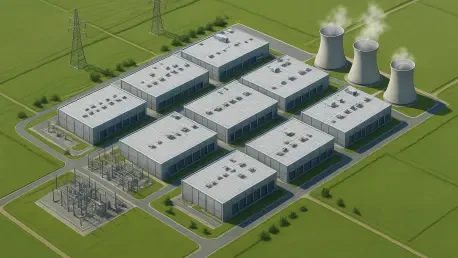

The Federal Energy Regulatory Commission currently faces the challenge of maintaining just and reasonable rates while tech corporations demand unprecedented grid access for AI model training. This demand is not merely a matter of digital capacity but a physical reality that involves the rapid construction of massive data centers across the American landscape, often outstripping the ability of federal and state regulators to monitor their environmental and economic footprints. As these facilities multiply, they consume vast quantities of electricity and water, emit significant levels of pollutants, and introduce complex chemical risks into local ecosystems. The legislative framework designed in the late 20th century to protect public health is increasingly struggling to keep pace with the hyper-accelerated timelines of the technology sector, leading to a governance gap that places a disproportionate burden on local communities. While the promise of artificial intelligence remains a central pillar of national economic policy, the lack of a cohesive federal oversight strategy threatens to undermine the very stability and environmental integrity that these laws were meant to preserve.
Environmental Inequality and the Erosion of Regulatory Safeguards
The Historical Context: Cumulative Harm and Vulnerable Regions
The current expansion of data centers often follows a historical pattern of industrial development where facilities are concentrated in specific geographic regions, frequently those inhabited by low-income or minority populations. Historically, federal environmental justice mandates were designed to prevent the creation of “sacrifice zones,” where the cumulative impact of multiple industrial sources would lead to severe health outcomes for residents. However, as the push for rapid technological dominance has accelerated, many of the substantive protections that once required agencies to consider the total burden on a community have been eroded or simplified into mere procedural requirements. This shift has meant that while a single data center might meet its individual emission targets, the collective impact of dozens of such facilities in a single county can lead to an aggregate level of pollution that exceeds the natural carrying capacity of the environment.
Despite the procedural right to participate in public hearings, residents in these targeted areas often find that their ability to influence the outcome of a project is severely limited by the narrow scope of federal reviews. The current regulatory environment focuses heavily on individual permit compliance rather than the broader landscape of environmental health. This creates a situation where the historical legacy of environmental racism is inadvertently reinforced, as new AI infrastructure is layered atop existing industrial contamination. Without a federal requirement to assess the cumulative harm of these developments, the administrative process often fails to recognize the systemic risks posed by the high-density clustering of data centers, leaving vulnerable populations to manage the long-term consequences of air and water degradation without a legal mechanism to effectively refuse new projects.
Case Study: State Incentives versus Community Health
A prominent example of this regulatory friction occurred with the massive xAI data center development in Mississippi, where state-level incentives were used to fast-track a $20 billion project. The development sparked a significant legal and environmental controversy regarding the use of large-scale gas turbines intended to provide immediate power to the facility before a permanent grid connection could be established. The core of the dispute centered on whether these massive engines should be classified as “portable” units, which are subject to less stringent oversight, or “stationary sources” under the Clean Air Act. This distinction is critical because stationary sources are required to undergo rigorous permitting and install the best available control technologies to limit the release of nitrogen oxides and other harmful pollutants into the surrounding atmosphere.
The decision by state regulators to facilitate the project by applying more lenient standards illustrates a growing trend where economic development goals override precautionary environmental principles. Local residents and environmental advocates argued that the sheer scale of the turbine installation would significantly degrade local air quality, yet the legal framework favored the corporate timeline over the public’s right to a clean environment. This case highlights a broader failure in the federal-state partnership, where federal laws like the Clean Air Act are interpreted in ways that allow for massive pollution increases under the guise of temporary or experimental operations. The result is a patchwork of enforcement that varies wildly from state to state, often leaving communities with the least political capital at the highest risk for environmental health problems.
Legal Barriers: Federal Statutes and the Right to Refuse
The National Environmental Policy Act (NEPA) serves as the primary tool for federal agencies to assess the environmental consequences of major actions, yet it has increasingly become a document of disclosure rather than a tool for prevention. Under current judicial interpretations, an agency can fulfill its NEPA obligations by simply identifying and discussing the potential harms of a data center project without actually being required to mitigate those harms or choose a less damaging alternative. This “hard look” requirement provides a veneer of transparency, but it does not grant local communities a substantive right to stop a project that is proven to be environmentally or socially detrimental. As a result, the federal government often presides over the degradation of local resources while claiming that all necessary procedural steps were followed to the letter of the law.
Furthermore, the legal avenues for challenging these decisions are becoming increasingly restricted for private citizens. Supreme Court rulings have limited the ability of residents to bring lawsuits under the Civil Rights Act based on the “disparate impact” of a project, meaning that unless a community can prove intentional discrimination, they cannot block a data center siting that disproportionately harms a specific racial or ethnic group. This high burden of proof effectively immunizes many tech corporations and government agencies from being held accountable for the unintended but predictable social consequences of their siting decisions. When combined with the Department of Justice’s tendency to defend federal permits on the grounds of national security or economic necessity, the legal system creates a formidable barrier that prevents residents from seeking meaningful environmental justice in the face of rapid industrial expansion.
The Hidden Price of Powering the AI Boom
Grid Strain: Industrial Expansion and Resident Utilities
The energy requirements of modern AI model training are so immense that they are fundamentally altering the operation of the American electrical grid. A single hyper-scale data center can require hundreds of megawatts or even several gigawatts of power, a load that is equivalent to the consumption of an entire mid-sized city. To meet this demand, utility companies must invest billions of dollars in new transmission lines, substations, and generation capacity. However, the costs of these massive infrastructure upgrades are often rolled into the general rate base, meaning that ordinary residential customers and small businesses end up subsidizing the expansion of the AI industry through higher monthly bills. This redistribution of costs represents a significant economic burden on households that may already be struggling with inflation and rising living expenses.
In states like Virginia, which hosts the highest concentration of data centers in the world, the strain on the grid has led to warnings of potential energy shortages and the need for expedited construction of high-voltage lines through residential and protected agricultural areas. The speed of this expansion often bypasses traditional planning cycles, leaving little time for public discourse on the long-term economic implications of such a heavy industrial load. Because the regulatory framework was not built to handle such a concentrated surge in demand from a single industry, there is a lack of transparency regarding how much of the financial burden is truly being borne by the tech corporations versus the public. Without federal intervention to ensure equitable cost allocation, the AI boom risks creating a permanent underclass of energy consumers who pay more for less reliable service while corporate profits continue to soar.
Regulatory Responsibility: Obligations Under the Federal Power Act
Under the Federal Power Act, the Federal Energy Regulatory Commission (FERC) is legally obligated to ensure that electricity rates remain “just and reasonable.” This mandate includes a long-standing “cost-causation principle,” which holds that those who cause costs to be incurred on the grid should be the ones responsible for paying them. In the context of the AI revolution, this principle is being put to the ultimate test as tech giants demand priority access to the grid while resisting the full financial responsibility for the upgrades their facilities require. FERC has the authority to mandate that utilities create specific rate classes for data centers, separating them from residential and small commercial users to prevent unfair cost-shifting. This would ensure that the massive capital expenditures required to power AI are directly funded by the companies that benefit from them.
Implementing these changes requires a more proactive stance from federal regulators than has been seen in recent years. By establishing clear federal guidelines for how data center interconnections are priced, FERC could stabilize the energy market and protect consumers from the volatility associated with sudden, large-scale industrial loads. This oversight is also necessary to prevent a “race to the bottom” where states compete for data center investments by offering increasingly subsidized electricity rates, a practice that ultimately weakens the national grid’s resilience. Protecting the integrity of the Federal Power Act means recognizing that the digital economy cannot be built on the backs of the average ratepayer, and that “just and reasonable” must apply to the distribution of costs as much as it does to the final price of a kilowatt-hour.
Chemical Management and the Toxic Legacy of Server Hardware
Emerging Risks: Identifying the Hidden Chemical Footprint of AI
While the technology industry is frequently marketed as a clean and sustainable alternative to traditional manufacturing, the physical infrastructure of AI is deeply dependent on a wide range of hazardous chemicals. Data centers utilize sophisticated liquid cooling systems that often rely on fluorinated gases and PFAS—known as “forever chemicals”—to manage the intense heat generated by high-density server racks. These substances are highly persistent in the environment and have been linked to a variety of human health problems, including developmental issues and increased cancer risks. When these cooling systems undergo maintenance or experience leaks, these chemicals can enter the local water supply or be released into the atmosphere, creating long-term liabilities for the communities surrounding these facilities.
The environmental risk is further compounded by the practice of cooling tower blowdown, where water used in the cooling process is treated with anti-corrosive and anti-microbial chemicals before being discharged into municipal sewer systems. These discharge streams often contain heavy metals and other regulated pollutants that can overwhelm local wastewater treatment plants, which were not designed to handle the specific chemical profiles of data center waste. As a result, these toxins can eventually find their way into surface waters and local ecosystems, where they bioaccumulate in the food chain. The federal government’s current approach to chemical management often fails to account for these specific pathways, as data centers are not yet treated with the same level of scrutiny as traditional chemical or manufacturing plants, despite their significant and growing chemical footprint.
Regulatory Gaps: TSCA Enforcement and the Life Cycle of Tech Waste
The Toxic Substances Control Act (TSCA) grants the Environmental Protection Agency (EPA) broad authority to regulate chemicals that present an unreasonable risk to health or the environment, yet the application of this law to the data center industry has been inconsistent. A major concern lies in the rapid turnover of server hardware, which is often replaced every few years to keep pace with the increasing computational demands of AI models. This creates a massive stream of electronic waste that contains flame retardants, lead, mercury, and other hazardous materials. When this hardware is discarded, it often ends up in landfills or incineration facilities where these toxic substances can leach into groundwater or be released into the air, posing a direct threat to public health and the surrounding environment.
The primary obstacle to effective chemical oversight is the EPA’s failure to designate data centers as a distinct industrial category for the purpose of environmental reporting and regulation. Without this designation, many of the chemical uses and waste streams associated with AI infrastructure remain hidden from public view and regulatory scrutiny. This lack of data makes it nearly impossible to assess the true life-cycle impact of server hardware or to enforce the provisions of TSCA in a meaningful way. To address this, the federal government must require more transparent reporting on the chemicals used in both the construction and operation of data centers, ensuring that the technology sector is held to the same environmental standards as any other heavy industry. Only through active enforcement and a comprehensive understanding of the tech sector’s toxic legacy can the EPA fulfill its mission to protect the public from chemical harm.
Moving Toward a Unified Federal Framework
Systemic Issues: Identifying Flaws in Current Governance
The recurring conflict between AI expansion and environmental protection is a symptom of a systemic flaw in federal governance, where laws are applied in a fragmented, source-by-source manner rather than a holistic one. The current legal framework provides various procedural rights that allow for the documentation of environmental harm, but it lacks the substantive power to prevent that harm when it conflicts with high-level economic or technological priorities. This creates a scenario where the law regulates the process of environmental degradation rather than forbidding the outcome itself. For communities on the front lines of data center development, the result is a sense of inevitability, as federal agencies prioritize the speed of innovation over the long-term health and stability of the regions they are tasked to protect.
This governance gap is further widened by the tension between executive orders that call for the rapid acceleration of AI development and the statutory duties of agencies to safeguard public health. While tech corporations are often granted the benefit of the doubt regarding the economic benefits of their projects, the burden of proof is consistently placed on local residents to demonstrate the specific, quantifiable risks they face. This imbalance of power is a direct consequence of a legal system that values economic growth above almost all other metrics, often ignoring the externalized costs of pollution, resource depletion, and infrastructure strain. Without a fundamental shift in how federal laws are implemented, the AI revolution will continue to outpace the safeguards meant to ensure that such growth is equitable and sustainable for the entire nation.
Path Forward: Essential Recommendations for Meaningful Oversight
The federal government recognized that environmental reviews had to transition from mere disclosure documents into actual decision-making tools that prioritized community safety. When findings of significant cumulative harm were made, agencies were empowered to trigger project denials or mandate strict mitigation efforts that went beyond simple financial compensation. This shift ensured that the “hard look” required by NEPA carried the weight of law, providing a substantive floor that prevented the further degradation of already overburdened regions. By integrating these cumulative impact standards into the permitting process, the government was able to move away from a fragmented model and toward one that accounted for the total environmental load placed on local ecosystems and populations.
Legislative reforms were also implemented to restore the ability of private citizens to challenge infrastructure projects based on their disparate impacts. By closing the legal loopholes that previously required proof of intentional discrimination, the federal government allowed residents to seek justice for the unintentional but devastating consequences of data center siting. Simultaneously, federal energy regulators asserted their authority to mandate corporate accountability for grid infrastructure costs, ensuring that tech giants internalized the externalities of their energy consumption. These proactive steps created a more balanced playing field where the benefits of technological progress did not come at the expense of public health or economic fairness. Through these combined efforts, the federal framework was successfully updated to manage the complexities of the digital age, ensuring that industrial expansion remained compatible with the long-term welfare of all citizens.