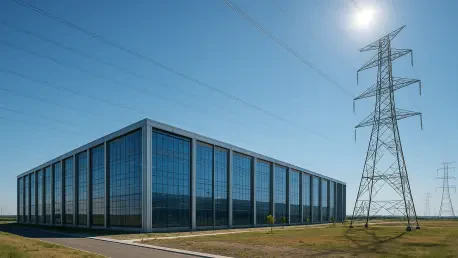

Data centers already account for over 4% of the nation’s total electricity usage, leading to significant concerns regarding the long-term reliability of the existing electrical grid. This massive digital footprint represents the physical manifestation of an artificial intelligence revolution that shows no signs of slowing down. As of 2026, the United States has seen the emergence of over 3,000 operational data centers, with approximately 1,500 additional facilities currently in various stages of construction or planning. These structures are the essential neurons of the modern economy, processing the astronomical amounts of data required to sustain advanced large language models. However, this architectural expansion is no longer confined to industrial parks; it is increasingly encroaching upon residential areas. The rapid pace of development has ignited a fierce debate over whether AI necessity justifies the infringement upon the rights of property owners.
Infrastructure Demands and the Power of Eminent Domain
The physical infrastructure of artificial intelligence requires more than just massive buildings; it necessitates a vast, intricate network of high-voltage transmission lines to deliver consistent power. Utility companies are finding it increasingly difficult to navigate the geography of modern energy needs without crossing privately owned land. When negotiation for voluntary easements fails, corporations frequently turn to the controversial legal tool of eminent domain. This power allows for the compulsory acquisition of private land, provided that the taking is for a legitimate public use and that the owner receives just compensation. In the current landscape, the friction between homeowners and tech-driven utility expansion has reached a boiling point. Families now face the prospect of massive steel towers and humming electrical wires bisecting their property to satisfy the energy hunger of distant server farms and artificial intelligence processing hubs.
Legal disputes often hinge on whether a utility company qualifies as a common carrier, a designation that grants the authority to seize land for the greater good. The definition of a common carrier is not uniform, leading to a fragmented legal reality where property rights are protected differently from state to state. In Texas, for instance, the judiciary has scrutinized whether a project truly serves the general public or merely provides a dedicated service to a private developer. This distinction is critical because many modern transmission projects are specifically engineered to support a single, massive data center rather than bolstering the local grid for the surrounding community. As more of these dedicated lines are proposed, the argument that they constitute a public use becomes harder to sustain. This legal ambiguity creates a significant hurdle for infrastructure developers while offering a path for landowners who seek to keep their property rights fully intact.
Redefining Public Use in the Modern Era
The foundational tension of modern property law can be traced back to the landmark Supreme Court ruling in Kelo v. City of New London, which expanded the definition of public use to include economic development. While this decision theoretically paved the way for massive industrial projects, it also sparked a nationwide movement to defend the sanctity of private ownership. By 2026, 45 states have implemented legislative reforms designed to curb the abuse of eminent domain for private gain. These laws vary in strength, but they collectively represent a significant barrier to the unfettered expansion of AI infrastructure. In many jurisdictions, the government must now prove that a project provides a clear, tangible benefit to the local citizenry rather than simply generating tax revenue or corporate profits. This legislative shift has forced tech companies and utility providers to reconsider their approach to land acquisition by emphasizing transparency and community benefits.
Judicial intervention in states like Michigan, Ohio, and Oklahoma has further complicated the landscape for AI infrastructure expansion. High courts in these regions have consistently ruled against the seizure of land from one private entity for the sole benefit of another. Within the context of the current AI boom, judges are being asked to determine if new transmission corridors are essential for grid stability or if they are merely private driveways for digital giants. The core of the legal debate centers on whether the integration of AI into the national economy qualifies as a public necessity comparable to roads or schools. If a project is viewed as primarily serving out-of-state interests or a specific corporate entity, it is likely to face intense judicial scrutiny. This scrutiny ensures that the push for technological progress does not bypass the constitutional protections afforded to homeowners, maintaining a vital check on corporate and governmental overreach.
Strategic Pathways for Landowner Protections and Grid Integration
As the demand for processing power continues to climb, the strategy for grid expansion must evolve beyond simple land acquisition. The reliance on eminent domain as a primary tool for development is becoming less viable as legal challenges mount and public opposition intensifies. Moving forward, the industry must explore alternative solutions such as co-locating power generation with data centers or utilizing existing industrial rights-of-way to minimize the impact on private property. The geographic location of a landowner remains a primary factor in the strength of their defense, as states with robust property rights protections provide a much more formidable shield against encroachment. This disparity suggests that the future of AI infrastructure will likely be shaped by regional legal climates, favoring areas where developers can find a balance between technological growth and community respect. Success in this era will depend on the ability to innovate in the social frameworks.
The resolution of these property disputes required a fundamental shift in how the nation approached the integration of large-scale technology into the physical environment. Stakeholders eventually recognized that ignoring the concerns of local communities led to costly delays and systemic instability. To address these challenges, developers moved toward a model of localized energy production, reducing the need for long-distance transmission lines that crossed private land. Policymakers also strengthened the criteria for public use, ensuring that any land taken for infrastructure projects provided direct enhancements to the local electrical capacity. This approach fostered a more collaborative environment where technological progress and property rights were no longer viewed as mutually exclusive. By prioritizing transparency and fair compensation, the industry established a more sustainable path for growth. The lessons learned provided a blueprint for future infrastructure projects.