
Instead of preventing fraud, technology-specific rules may simply move the goalposts of self-incrimination, requiring new strategies for defense and judicial oversight. The rapid integration of generative artificial intelligence into the United States legal system has created a profound tension between the traditional duty of candor and the constitutional protections afforded to every citizen. As sophisticated language models have become standard in modern legal workflows, the emergence of AI hallucinations—fabricated case citations and fictitious legal theories that appear remarkably authentic—has forced the judiciary into a defensive posture. This shift has resulted in a flurry of new standing orders and local rules designed to safeguard the integrity of the court record, yet these very safeguards are now colliding with the Fifth Amendment. When a judge demands to know whether an attorney utilized these tools or verified their output, the inquiry moves beyond mere professional conduct and enters the realm of potential criminal liability, creating a scenario where the practitioner may need to seek protection under the law they serve.
The Evolution of Judicial Mandates and AI Hallucinations
The legal landscape has been significantly altered by the sheer efficiency with which generative tools can synthesize vast amounts of data, unfortunately including the generation of highly persuasive but entirely nonexistent legal precedents. Unlike historical research errors, which typically involved misinterpretations or outdated citations, AI hallucinations involve the creation of realistic-sounding case names, docket numbers, and even specific quotes that have no basis in reality. In response to this unprecedented threat to judicial reliability, courts such as the U.S. Court of Appeals for the Tenth Circuit have pioneered the implementation of specific disclosure rules. These mandates are not merely suggestions but formal requirements that force attorneys to disclose the involvement of AI in their drafting process. By compelling this transparency, the judiciary seeks to maintain a high standard of accuracy, but the transition from voluntary disclosure to mandatory certification has fundamentally changed the risk profile for every lawyer appearing before the bench.
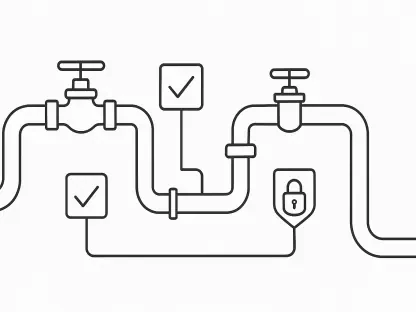
These judicial mandates generally rest on three specific requirements: the formal disclosure of AI usage, the certification of human verification for every citation and quote, and the explicit assumption of personal liability for the contents of the filing. While these pillars are intended to act as a deterrent against the reckless use of technology, they simultaneously build a comprehensive paper trail that can be weaponized in criminal proceedings. When a lawyer signs a certification asserting that every case has been manually checked, that signature serves as a formal statement made under the penalty of perjury. If it is later revealed that the filing contains fabricated authorities, the certification itself becomes a piece of incriminating evidence. This dynamic creates what legal scholars describe as a perpetual motion machine of criminal exposure, where the act of complying with court-ordered transparency potentially provides the government with all the necessary elements to pursue charges of obstruction of justice or false statements.
Defining the Privilege Against Self-Incrimination in Court
A common misconception persists that the Fifth Amendment privilege against self-incrimination is a shield reserved exclusively for defendants in high-stakes criminal trials. In the modern courtroom of 2026, the application of this privilege has become a critical concern for legal professionals during even routine procedural inquiries. The Fifth Amendment applies whenever the government, including a judge acting in an official capacity, compels a person to provide testimonial answers that could provide a link in the chain of evidence required for a criminal prosecution. For an attorney, the threat of self-incrimination arises the moment a judicial inquiry shifts from the merits of a motion to the personal conduct and veracity of the individual who filed it. While a lawyer is expected to be an advocate for the truth, they do not surrender their individual constitutional rights upon entering the bar, and the privilege remains a vital safeguard against being forced to witness against oneself in a professional setting.
A nuanced distinction must be made between professional or administrative consequences and actual criminal liability. The Fifth Amendment does not offer protection against the sting of professional embarrassment, the financial impact of Rule 11 sanctions, or the administrative revocation of a law license by a bar association. Because these outcomes are considered civil or disciplinary in nature, an attorney generally cannot refuse to answer questions about their research methods solely to avoid a public reprimand or a fine. However, the privilege is validly invoked when there is a reasonable cause to apprehend that an answer could lead to charges of perjury, criminal contempt, or even fraud. When a judge asks if a lawyer actually performed the verification they certified, they are effectively asking the lawyer to admit to a crime if the certification was false. At this precise junction, the attorney’s status transitions from a court officer to a person with a justifiable fear of criminal prosecution, necessitating a careful invocation of their rights.
The Dual Role of the Lawyer as an Officer of the Court
The inherent tension in modern litigation stems from the lawyer’s dual identity as both a private citizen with personal rights and an officer of the court with a profound duty of candor. This duty requires lawyers to be honest with the tribunal, a responsibility that often seems to conflict with the right to remain silent. Nevertheless, long-standing legal precedents have made it clear that the state cannot demand a waiver of constitutional protections as a prerequisite for maintaining a professional license. In landmark decisions like Spevack v. Klein, the Supreme Court established that an attorney cannot be disbarred or otherwise sanctioned for the sole act of invoking the Fifth Amendment during a disciplinary investigation. This principle ensures that the judiciary cannot use the threat of professional destruction to bypass the constitutional prohibition against compelled self-incrimination, maintaining a necessary barrier between professional ethics and fundamental human rights.
Building on this foundation, additional precedents such as Garrity v. New Jersey highlight that the government is prohibited from forcing individuals to choose between their livelihoods and their constitutional rights. If a judge were to suggest that a lawyer will lose their career or face immediate suspension unless they explain their use of AI tools, any testimony extracted under that threat would be considered legally coerced. In such instances, the resulting statements could be barred from use in a subsequent criminal trial, as the state cannot extract information by putting a person’s profession in jeopardy. This framework provides an essential shield for practitioners in 2026, as the pressure to adopt and master generative AI continues to grow. It ensures that while the court can demand high standards of practice, it cannot use the power of the bench to bully a practitioner into a self-incriminating confession regarding the technical nuances of their preparation process.
Navigating the Certification Trap
The certification trap represents the most complex intersection of modern legal technology and constitutional law. When an attorney signs a document claiming to have verified the authenticity of every cited case, they are creating a preexisting filing that is already part of the public record. Because the Fifth Amendment only protects against compelled testimonial communication, it cannot be used to retroactively hide the document or the fact that the attorney signed it. The filing itself is objective evidence, much like a blood sample or a fingerprint, and the court already possesses it. The conflict intensifies only when the judge demands a deeper explanation that goes beyond the physical existence of the document. If the court suspects a citation is fake and asks the lawyer to describe their verification steps, they are seeking new testimony that could bridge the gap between a simple error and intentional criminal deception.
In these moments, the lawyer is being asked to provide the missing testimonial link that would support a charge of perjury or fraud. While the document serves as the objective proof of what was filed, the lawyer’s explanation constitutes the subjective proof of intent and process. The Fifth Amendment provides a clear boundary here: while the court can use the filing as a basis for civil sanctions or a referral to the bar, it cannot compel the lawyer to become a witness against themselves to explain the underlying fraud. This distinction is critical because it prevents the judiciary from turning a procedural inquiry into a de facto criminal deposition. By recognizing the difference between the document as evidence and the lawyer as a witness, the legal system can maintain its standards of integrity without sacrificing the procedural protections that prevent the government from overreaching into the individual’s mental and preparatory processes.
Shifting Judicial Focus from Process to Output
To avoid these repeated constitutional standoffs, many experts suggest that the judiciary should pivot its regulatory focus away from the specific technology used and toward the actual output submitted to the court. A fictitious citation is a fundamental breach of the rules of procedure regardless of whether it was hallucinated by a sophisticated AI, drafted by an unsupervised paralegal, or invented by a desperate attorney. By focusing on the accuracy of the filing rather than the technological biography of how it was created, courts can enforce high standards of practice without delving into the internal workflows that trigger self-incrimination concerns. This approach treats AI as just another tool in the lawyer’s arsenal, similar to a digital database or a physical library, and holds the practitioner accountable for the result rather than the method.
Furthermore, courts should strive to keep certifications objective and prospective, focusing on the existence of citations and the literal accuracy of quotes rather than the subjective process of human review. If a judge suspects that a lawyer has intentionally misled the court with AI-generated fabrications, the investigation should rely on independent evidence rather than compelled testimony from the practitioner. The court has access to the filing, electronic metadata, and potential testimony from third-party staff or firm administrators to build a case for sanctions or criminal referral. By utilizing these external sources of information, the judiciary can uphold the sanctity of the record and ensure accountability without requiring the lawyer to provide the evidence for their own prosecution. This strategy preserves the integrity of the judicial process while respecting the fundamental constitutional boundaries that have long protected individuals from the coercive power of the state.
The Future of Accountability and Litigation
As we look back at the development of these protocols over the last year, it is evident that the legal community has entered a period of transition where traditional ethics and modern technology are permanently intertwined. The rise of the Fifth Amendment as a defense for practitioners was an inevitable consequence of aggressive judicial mandates that attempted to regulate the internal preparation of legal documents. In 2026, many law firms have already adjusted their internal policies, moving toward more robust and transparent verification systems that do not rely on a single attorney’s certification but rather on a collaborative audit trail. This shift has successfully reduced the frequency of AI-related hallucinations reaching the court, yet it has also highlighted the importance of legal counsel for lawyers themselves. The realization that an attorney can face criminal exposure for a technical error has fundamentally changed the risk assessment of every modern litigation strategy.
The judiciary eventually learned that while the Fifth Amendment provides a powerful shield against criminal prosecution, it does not prevent the court from maintaining a high level of accountability. Judges have successfully utilized adverse inferences in civil disciplinary contexts, where a lawyer’s silence can be used as a basis for professional sanctions when supported by independent evidence. This balanced approach ensured that the legal profession remained self-regulating and credible without infringing upon the core constitutional rights of its members. Moving forward, the most effective strategy for practitioners involves a focus on rigorous, verifiable output and the proactive use of technology-neutral standards. By prioritizing the accuracy of the record and understanding the precise boundaries of constitutional protection, the legal community has managed to navigate the transition into an AI-augmented era while keeping the fundamental principles of American justice firmly in place.