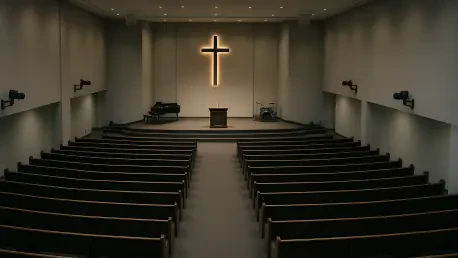

The presence of high-definition cameras in staff offices suggests a management style that prioritizes digital oversight over interpersonal trust and the sanctity of private counseling. At Lakepointe Church, a massive multi-campus organization in North Texas, this philosophy has manifested as a sprawling network of more than 400 artificial intelligence-enabled cameras at its Rockwall location. This implementation has triggered an intense national debate regarding the ethical boundaries of surveillance within religious institutions, where the expectation of privacy is traditionally paramount. While church administrators maintain that such a robust security posture is vital for the protection of thousands of weekly visitors, former members and privacy advocates argue the system represents an unprecedented intrusion. The friction between institutional safety and personal liberty has placed the church at the center of a technological controversy that challenges the definition of a sacred sanctuary in the digital age.
The Technological Scope: Ethical Concerns and Privacy
Advanced Capabilities: Workplace Monitoring and Office Oversight
The technical infrastructure driving this debate is a sophisticated AI ecosystem developed by the technology firm Coram, which elevates standard video monitoring into a highly searchable data platform. Unlike conventional security setups that rely on manual footage review, the Coram system allows authorized personnel to perform complex searches using natural-language queries to locate individuals or specific events almost instantly. This means that a simple request can track a person’s entire path across the sprawling campus, cataloging their movements from the parking lot into various interior rooms. By utilizing advanced algorithms, the church maintains what it calls “full visibility,” creating a digital thread of every visitor who enters the property. The system is also marketed with facial-recognition capabilities and license-plate tracking, transforming the church into a high-tech monitoring hub that can organize appearances into permanent searchable records.
The implementation of such a dense camera network has led to startling allegations regarding the specific placement of these devices within the church’s private quarters. Former church members and internal whistleblowers have claimed that cameras are positioned in sensitive areas where privacy is reasonably expected, such as rooms where women have changed clothes for various church activities. Furthermore, the installation of AI-enabled cameras within staff offices has sparked internal friction, as employees navigate a workspace where their every interaction is potentially being recorded and analyzed. While leadership describes these office cameras as necessary tools for accountability and professional standards, critics view them as an intrusive form of workplace surveillance. This level of monitoring potentially undermines the confidentiality required for private counseling sessions or sensitive pastoral work, where congregants expect their most vulnerable moments to remain strictly between themselves.
Privacy Implications: The Harvesting of Biometric Data
The sheer scale of the surveillance at Lakepointe—averaging one camera for every few dozen feet of the facility—represents an extreme outlier when compared to other large religious organizations. This density suggests a fundamental shift from traditional reactive safety measures to a modern model of total surveillance, raising significant questions about the surveillance creep often observed in private entities. For many observers, the transition to an AI-managed cloud platform means that personal data and biometric records are being harvested without clear or explicit disclosure to the thousands of people being recorded daily. This lack of transparency regarding data retention periods, storage security, and specific access protocols has fueled a climate of suspicion among both the congregation and the broader public. The absence of a public privacy policy detailing how these AI-generated records are utilized further complicates the relationship between the church hierarchy and members.
A significant point of contention for many critics involved the perceived hypocrisy gap between the leadership’s public rhetoric and its internal management strategies. While the church’s platform occasionally critiqued government overreach and authoritarian surveillance tactics, it simultaneously established a digital infrastructure within its own walls that mirrored those very systems. This divergence led to a fundamental disagreement over the very nature of a church sanctuary. Some argued that the facility should have been treated as a public square where one is always watched for safety reasons, while others insisted it was a sacred space where individuals should have been free from the constant gaze of an AI database. The tension between these two viewpoints created a rift in the community, as the spiritual mission of the church seemed increasingly at odds with the invasive nature of the technology used to manage the physical environment.
Institutional Defense: The Argument for Collective Safety
Leadership Perspectives: The Security and Protection Mandate
In response to the growing public scrutiny, Senior Pastor Josh Howerton and other church leaders have framed the surveillance system as a moral imperative for protecting the most vulnerable members of their community. Howerton has argued that the choice for the church is a simple binary: either the administration uses every available technological advantage to deter predators and prevent violence, or it leaves its children’s ministries and elderly congregants at risk. From this leadership perspective, the AI system serves as a world-class safety net designed to identify potential threats and weapons in real-time. By utilizing automated alerts, the security team can respond to anomalies before they escalate into physical harm, ensuring that a campus serving tens of thousands remains a secure environment for families. This defense prioritizes the collective physical safety of the group over the individual privacy concerns raised by the presence of advanced monitoring technology throughout the church campus.
Technical leadership at Lakepointe has emphasized that the move to a centralized, AI-enhanced platform was a necessary upgrade for a modern megachurch infrastructure in 2026. By consolidating various fragmented security functions into one scalable, cloud-based system, the church can manage its sprawling facilities more efficiently and with fewer personnel. The ability to distribute video clips across different departments and monitor multiple campuses from a single location has been touted as a significant operational advantage. For the church administration, the clear benefits of preventing physical harm and maintaining order far outweigh the theoretical concerns regarding digital privacy or biometric tracking. They position the Coram technology as a vital shield against the diverse security threats facing large public gatherings in the current era. This approach suggests that absolute security is a prerequisite for religious freedom, justifying the use of AI.
Future Resolutions: Accountability and Data Governance
The resolution of the Lakepointe controversy required a total shift toward transparency and the establishment of independent oversight. To address the lingering concerns of the public, the church leadership eventually adopted a comprehensive data governance policy that clearly defined the storage and deletion protocols for all biometric information. This included an explicit commitment to purging facial recognition data after a set period and providing members with the right to request information about their own recorded data. Furthermore, the creation of an external audit board composed of both legal experts and privacy advocates helped to ensure that the surveillance system was never used to monitor private pastoral sessions or inappropriate areas. These steps provided a concrete roadmap for how large organizations could balance security with privacy. By implementing these clear boundaries, the church demonstrated that technological power must be tempered with accountability to maintain the trust of a community.
Ultimately, the situation at Lakepointe served as a critical benchmark for how religious institutions globally navigated the integration of AI security. The church’s decision to move beyond a binary safety versus privacy argument and instead focus on ethical implementation offered a way forward for other megachurches facing similar dilemmas. It was determined that the presence of 400 cameras could only be justified if the governance of that system was as robust as the technology itself. Moving forward, houses of worship learned that maintaining the sanctity of their space required protecting not just the physical bodies of their members, but also their digital identities and personal dignity. The outcome of this scrutiny encouraged other organizations to conduct thorough privacy impact assessments before deploying high-tech monitoring. This shift in perspective ensured that the pursuit of absolute security did not lead to the sacrifice of the very personal liberties that these communities sought to protect.