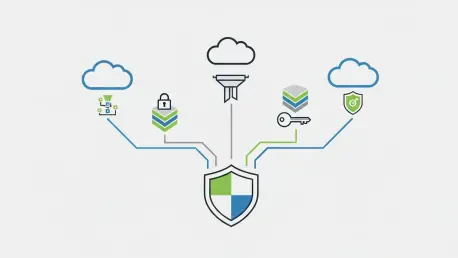

As artificial intelligence systems become deeply embedded within the operational fabric of multi-cloud enterprises, the fundamental nature of cybersecurity is undergoing a seismic shift that many organizations are unprepared to address. The rapid proliferation of AI, expected to be nearly ubiquitous by 2026, moves the primary corporate challenge from the strategic decision of whether to implement this technology to the critical imperative of how to secure it effectively against an entirely new class of threats. Traditional security architectures and their associated tools, meticulously designed for the predictable data flows and static applications of a bygone era, are proving to be fundamentally inadequate for the dynamic, distributed, and probabilistic nature of modern AI. This growing disparity necessitates a new, proactive security framework—one that is architected from the ground up—not merely as a best practice, but as an essential component for regulatory compliance, sustained innovation, and ultimate corporate survival in an increasingly intelligent world.
The Paradigm Shift from Protecting Assets to Securing Systems
The evolution of AI security demands a profound change in perspective: a transition from the conventional model of protecting individual assets to the far more complex task of securing entire, dynamic systems. Artificial intelligence is not a static endpoint or a server to be hardened with a firewall; it is a living, adaptive ecosystem with a continuous lifecycle. Achieving true security in this context requires a holistic understanding that encompasses every stage, from the initial ingestion and cleansing of data, through the intensive processes of model training and fine-tuning, to the point of inference and the subsequent triggering of automated business actions. This system-first approach moves beyond the familiar territory of infrastructure hardening and endpoint protection to address the intricate web of interactions and dependencies that defines the operational reality of modern AI, forcing security teams to consider how data moves, who influences a model’s behavior, and how its outputs translate into real-world consequences.
This inherent complexity is significantly amplified by the widespread adoption of multi-cloud strategies. While enterprises embrace multiple cloud providers to foster resilience, avoid vendor lock-in, and leverage best-of-breed services, this approach inadvertently fragments security visibility and leads to inconsistent control policies across different environments. Each cloud provider offers its own proprietary suite of security tools, which are rarely designed to interoperate seamlessly, thereby creating dangerous visibility gaps and governance seams that sophisticated attackers can readily exploit. For instance, a model trained on sensitive data in one cloud might be deployed for inference in another, crossing security boundaries that are poorly monitored. Without a unified security layer that provides a single pane of glass and consistent policy enforcement across all clouds, organizations are left with a disjointed and dangerously vulnerable posture, unable to effectively protect the very AI systems that are becoming central to their operations.
A New Threat Landscape Demands a New Defense
Legacy cybersecurity tools, including firewalls, Security Information and Event Management (SIEM) platforms, and conventional data loss prevention (DLP) solutions, operate with a critical blindness to the unique context of artificial intelligence. These tools were built to analyze network packets, log files, and structured data, but they lack the semantic understanding required to interpret the nuances of AI interactions. They cannot answer fundamental questions such as, “What specific data influenced this model’s unexpected output?” or “Did a user’s conversational prompt contain sensitive intellectual property that is now being exfiltrated to a third-party model?” This contextual ignorance renders them largely ineffective against a new wave of AI-specific attacks, such as prompt injection, data poisoning, model inversion, and membership inference attacks, which exploit the intrinsic characteristics of machine learning models rather than traditional software vulnerabilities. These threats can manipulate business decisions, steal proprietary data, and undermine the integrity of the entire AI system.
In response to this sophisticated and evolving threat landscape, a new, cohesive defense-in-depth architecture is not just recommended; it is required. This modern framework moves beyond reactive, bolt-on security measures and instead proposes a structured, multi-layered defense designed to provide comprehensive and consistent protection across the entire multi-cloud estate. Its core philosophy is proactive and integrated, focusing on three critical layers of defense that work in concert. The first layer defends the AI models themselves as primary corporate assets. The second layer secures the data pipelines that are the lifeblood of these models, protecting sensitive information from ingestion to output. The third and final layer works to contain the compounded risk that emerges within the AI-driven business workflows that these models power. Together, these layers form a multi-faceted shield, creating a resilient security posture that can withstand the unique pressures of the AI era.
The Three Pillars of Multi-Cloud AI Defense
The foundational layer of a modern AI security architecture concentrates on protecting the AI model itself as both a high-value asset and a potential vulnerability. In a distributed multi-cloud environment, models are highly portable, creating numerous opportunities for data leakage, malicious abuse, or unauthorized modification. A robust defense strategy, therefore, requires security controls that are intrinsic to the model’s access patterns and behavior, not merely tied to the underlying infrastructure it happens to reside on. This is built on four essential pillars: establishing an explicit identity for every single request, whether from a human or a system; enforcing intentional usage through granular, role-based access controls to isolate experimental models from production systems; implementing continuous behavioral monitoring to detect anomalies in prompt structures or output characteristics that may signal misuse; and, most critically, applying a consistent cross-cloud governance framework to ensure a model’s security posture remains identical whether it is deployed on AWS, Azure, or Google Cloud.
The second architectural layer addresses the security of data, the most critical and fragile component of any AI system. Traditional data security controls are insufficient because they cannot inspect the conversational and contextual information embedded within AI prompts and outputs. A single user prompt can contain highly sensitive corporate data, customer PII, or financial information, and if that prompt is sent to an external model, it can result in an immediate and irreversible data breach. An effective AI data security strategy must therefore be end-to-end, with robust controls applied both before and after the inference process. Pre-inference controls include the real-time classification and detection of sensitive entities as users type prompts, followed by the automatic masking or tokenization of that information before it ever reaches the model. Post-inference controls complete this protective loop by filtering model outputs to prevent the inadvertent leakage of sensitive information, enforcing retention policies, and comprehensively logging all interactions for future audit and investigation.
The Inevitable Future Centralized Governance and Compliance
To effectively manage these defensive layers across a sprawling multi-cloud landscape, a centralized, context-aware AI security control plane proved to be a non-negotiable requirement. Relying on the disparate and non-interoperable security tools offered by individual cloud providers was a strategy that consistently led to dangerous visibility gaps and policy inconsistencies. A central platform became essential for enforcing unified security policies, aggregating logs and alerts into a single coherent view, governing models with consistency regardless of their location, and providing a real-time, authoritative source of truth for risk management across all cloud environments. This centralized nervous system was what ultimately allowed organizations to eliminate the critical blind spots that had previously plagued their AI security posture, enabling them to move forward with confidence.
Looking back from the vantage point of 2026, this integrated architectural approach became the standard of practice, its adoption accelerated by both the maturation of the technology and the introduction of stringent regulatory pressures. The future of AI security was defined by the widespread acceptance of standardized risk frameworks, deeper native integrations between specialized AI security platforms and the cloud providers’ own security tools, and a much stronger regulatory focus on achieving model explainability and traceability to satisfy auditors and build public trust. The enterprises that had foresightfully treated their AI systems as critical infrastructure and embedded security directly into their MLOps pipelines were the ones that ultimately built a durable and significant competitive advantage. They successfully transformed the immense potential of artificial intelligence into safe, trustworthy, and sustainable business value, leaving those who had delayed to face a significant and costly challenge in securing their most transformative technological assets.