
As a seasoned technologist deeply embedded in the evolution of machine learning and natural language processing, Laurent Giraid has spent years navigating the complex intersection of artificial intelligence and ethical implementation. With the recent news of a $55 million Series B funding round aimed at scaling agentic AI through the Carebricks platform, Giraid offers a unique vantage point on how the industry is moving beyond mere experimentation. This conversation explores the shift from theoretical research to the practical operationalization of AI in heavy-hitters like Cleveland Clinic and UTMB, the necessity of bridging the gap between clinician intent and workforce capacity, and the rigorous governance required when AI agents begin making life-critical decisions. We delve into the reality of U.S. healthcare spending, which reached a staggering $5.3 trillion in 2024, and how technology is finally evolving to handle the administrative and clinical weight that has historically led to provider burnout.
Many health systems struggle to move machine learning models from research sandboxes into live clinical workflows. How does the emergence of agentic AI platforms change the way a hospital actually “runs” software against live patient data at an institutional scale?
The historical bottleneck in healthcare hasn’t necessarily been the lack of sophisticated algorithms, but rather the immense difficulty of integrating those models into a working hospital environment. For years, we saw brilliant machine learning pilots that performed beautifully in a research setting but completely withered when faced with the messy, high-stakes reality of a live patient chart. Platforms like Carebricks represent a fundamental shift because they focus on closing that specific space between a theoretical model and an operational tool that clinicians can actually trust. By securing $55 million in new funding, there is a clear market signal that the industry is ready to move past “innovation theater” and into a phase where AI is baked into the infrastructure. This approach allows the technology to act on the ideas clinicians already have, effectively turning the software into an active participant in the care team rather than just another passive documentation system.
With U.S. healthcare spending hitting $5.3 trillion in 2024 and labor shortages continuing to strain providers, what is the core argument for shifting technology spending toward software that acts on clinician ideas rather than just recording them?
We are currently witnessing a period where medicine has advanced at a velocity that far exceeds our healthcare system’s physical ability to operationalize those breakthroughs. Clinicians are drowning in a sea of documentation and administrative “busy work” that consumes hours of their week, leaving them with very little capacity to address the actual opportunities for improving patient outcomes. The bet here is that the next era of technology must serve as a force multiplier—an agentic layer that handles the execution of routine but critical tasks. When we talk about labor shortages, we aren’t just talking about a lack of bodies; we are talking about a deficit of time. If an AI agent can handle the heavy lifting of prior authorizations or registry data management, it releases the human workforce to focus on the complex, nuanced medical judgment that a machine simply cannot replicate.
The University of Texas Medical Branch (UTMB) is now running more than 20 agents live on the Carebricks platform. Could you share a specific instance where this scale of agentic AI moved from a technical success to a literal life-saving event?
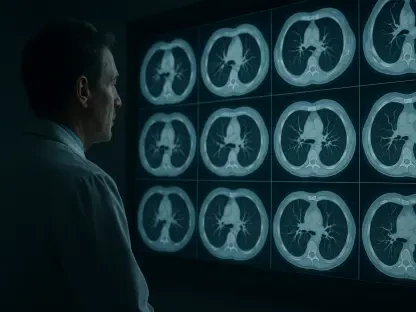
The most compelling evidence of this technology’s impact is found in the cardiology department at UTMB, where a coronary calcium detection agent was deployed using an FDA-cleared algorithm. In its very first month of operation, this agent scanned imaging data and flagged a patient who appeared to be at imminent risk of a major cardiac event, despite not being the primary focus of the initial scan. When the cardiology team received the alert and confirmed the risk, they performed a triple bypass surgery that almost certainly saved the patient’s life. It is moments like these—where the silent, tireless “eyes” of an AI detect a hidden threat—that validate the move away from controlled trials toward live production use. This isn’t just about efficiency; it’s about creating a safety net that catches the critical details that humans, regardless of their expertise, might miss during a grueling twelve-hour shift.
Beyond emergency interventions, how do these specialized agents, such as those used in nephrology or lung nodule tracking, transform the day-to-day operational efficiency and patient wait times?
The operational results we are seeing from live environments like UTMB are quite staggering when compared to the typical benchmarks we see in tech demos. For instance, their nephrology triage agent now automatically prioritizes patients based on the severity of their condition, which has successfully cut average specialist wait times by more than 50 percent. In the case of lung nodule tracking, the system ensures that incidental findings on CT scans are followed through to the appropriate clinical conclusion, resulting in an 80 percent faster response time on urgent cases. We are also seeing a doubling of guideline-concordant follow-ups, which is a massive win for preventative care and long-term patient health. These agents take over the manual coordinator work that usually clogs up the system, allowing the clinical staff to operate at the very top of their licenses.
As health systems like Cleveland Clinic and Intermountain Health adopt these platforms, what are the primary concerns regarding governance and the liability that comes with letting departments build and tune their own AI agents?
When you give a department the power to build its own triage or diagnostic agent, you are also handing them the ownership of the consequences, which creates a complex new landscape for liability and oversight. Health system boards are now tasked with answering difficult questions about how these agents are monitored and what happens when an AI’s judgment contradicts a clinician’s expert opinion. It is not enough to just “run” the AI; there must be a rigorous, ongoing cadence of auditing to ensure that the agents are performing correctly across diverse patient populations over time. As the agent count climbs into the dozens, the governance structure must evolve from a centralized IT function into a specialized clinical oversight role. We have to be transparent about false positives and the potential for bias, ensuring that the technology remains a tool for human empowerment rather than a black-box decision-maker.
What is your forecast for the evolution of the “agentic” hospital over the next decade?
I believe we are entering an era where the “agent count” will become as significant a metric for a hospital’s health as their patient satisfaction scores or bed occupancy rates. Within the next ten years, I forecast that the traditional, static Electronic Health Record will be replaced by a dynamic, agent-driven ecosystem that anticipates clinician needs before they even articulate them. We will see a shift where every clinical department has a “digital twin” of its workflow, managed by dozens of specialized agents that handle everything from real-time sepsis monitoring to the automated scheduling of complex surgeries. The $5.3 trillion spending crisis will finally begin to level off as these agents eliminate the massive waste associated with administrative friction and uncoordinated care. Ultimately, the successful hospitals will be the ones that view AI not as a software purchase, but as a fundamental redesign of how medical expertise is delivered to the bedside.