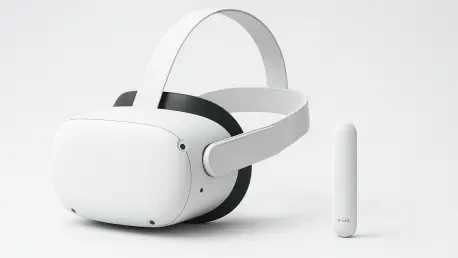

Valve’s September 2026 launch of the Steam Frame marks a pivotal shift toward hardware-driven wireless fidelity in the enthusiast virtual reality market. For years, the industry has wrestled with the inherent trade-off between the visual splendor of tethered PC-based experiences and the physical liberation of standalone mobile units. The Steam Frame aims to solve this dilemma by positioning itself as a premium wireless extension of the desktop, rather than a completely isolated portable console. This transition represents a significant leap from the legacy of the Valve Index, which served as the gold standard for wired immersion. By engineering a system that prioritizes a dedicated hardware link over general-purpose networking, Valve is attempting to satisfy the most demanding segment of the gaming community. The pricing reflects this ambition, with the 256GB base kit entering the market at $1,059 and the 1TB high-capacity version reaching $1,299. These figures place the device firmly in the prosumer category, catering to users who prioritize performance and stability over entry-level accessibility. As the first major hardware release from Valve in several years, the Steam Frame serves as a strategic cornerstone for the company’s vision of a unified, untethered gaming environment.
Strategic Market Vision: The Premium Ecosystem Play
The release strategy for the Steam Frame draws heavily from the “Steam Machine playbook,” a controlled distribution model designed to prioritize the existing community while mitigating the impact of third-party resellers. To participate in the initial purchase waves, customers were required to have Steam accounts in good standing with a history of activity dating back to the start of 2026. This exclusionary approach ensures that the limited initial stock reaches dedicated enthusiasts rather than speculative buyers looking to profit from high demand. This methodology also allows Valve to maintain a tighter feedback loop with its core audience, ensuring that the early adoption phase serves as a foundation for long-term software refinement. By bundling the hardware with a dedicated 6GHz wireless adapter and a native version of the flagship title Half-Life: Alyx, Valve is emphasizing the “plug-and-play” nature of the device. This curated experience is intended to justify the premium price tag, moving away from the more experimental nature of earlier prototypes toward a polished consumer product that fits seamlessly into the established Steam library.
Beyond the initial logistics, the pricing shift from earlier sub-$1,000 targets to the current four-figure range highlights the economic realities of high-end hardware production in the current climate. Valve has attributed these costs to ongoing global shortages in high-performance memory and storage components, which have impacted manufacturing across the entire technology sector. Despite these financial hurdles, the market positioning remains clear: the Steam Frame is intended to be the definitive choice for those who find the graphical limitations of standalone mobile VR unacceptable. This strategy creates a unique niche that bridges the gap between traditional console gaming and the ultra-enthusiast PC market. By focusing on the “streaming-first” philosophy, Valve is betting that users value the ability to leverage their existing desktop hardware more than they value a completely standalone ecosystem. This approach reinforces the importance of the PC as the central hub for high-fidelity interactive entertainment, even as the physical interface becomes increasingly mobile and untethered from the desk.
Technical Architecture: Breakthroughs in Wireless Fidelity
The primary technical hurdle for high-end wireless VR has always been the inconsistent nature of standard home Wi-Fi networks, which frequently lead to latency spikes and visual compression artifacts. The Steam Frame addresses this challenge through a dedicated Wi-Fi 6E wireless adapter that establishes a proprietary 6GHz link directly between the headset and the host computer. This hardware-centric solution removes the variable of router quality from the equation, providing a consistent, high-bandwidth environment for data transmission. To further optimize the stream, the system utilizes integrated eye-tracking sensors to enable foveated streaming. This technique ensures that the highest resolution rendering is concentrated only where the user is currently looking, significantly reducing the overall bandwidth required for a sharp image. Valve claims this advancement achieves a ten-fold improvement in effective bandwidth, resulting in visual quality that early reviewers have described as being indistinguishable from a traditional wired connection. This dedicated link is the fundamental pillar of the “streaming-first” thesis, ensuring that the massive processing power of a high-end PC is not bottlenecked by network congestion.
In addition to the proprietary 6GHz link, the Steam Frame incorporates two separate Wi-Fi 7 radios to manage different types of data flow simultaneously. One radio is reserved exclusively for the high-intensity video stream originating from the PC, while the second radio handles background tasks such as internet connectivity, system updates, and home network communication. This dual-link architecture prevents standard data traffic from interfering with the time-sensitive VR stream, effectively eliminating the common “Error 17” connectivity failures that have plagued previous attempts at high-end wireless VR. By separating these streams, the Steam Frame maintains a stable low-latency environment even in homes with multiple connected devices. This architectural decision reflects a deep understanding of the practical challenges faced by enthusiasts who live in dense urban areas where wireless interference is common. The combination of hardware-level streaming optimization and redundant radio links creates a robust foundation for the next generation of wireless immersion, proving that high-fidelity gaming no longer needs to be physically anchored to a stationary computer.
Industrial Design: Balancing Ergonomics and Internal Power
Weight distribution and wearer comfort are critical factors in the success of any wearable technology, and the Steam Frame introduces a radical approach to headset ergonomics. The “frontbox” of the device, which contains the optics and sensors, weighs only 185 grams, making it one of the lightest high-end headsets ever produced. To achieve this, Valve moved the battery and some processing components to the rear of the head strap, creating a balanced 440-gram total weight that sits comfortably on the user’s head. This design significantly reduces neck strain during extended sessions, allowing users to remain in virtual environments for longer periods without physical fatigue. The optical system utilizes dual 2160×2160 LCD panels paired with advanced pancake lenses, offering a crisp and clear field of view that minimizes the “screen door effect.” The headset supports adjustable refresh rates ranging from 72Hz to 144Hz, with the highest setting being specifically optimized for high-performance PC streaming. This focus on physical balance and optical clarity demonstrates a shift toward more human-centric engineering in the virtual reality space.
Under the hood, the Steam Frame is powered by a 4nm Snapdragon 8 Gen 3 system-on-a-chip, which provides the necessary computational overhead for its various streaming and standalone functions. While the device is primarily designed to stream content from a PC, it also features 16GB of unified LPDDR5X RAM, which is significantly higher than the memory capacity found in competing mobile headsets. This high memory ceiling is essential for the complex software translation layers required to run traditional x86-based games on the ARM64 architecture. The hardware package is completed by the new Steam Frame Controllers, which depart from traditional VR designs by including a full D-pad on the left and standard face buttons on the right. These controllers use magnetic TMR thumbsticks to eliminate the possibility of stick drift, a common failure point in previous gaming hardware. With approximately 40 hours of battery life on a single AA battery, these controllers are designed for reliability and multi-functional use, doubling as standard gamepads for non-VR titles when the user is playing in a virtual desktop environment.
Software Ecosystem: Translation Layers and Native Performance
The true complexity of the Steam Frame lies in its sophisticated software stack, which allows the mobile Snapdragon processor to interact with the vast library of PC-native games on Steam. Running on SteamOS 3, the device utilizes a multi-layered approach to compatibility, featuring Proton 11.0 for ARM64 and the specialized FEX translation layer. These technologies work in tandem to translate instructions meant for traditional desktop CPUs into a format that the mobile chip can understand, effectively bridging the gap between desktop and mobile architectures. To support this initiative, Valve launched the “Steam Frame Verified” program, which certifies games that meet strict performance and usability standards on the headset’s internal hardware. For a title to be considered “Verified,” it must maintain a consistent frame rate of at least 72 FPS at a native resolution of 1728×1728 per eye. This program provides users with a clear understanding of what they can expect from the standalone experience, ensuring that the “library-first” mentality of the Steam platform is preserved even in this new hardware category.
A cornerstone of the content strategy for the Steam Frame was the native port of Half-Life: Alyx to the ARM architecture. By optimizing its most successful VR title to run directly on the headset without the need for a PC, Valve has provided a compelling technical showcase of what its translation layers can achieve. This native 64-bit version includes full support for the Steam Workshop and Cloud saves, demonstrating that a “standalone” experience does not have to be a compromised version of a flagship game. As of October 2026, the library of verified titles has expanded to over 200 games, including a diverse mix of native VR experiences and traditional flatscreen hits like Hollow Knight: Silksong. The goal is to provide a unified gaming environment where the user’s library follows them regardless of whether they are sitting at a desk or moving around in a dedicated VR space. This approach relies on the Lepton layer for Android compatibility, ensuring that while the focus remains on Steam content, the headset remains a flexible tool capable of running a wide variety of modern applications.
Global Logistics and the Accessory Revenue Strategy
Valve has maintained a highly controlled rollout for the Steam Frame, focusing on specific regional markets to ensure adequate support and inventory management. Currently, the device is available in the United States, Canada, the United Kingdom, the European Union, and Australia. For the Asian markets, Valve has partnered with regional distributors like KOMODO to manage logistics in Japan and Taiwan, with plans to expand into South Korea later this year. This regional focus allows Valve to manage the reservation queue more effectively, although some consumers have expressed frustration with the limited availability. The reservation system remains the primary way to acquire a unit, with waves of emails being sent to prospective buyers as stock becomes available. This methodical approach is intended to prevent the market from being flooded with units that the company cannot support, maintaining a high standard of customer service for those who do manage to purchase the device.
One of the more controversial aspects of the Steam Frame launch is the “à la carte” accessory model, which separates several functional components from the base kit. The initial package does not include a dedicated power supply, a decision Valve justified by noting that the headset is compatible with any standard 45W USB-C charger that many enthusiasts already own. However, those who require a branded PSU must purchase it separately for $29. Furthermore, the headset is designed for monochrome passthrough for safety and environmental awareness by default; users who want high-fidelity color passthrough must purchase the $149 Arcturus Vision camera add-on. Other optional upgrades include a $59 Ergonomic Accessories Kit that features specialized hand straps and light blockers for enhanced comfort. While this modular approach allows users to customize their experience and only pay for the features they need, it has been criticized by some early adopters who expected a more comprehensive all-in-one package given the high initial investment. This revenue model reflects a shift toward modularity, where the core headset serves as a platform that can be expanded based on the user’s specific needs and budget.
Performance Realities: Successes and Operational Hurdles
Early performance data from the first month of the Steam Frame being in the hands of consumers indicates that the dedicated 6GHz wireless link is a resounding success. Independent reviews have consistently praised the lack of noticeable latency, noting that the foveated streaming technology provides a visual experience that rivals the best tethered headsets on the market. The physical design has also received high marks, particularly the lightweight frontbox, which sets a new standard for comfort in the high-end enthusiast segment. However, the launch has not been without its technical challenges. Some early units were plagued by persistent connection errors during the initial setup process, prompting Valve to release several aggressive beta firmware updates to stabilize the streaming link. These early growing pains are typical for complex hardware launches, but they underscore the difficulty of maintaining a proprietary wireless link in a variety of unpredictable home environments.
One of the most frequently cited drawbacks of the Steam Frame is its relatively limited battery life, which ranges from one to two hours depending on the intensity of the content being streamed. While this is sufficient for many gaming sessions, it falls short of the expectations set by some other mobile devices in the market. Enthusiasts have noted that for longer immersive experiences, external battery packs or the use of a charging cable become necessary, which somewhat undermines the “untethered” promise of the device. Additionally, the decision to gate color passthrough behind an expensive accessory has been a point of contention, especially as competitors have begun to include similar features as standard equipment. Despite these hurdles, the general consensus is that the Steam Frame delivers on its core promise of high-fidelity wireless PC VR. The device’s success in moving the industry toward a more flexible, hardware-driven streaming model suggests that Valve has successfully identified the primary pain points of its audience and provided a robust, albeit expensive, solution.
Future Considerations: Sustaining the High-End VR Ecosystem
The arrival of the Steam Frame has successfully established a new benchmark for what is possible in the wireless enthusiast space, particularly regarding the integration of desktop power with mobile convenience. For the ecosystem to flourish, the industry must now focus on expanding the “Steam Frame Verified” catalog to ensure that the transition between streaming and native play becomes even more seamless. Developers are encouraged to optimize their titles for ARM64 architectures, as the success of the Half-Life: Alyx port proved that high-fidelity assets can indeed thrive on mobile silicon when paired with sophisticated translation layers. This push for optimization will likely lead to a more diverse range of experiences that can run independently of a PC, providing users with more value when they are away from their home networks. The industry’s trajectory suggests that the divide between “standalone” and “PC VR” was merely a temporary technical limitation that is now being systematically dismantled.
Valve successfully moved the high-end VR market toward a more sustainable and flexible future by prioritizing specialized wireless hardware. The focus for the coming months will be the refinement of the software stack to further extend battery life and the stabilization of the streaming link for a wider variety of hardware configurations. As more users enter the reservation queue and regional availability expands, the lessons learned from the Steam Frame rollout will likely inform the development of future iterations and competing products. The adoption of modular accessories and dedicated streaming links pointed toward a hardware landscape where customization and performance were no longer at odds with mobility. Moving forward, the growth of the “Great on Frame” library will serve as the primary metric for the device’s long-term viability, ensuring that the Steam ecosystem remained the dominant force in the evolution of immersive interactive media.