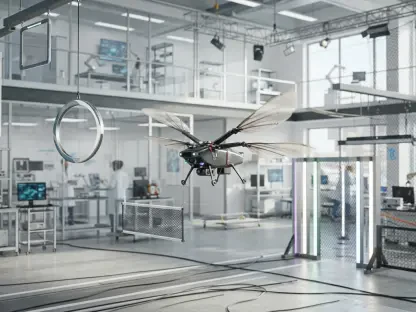

The seamless integration of sophisticated generative artificial intelligence into humanoid robotic hardware has fundamentally shifted the global economic landscape from basic automation toward true machine autonomy. Unlike the rigid machines of the previous decade that required pre-programmed paths and strictly controlled settings, modern systems utilize multimodal neural networks to interpret their surroundings in real time. This shift allows machines to navigate complex warehouses, assist in delicate surgical procedures, and even manage hospitality services with a level of nuance that was once considered exclusively human. As the gap between biological capability and silicon-based logic continues to narrow, industries are forced to re-evaluate the traditional hierarchy of the workforce. The question is no longer whether a robot can perform a specific task, but rather how its ability to process data at lightning speeds while maintaining physical stamina provides a competitive edge that human workers simply cannot match without technological augmentation.
The Dawn: General-Purpose Autonomy
Cognitive Flexibility through Foundation Models
The transition from specialized robotics to general-purpose agents has been accelerated by the deployment of foundation models specifically trained for physical interactions. These systems do not just follow commands; they understand the physical laws of their environment through synthetic data training and real-world reinforcement learning. For instance, a robotic arm equipped with an advanced visual-language model can identify an unfamiliar object, determine its fragility based on visual textures, and adjust its grip strength accordingly without human intervention. This level of cognitive flexibility allows for rapid deployment across diverse sectors, from high-tech manufacturing to artisanal food preparation. By utilizing self-correcting algorithms, these robots learn from their mistakes in a matter of seconds, whereas a human trainee might require days of repetitive practice. This rapid skill acquisition is fundamentally altering the return on investment for companies looking to scale operations without traditional logistical hurdles.
Mastery of Complex and Unstructured Environments
Modern robotics has moved past the era of fixed conveyor belts into the realm of unstructured environments where variables are constantly shifting. Using advanced lidar systems and spatial computing, robots now navigate crowded hospital corridors or cluttered construction sites with a degree of spatial awareness that rivals human peripheral vision. These machines are capable of predictive modeling, allowing them to anticipate the movements of people and other equipment to avoid collisions and optimize their paths for efficiency. This ability to operate safely alongside humans while performing high-precision tasks is a significant milestone in engineering. Furthermore, the use of edge computing ensures that these robots can process complex sensory data locally, reducing latency and allowing for instantaneous reactions to environmental hazards. This reliability ensures that production remains consistent regardless of the time of day or external conditions, making these machines indispensable in global logistics.
Strategic Integration: Future-Proofing Business Infrastructure
The shift toward a fully integrated robotic workforce required a fundamental transformation in how leadership approached technological investment and personnel development. It became clear that the organizations which thrived were those that did not just purchase hardware, but invested in the software infrastructure necessary to support continuous learning and adaptation. To remain competitive, it was vital for stakeholders to conduct comprehensive audits of their operational bottlenecks and identify specific areas where high-precision automation provided the most significant lift. Leaders also prioritized the establishment of ethical guidelines to ensure that the deployment of autonomous systems remained transparent and beneficial to the broader workforce. Looking ahead, the focus shifted toward modularity, allowing companies to upgrade robotic components and AI models without overhauling entire systems. This proactive stance ensured that businesses were not merely reacting to changes but were actively shaping the future of efficiency.