
The global technology landscape has transitioned from the initial frenzy of theoretical artificial intelligence capabilities to a period of unprecedented industrial execution and massive physical deployment. As we navigate the current environment, the excitement surrounding large language models has evolved into a disciplined focus on the tangible results of the immense capital expenditure boom initiated by the world’s largest technology conglomerates. This era is increasingly defined by a holistic approach to the modern data center, where the ultimate success of an investment is measured by how effectively it addresses both the physical and digital requirements of hyper-scale computing. From specialized power delivery systems and advanced liquid cooling to high-speed networking fabrics, the scope of market winners has expanded far beyond the companies that simply design the underlying silicon. Investors and industry analysts are now looking past the initial hardware surge to identify the firms providing the critical infrastructure that keeps these massive AI clusters operational and efficient. The narrative has shifted toward the sustainability of this spending and the specific companies that have successfully integrated themselves into the long-term supply chain of the global AI economy.
The Massive Scale: Why Hyperscaler Spending Defines the Market
Microsoft and Amazon have set a record-breaking pace for infrastructure investment, with their combined capital spending reaching hundreds of billions of dollars to support the burgeoning demand for cloud-based intelligence. Microsoft’s aggressive additions to its server capacity and Amazon’s massive backlog for its Web Services division demonstrate a shared institutional belief that the risk of under-investing in AI infrastructure far outweighs the potential cost of building too much capacity too soon. These organizations are not merely purchasing chips; they are redesigning the very architecture of their global networks to accommodate the unique workloads required by generative models. The sheer volume of these investments has created a rising tide for the entire semiconductor and hardware ecosystem, as these hyperscalers compete to secure the necessary components before their rivals. This competitive pressure ensures that the capital expenditure super-cycle remains robust, as neither company can afford to fall behind in the race for computational supremacy, leading to a steady stream of orders that provides significant revenue visibility for their primary equipment suppliers and service providers.
Alphabet and Meta are also pouring vast amounts of capital into their proprietary hardware and internal infrastructure to maintain their competitive advantages in search, social media, and advertising. While Alphabet focuses on scaling the Google Cloud Platform to meet the soaring demand from external enterprise clients, Meta is constructing some of the world’s largest and most efficient server farms to support its own internal AI research and consumer-facing features. This internal focus allows these companies to optimize their hardware specifically for their own algorithms, often leading to better performance and lower energy consumption compared to off-the-shelf solutions. The massive scale of these projects has transformed the industrial landscape, as these tech giants have effectively become their own utility providers and hardware designers. Their commitment to multi-year infrastructure projects provides a stabilizing force for the market, ensuring that even if consumer demand fluctuates, the underlying build-out of the AI-driven internet continues at a relentless pace. This strategic depth allows them to weather short-term market volatility while continuing to expand the physical footprint of the digital world.
Bridging the Gap: The Transition from Compute to High-Speed Networking
While processing power remains an essential component of the AI ecosystem, the primary industry bottleneck has shifted toward the networking infrastructure that connects thousands of individual chips into a unified, high-performance system. Nvidia and AMD continue to lead the market in terms of data center revenue, but their internal growth is increasingly driven by the sophisticated networking components that facilitate seamless communication within massive server clusters. As AI models grow in complexity, the ability to transfer data between GPUs at lightning speeds has become just as critical as the raw floating-point performance of the processors themselves. This shift has placed a premium on proprietary interconnect technologies and high-bandwidth memory, making the networking stack a central focus for engineers looking to maximize the efficiency of their hardware investments. Without these advanced connectivity solutions, even the fastest chips in the world would spend a significant portion of their time waiting for data to arrive, leading to wasted energy and diminished returns on billions of dollars of capital expenditure.
Broadcom and Arista Networks have emerged as the primary beneficiaries of this fundamental transition by providing the essential fabric of the modern, high-density data center. Broadcom’s success with custom application-specific integrated circuits and Arista’s leadership in high-speed Ethernet switching demonstrate that as AI clusters grow in size and scope, the ability to move data quickly and efficiently has become a massive value driver. These companies provide the switches, routers, and specialized controllers that act as the nervous system of the data center, ensuring that thousands of processors can work in perfect synchronization. Their dominance in this space is protected by high barriers to entry, including deep technical expertise and long-standing relationships with the major hyperscalers. As the industry moves toward even larger training clusters, the demand for their high-end networking hardware has surged, allowing them to capture a greater share of the overall AI budget. This trend highlights the growing realization that compute power is only one part of the equation, and that the “connective tissue” of the data center is where the next phase of performance gains will be found.
Growth Drivers: The Rise of Specialized AI Cloud Providers
A new class of AI-first cloud specialists, including firms like CoreWeave and Nebius, has successfully carved out a significant portion of the market by offering dedicated GPU clusters specifically optimized for large-scale training. These companies provide clear evidence of how massive capital spending converts into future revenue by utilizing large backlogs and long-term contracts to provide investors with high visibility into their growth trajectories. Unlike traditional cloud providers that offer a broad range of general-purpose services, these specialized firms focus almost exclusively on high-performance computing tasks, allowing them to offer superior performance for AI developers. This specialization has made them the preferred partners for startups and research labs that require immediate access to the latest hardware without the overhead of managing their own physical infrastructure. Their business models are built on the premise that speed-to-market is the most valuable commodity in the AI race, and by providing ready-to-use clusters, they have become an indispensable part of the development pipeline for the next generation of artificial intelligence applications.
The financial metrics for these specialized providers are increasingly defined by their remaining performance obligations and the significant volume of customer prepayments they receive. There is a substantial gap between their current operational capacity and the amount of power and space they have already contracted to their clients, indicating a multi-year pipeline of demand that is secured long before the physical infrastructure is even completed. This high level of contractual certainty allows these firms to secure favorable financing terms for their massive equipment purchases, creating a virtuous cycle of expansion. Investors have begun to favor these companies because their revenue models are more predictable than those of the broader software industry, as they are essentially selling a scarce physical resource. As they continue to secure more power and build more data centers, their influence over the AI supply chain is only expected to grow, making them a critical barometer for the health of the overall sector. Their ability to monetize their infrastructure so rapidly has set a new standard for capital efficiency in the tech industry, proving that specialized cloud services are a vital component of the modern compute economy.
Physical Support: Server Manufacturers and Optical Interconnects
Hardware manufacturers like Dell and Super Micro have transitioned into core AI infrastructure players by managing record-breaking order volumes for highly specialized and complex server systems. Despite the ongoing pressure that high component costs put on their profit margins, these companies have become essential links in the global supply chain for enterprises that are building their own private AI capabilities. They provide the integration services and customized chassis designs that allow businesses to deploy AI hardware in their own on-premise facilities or in colocation centers. The demand for these systems has remained resilient as more traditional industries, from finance to healthcare, begin to integrate large language models into their core operations. These manufacturers act as the bridge between the high-tech semiconductor companies and the broader corporate world, translating raw silicon into functional, rack-mounted solutions that can be easily managed by IT departments. Their role in the ecosystem is one of logistical and engineering excellence, ensuring that the massive influx of chips is actually deployed and utilized in a productive manner across various sectors of the economy.
The physical transmission of data via light has also become a critical priority for the industry, directly benefiting optical networking firms such as Lumentum and Coherent. As data centers scale to higher speeds and larger physical footprints, the demand for advanced optical modules and high-power lasers has surged because these components are vital for reducing the latency that can slow down large-scale AI training. Standard copper wiring is no longer sufficient for the massive bandwidth requirements of modern clusters, leading to a widespread transition toward fiber-optic interconnects within the data center itself. These optical components allow for faster data rates and lower power consumption over longer distances, which is essential for connecting the multiple rows of server racks that make up a modern AI facility. The technical requirements for these modules are incredibly demanding, creating a market where only a few specialized firms can compete effectively. As the industry moves toward 800G and 1.6T networking standards, the expertise of these optical networking companies has become a bottleneck of its own, making them some of the most consistent winners in the current infrastructure build-out.
Resource Demands: Overcoming Power and Cooling Limitations
The massive energy requirements of AI workloads have made electrical infrastructure companies some of the most consistent and reliable winners of the current industrial boom. Firms such as Eaton and GE Vernova are seeing their order backlogs double as they provide the transformers, switchgear, and complex grid connections necessary to power the next generation of high-density data centers. The sheer amount of electricity required to run thousands of high-end GPUs has put an enormous strain on local power grids, requiring a complete overhaul of how data centers are powered. These industrial firms are not just selling equipment; they are designing the power distribution systems that ensure these facilities remain operational 24/7 without causing blackouts or localized grid failures. The transition toward more sustainable and reliable energy sources has further increased the demand for their services, as tech companies seek to meet their carbon-neutral goals while simultaneously expanding their power-hungry infrastructure. This focus on the “heavy” side of the tech industry marks a significant shift in where the value is being created, as the availability of power has become the ultimate limiting factor for AI growth.
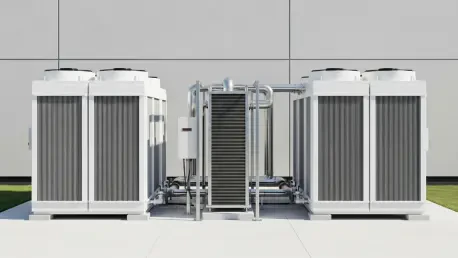
Simultaneously, the extreme heat generated by modern AI hardware has turned specialized cooling systems into a primary growth driver for industrial firms like Vertiv and Modine. The traditional method of using fans and ambient air to cool servers is no longer effective for the intense thermal loads produced by the latest generation of processors, making liquid cooling and advanced thermal management a necessity rather than an option. These companies provide the chillers, heat exchangers, and direct-to-chip liquid cooling systems that prevent the hardware from melting under the pressure of intense training sessions. The move toward liquid cooling has required a complete redesign of the data center floor, creating a massive opportunity for firms that can provide integrated thermal solutions. This shift has also improved the overall energy efficiency of these facilities, as liquid cooling is significantly more effective at removing heat than traditional air-based systems. As server densities continue to rise, the expertise of these cooling specialists has become indispensable, ensuring the operational integrity of the world’s most expensive hardware and further cementing their place as key winners in the infrastructure cycle.
Future Outlook: Navigating the Risks of a Capital-Intensive Cycle
Despite the record growth seen across the sector, the AI infrastructure industry faced potential challenges including the threat of overcapacity if consumer demand for services failed to match the current pace of construction. There was also a significant concentration risk, as many of the leading suppliers relied on a very small number of massive customers to sustain their revenue growth and justify their expansion plans. Investors focused on companies that successfully converted their massive backlogs into profitable revenue while effectively managing the rising costs of raw materials and skilled labor. The market matured into a disciplined evaluation of financial conversion, where margin stability and the ability to fulfill long-term contracts became the primary indicators of a true winner in the space. Analysts observed that the companies with the strongest balance sheets were those that had secured their supply chains and diversified their customer bases beyond the core hyperscalers. This period of intense activity taught the industry that physical constraints were just as important as software innovation, leading to a more balanced and sustainable approach to the future of technology investment.
To maintain a competitive edge in this evolving market, organizations focused on optimizing their existing infrastructure rather than simply adding more raw capacity. Leaders in the space prioritized the development of more efficient cooling technologies and modular data center designs that could be deployed rapidly in response to shifting regional demands. There was a clear move toward integrating renewable energy sources directly into data center sites to mitigate the risks associated with grid instability and rising electricity prices. Businesses also invested heavily in software-defined networking to maximize the utilization of their existing hardware, ensuring that every watt of power contributed to a meaningful computational output. These strategic adjustments allowed the industry to move past the initial build-out phase and into a more mature era of operational excellence. For those looking to navigate the next phase of this cycle, the focus remained on identifying the specific technologies that reduced the total cost of ownership for AI systems. By prioritizing efficiency and reliability over sheer scale, the winners of the next decade positioned themselves to thrive regardless of short-term fluctuations in market sentiment.