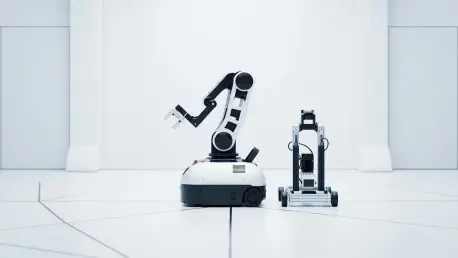

Logistics facilities across the globe are currently grappling with an increasingly fragmented operational landscape where standardized solutions often fail to meet the unique physical demands of specialized cargo. The rise of diverse shipping formats, ranging from specialized pharmaceutical containers to heavy industrial paper rolls, has forced facility managers to choose between expensive custom machinery or inefficient manual labor. MoviĜo Robotics has addressed this specific tension through the introduction of its Ŝharko5 Technology Platform, which represents a fundamental shift toward modularity in autonomous mobile robotics. By decoupling the core technological “brain” and drive system from the mechanical lifting components, this framework allows for a degree of versatility that was previously unattainable without massive capital investment. Such advancements suggest that the era of rigid, one-size-fits-all automation is finally ending in favor of systems that adapt to the facility rather than forcing the facility to adapt to the machine.
Adaptability Through Standardized Modular Engineering
The brilliance of this modular approach lies in the separation of the standardized front section from the highly specialized rear lifting unit. This configuration enables the Ŝharko5 platform to serve a wide array of sectors, including the automotive, food, and print industries, without requiring a complete redesign for every new application. For example, the Ŝharko5FP is engineered specifically for full Euro-pallets, while the Ŝharko5SP handles half-pallets with precision, and the Ŝharko5RT provides a robust solution for transporting heavy reels in high-volume print shops. By leveraging these distinct configurations, companies can deploy a fleet that shares a common technology base but excels at divergent tasks. This strategy significantly lowers the barrier to entry for automation because development costs are amortized across the standardized components. Furthermore, the ability to swap or upgrade modular units ensures that the robotics fleet remains functional as production requirements change from 2026 to 2028.
Integrated Intelligence: The Software and Partnership Synergy
Operational efficiency within this ecosystem was significantly bolstered by a sophisticated software suite that utilized vision technology to identify carrier types autonomously. This intelligence allowed the system to dispatch the most appropriate robot for a specific task within a unified digital map, streamlining complex warehouse traffic. The strategic partnership with HP Indigo further validated this approach, as the robotics were integrated into a global portfolio to simplify maintenance for the print industry. Decision-makers who aimed to future-proof their operations focused on these interoperable systems rather than isolated hardware. Moving forward, the successful implementation of such modular platforms required a thorough audit of existing carrier types to identify where automation could bridge gaps between disparate workflows. By prioritizing scalable frameworks, organizations avoided the pitfalls of vendor lock-in and maintained high agility in a volatile market. These steps ensured that logistics remained a competitive advantage rather than a bottleneck.