


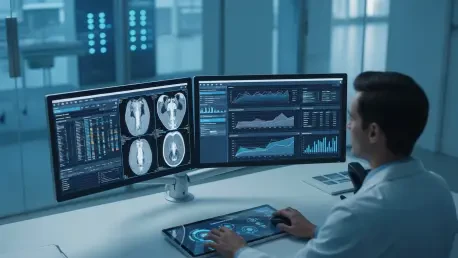

The modern radiology department stands at a unique and complex crossroads where the sheer volume of diagnostic data generated every second has finally surpassed the cognitive capacity of the human workforce to interpret it without substantial mechanical assistance. While regulatory bodies have cleared over a thousand AI-enabled devices for clinical use, the industry remains entangled in a persistent implementation gap where integration costs and outdated reimbursement structures continue to hinder the seamless adoption of these technologies. This bottleneck has created a landscape where promising algorithms are often isolated in pilot phases rather than being integrated into the core fabric of patient care. However, the paradigm is shifting from these isolated, passive diagnostic tools toward sophisticated agentic systems that promise to redefine the radiologist’s role. Instead of focusing on single findings, these systems manage the entire diagnostic journey, addressing the workforce shortage while simultaneously elevating the quality of clinical insights. This transition marks a departure from simple pixel analysis toward a holistic understanding of patient health, ensuring that the specialty remains the central nervous system of hospital operations.
The Evolution from Narrow Tools to Agentic Intelligence
The first era of radiology AI was defined primarily by narrow applications, where singular algorithms were meticulously designed to perform discrete, task-specific functions such as identifying an intracranial hemorrhage or flagging a suspicious pulmonary nodule. While these tools provided measurable value by acting as a digital second set of eyes, they remained fundamentally passive, requiring constant human intervention to be invoked and leaving the connective tissue of the diagnostic process entirely to the physician. Today, the field is moving rapidly toward multimodal foundation models that do not merely analyze static images but synthesize them with laboratory results, clinical notes, and historical protocol data to generate comprehensive draft reports. Recent studies indicate that these domain-specific generative models are nearing human-level performance, with high sensitivity for conditions like pneumothorax and a significant percentage of reports being accepted by clinicians without any modification, signaling a major leap in accuracy.
Building on this foundation, the rise of agentic AI represents a fundamental change in software capability that moves far beyond the limitations of traditional reporting tools. Unlike passive systems that wait for a prompt, agentic systems possess the inherent ability to reason across various inputs, sequence their own complex tasks, and coordinate actions across disparate hospital systems like the PACS, RIS, and EHR. An agentic system does not just find a nodule; it reviews the patient’s longitudinal history, drafts follow-up recommendations based on established guidelines, schedules the next necessary scan, and alerts the relevant multidisciplinary specialists automatically. This shift represents a transition from software that reacts to human commands to systems that proactively manage the clinical workflow, allowing radiologists to move away from administrative coordination and focus their expertise on high-level diagnostic decision-making and complex patient consultations that require deep medical nuance.
Infrastructure Orchestration and the Human Loop
As the proliferation of AI tools has accelerated, radiology departments have encountered the unintended consequence of integration fatigue, leading to a demand for streamlined management systems. Managing dozens of individual vendor relationships, each with separate security protocols and dashboards, became unsustainable for most hospital networks around the start of the current decade. In response, the market has pivoted toward orchestration platforms that act as a central radiology operating system, providing a single point of integration and governance for a curated marketplace of validated tools. This consolidation is often led by established imaging vendors who are incorporating autonomous AI directly into their existing ecosystems to create a unified workspace. By swallowing autonomous AI products and integrating them into the native PACS environment, these platforms ensure that the most effective tools are seamlessly deployed without adding layers of technical complexity for the end-user.
This sophisticated infrastructure is also fundamentally changing the nature of the human-machine loop, shifting the radiologist’s responsibility from a primary reader to an overseeing supervisor. In emerging human-on-the-loop and human-off-the-loop scenarios, AI systems can autonomously clear normal cases or prioritize worklists based on the urgency of findings, with the human physician only intervening when the system’s performance drifts or an anomaly is detected. This transition redefines the radiologist as an attending of the system, responsible for catching rare errors and handling the most complex cases while the routine, high-volume workload is automated with high sensitivity. However, this shift brings forward significant legal and ethical hurdles regarding liability, as current legal frameworks typically hold the human signatory responsible for every final report. Developing new standards for autonomous diagnostic oversight will be essential as these systems take on more independent roles.
Expanding the Strategic Reach of Radiology
As the routine aspects of image interpretation become increasingly automated, the strategic scope of the radiology specialty is expanding into more advanced clinical territories that were previously underserved. One of the most significant shifts is the rapid growth of theranostics, a field that merges diagnostic imaging with targeted molecular therapy to provide personalized treatment pathways for patients. For example, the use of PSMA-PET imaging is now routinely used to guide specific treatments for prostate cancer, placing the radiologist at the center of the therapeutic decision-making process. In this context, the specialist is no longer just identifying the presence of a disease but is actively involved in selecting and dosing therapeutic agents based on real-time imaging data. This transformation turns the imaging suite into a vital gateway for advanced treatments, ensuring that radiologists are perceived as active clinical partners rather than just providers of diagnostic information.
Furthermore, the implementation of AI is enabling the practice of opportunistic screening, which extracts valuable health data from routine scans that would otherwise go unnoticed by the human eye. A standard CT scan ordered to investigate abdominal pain can now be used to automatically identify biomarkers for conditions such as osteoporosis, sarcopenia, or cardiovascular risk without requiring additional radiation or patient visits. This turns every routine imaging procedure into a goldmine of data for population health management, allowing for the early detection of chronic diseases across large patient cohorts at no extra cost. By shifting the focus from reactive diagnostics to proactive preventative care, radiology is becoming a central hub for health maintenance within the hospital ecosystem. This transition ensures that the radiologist remains a vital node in modern medicine, providing insights that go far beyond the initial reason for the scan and adding long-term value.
Strategic Implementation and the Path Forward
The successful integration of agentic systems required a fundamental reassessment of how medical institutions approached the intersection of technology and human expertise. Organizations that thrived were those that moved beyond the simple purchase of software and instead focused on building robust governance frameworks to monitor algorithmic performance in real-time. This involved establishing clear protocols for when a system could operate autonomously and identifying the specific clinical thresholds that triggered human intervention. By prioritizing transparency and data integrity, these institutions managed to mitigate the risks associated with AI drift and maintained a high standard of patient safety. The focus shifted from proving that the technology worked to ensuring that it could be reliably scaled across diverse patient populations, which necessitated a move toward standardized data formats and interoperable systems that allowed for seamless communication between different medical departments.
Ultimately, the transition toward a more automated and strategic radiology model provided a viable solution to the global workforce crisis that threatened the stability of the medical field. By offloading routine interpretations to agentic systems, the profession successfully reclaimed the time necessary for deep clinical engagement and multidisciplinary collaboration. This shift empowered radiologists to take on more prominent roles in patient management and therapeutic strategy, reinforcing their position as indispensable leaders in the modern healthcare landscape. Moving forward, the industry must continue to advocate for reimbursement models that reward the quality of AI-driven insights rather than just the volume of studies performed. This evolution not only improved the daily work-life of the medical staff but also significantly enhanced the speed and accuracy of patient care, setting a new benchmark for how technology and human intelligence can work in harmony to solve the most pressing challenges in clinical practice.







