


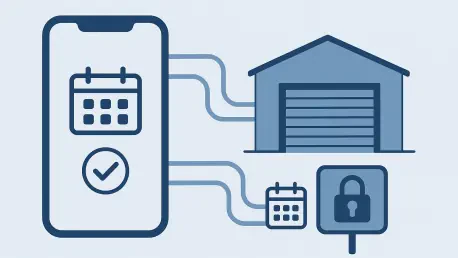

The self-storage industry is currently navigating a period of profound change as the gap between basic automation and cognitive artificial intelligence narrows. The transition from “answering” to “acting” represents the most significant advancement in storage technology, turning website widgets into active operational assets that update management systems. Operators no longer view digital assistants as mere novelties but as essential components of a modern facility’s workforce. In this landscape, the reliance on rigid, script-based chatbots has given way to sophisticated Large Language Models that understand human intent with remarkable precision. This evolution allows for a more fluid interaction where a prospective tenant’s nuanced needs are met with specific, actionable solutions. As these systems mature, the focus has shifted toward creating a seamless bridge between a customer’s initial inquiry and the final rental agreement. By automating the administrative middle ground, facilities are seeing reduced overhead and improved tenant satisfaction, setting a new standard for what it means to be a digitally native storage operation in the current year.
Mastering Customer Interaction: Specialized Teams and Omnichannel Flow
Deploying Modular Teams: Better Service Through Specialization
The most successful storage operations have moved away from using a single, general-purpose chatbot in favor of a modular team of specialized AI agents. This architecture functions like a digital front office where different agents are assigned to specific roles, such as lead generation, billing disputes, or technical support for gate access. By narrowing the focus of each agent, developers can ensure that the AI provides deep expertise rather than shallow, generic answers. For instance, a dedicated sales agent is trained specifically to handle unit sizing questions and promotional inquiries, while a billing specialist is focused entirely on payment processing and account balances. This specialization significantly reduces the likelihood of the AI hallucinating or providing irrelevant information, as each agent operates within a strictly defined knowledge base. Consequently, tenants receive accurate and professional guidance that feels less like a robotic script and more like a conversation with a trained facility manager who knows the business inside and out.
Furthermore, this modular approach allows for much higher accuracy in complex customer scenarios that previously required human intervention. When an agent is tasked with a specific vertical, it can be programmed with industry-specific logic that understands the nuances of self-storage, such as climate control requirements or insurance requirements. Instead of a customer being stuck in a loop of “I don’t understand,” the specialized agent can drill down into the user’s specific problem with relevant follow-up questions. If a tenant mentions they are moving across the country and need long-term vehicle storage, the AI recognizes the intent and provides details on prep-work and outdoor vs. indoor options. This level of sophistication transforms the user experience from a frustrating technical hurdle into a helpful service. As these modular systems continue to refine their internal logic, the efficiency gains for owners become undeniable, as the AI handles the majority of routine inquiries with a degree of precision that matches or exceeds human performance.
Omnichannel Experience: Maintaining Contextual Memory
Modern AI agents provide a unified experience across various communication channels, ensuring that a customer’s journey is never interrupted by a change in medium. In the past, a lead might have started a conversation on a website chat and then followed up via text message, only to find they had to repeat their entire story to a new system. Today’s sophisticated AI architectures maintain “contextual memory,” which acts as a persistent record of all interactions across web, SMS, and voice platforms. This means that if a potential customer asks about 10×10 unit pricing on a mobile site and then calls the office two days later, the AI-powered phone system already knows who they are and what they were looking for. This continuity builds a sense of trust and professionalism, as the facility appears to be fully aware of the tenant’s needs regardless of how they choose to communicate. It removes the friction that often kills a sale, allowing for a smooth progression from an initial “just looking” phase to a confirmed reservation.
Maintaining this level of conversation continuity is essential for capturing leads that would otherwise drop off due to administrative delays. When an AI agent can bridge the gap between a late-night web inquiry and a morning follow-up text, it creates a 24/7 sales cycle that does not require human staffing. The unified platform ensures that every touchpoint is an opportunity to move the customer closer to a rental agreement rather than a repetitive chore of data re-entry. Moreover, this omnichannel approach allows the facility to meet the customer where they are most comfortable, whether that is a quick text during a lunch break or a detailed web search in the evening. By providing a consistent and informed voice across all these channels, storage operators can drastically improve their conversion rates and provide a high-end service feel that was previously reserved for luxury brands. This technical foundation is what enables a small facility to compete with national REITs by offering a responsive, intelligent presence that never misses a beat or forgets a detail.
Building a Solid Technical Foundation: Integration and Growth
Technical Integration: Connecting AI to Live Data
For an AI agent to move beyond a simple conversational tool, it must be deeply integrated with the facility’s property management software through robust API connections. This “plumbing” is the critical infrastructure that allows the AI to access real-time unit availability, current street rates, and tenant account statuses. Without this live link, an AI assistant is essentially a glorified FAQ page, unable to provide the specific information a customer needs to make a purchasing decision. True operational efficiency is achieved when the AI can both read data from the management system and “write back” to it, such as creating a new lead profile or updating a tenant’s contact information. This bi-directional communication ensures that the data seen by the manager in the office is the exact same data being used by the AI on the website. By automating these data entry tasks, the AI reduces the manual workload for human staff, allowing them to focus on high-value activities like facility maintenance or personalized customer service.
Furthermore, the ability of AI agents to execute transactions rather than just provide information marks a turning point for storage operations. An integrated system can allow a customer to select a unit, apply a move-in discount, and sign a digital lease all within a single interaction. This level of autonomy requires the AI to understand complex business rules, such as when to offer a “first month free” promotion versus a standard rate. When the system is correctly connected to the facility’s live data, it can make these decisions on the fly, ensuring that the facility is always maximizing its revenue and occupancy. This integration also extends to security systems, where an AI might help a tenant troubleshoot a gate code or verify their access hours without needing a manager to pick up the phone. The result is a highly responsive ecosystem where technology serves as the primary engine for both sales and operations, creating a more agile and profitable business model that thrives on data accuracy and speed.
Operational Efficiency: Realizing Value Through Data Flow
The self-storage industry has reached a stage where the implementation of AI is no longer a luxury but a fundamental requirement for maintaining market share and operational health. Lessons learned from the multi-family housing sector show that early adopters of these automated systems quickly outpace their competitors by capturing a higher percentage of off-hours leads and reducing turnover. Currently, there is a visible divergence in the market, as larger portfolios leverage AI to scale their operations without a proportional increase in headcount. Smaller operators who adopt these tools now can close this gap, gaining a significant edge in efficiency before these technologies become the universal industry standard. The focus must be on creating a data-driven environment where every interaction is tracked and used to refine the sales process. This approach ensures that the facility is not just reacting to the market but actively shaping its growth through intelligent automation and superior customer engagement.
In conclusion, the evolution of AI agents has successfully moved the needle from simple automated replies to full-scale operational autonomy. The self-storage sector benefited greatly from these advancements as they reduced the administrative burden on human employees while providing a more consistent experience for tenants. Strategic decision-makers realized that the true value of AI lay in its ability to integrate with live property management systems and maintain context across multiple communication channels. This shift allowed facilities to handle a higher volume of inquiries with greater precision, ensuring that no lead was lost to a lack of response or a fragmented customer journey. By focusing on specialized agent roles and seamless data flow, operators established a robust foundation for long-term growth. Ultimately, the industry embraced these tools as permanent fixtures of the modern storage landscape, confirming that the path to profitability was paved with intelligent, integrated automation that prioritized the tenant experience above all else.







