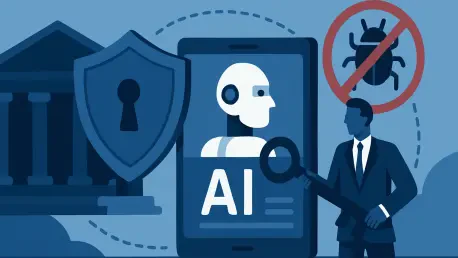

Applying Zero Trust principles to non-human entities ensures that every AI agent operates under the rule of least privilege while maintaining a clear digital identity. This development arrives as the public sector undergoes a dramatic transformation, shifting from the use of simple informational chatbots to the deployment of sophisticated, autonomous AI agents. These modern systems are no longer confined to answering basic questions; they are increasingly integrated into deep backend environments where they can retrieve, update, and manage sensitive citizen records. However, this increased capability introduces a significant surface area for cyberattacks, as the line between a helpful automated assistant and a potential entry point for data exfiltration becomes dangerously blurred. Consequently, government leaders are tasked with a complex challenge: embracing machine learning while establishing a security framework robust enough to protect national interests and the personal privacy of millions.
Implementing Technical Guardrails and Interaction Monitoring
Input Inspection: Filtering Malicious Request Patterns
To mitigate the risks associated with autonomous systems, agencies must move away from allowing users to communicate directly with large language models without oversight. Instead, the deployment of specialized security layers like FortiAIGate acts as a critical intermediary to inspect every input for malicious patterns or known injection techniques. By filtering requests before they reach the model, governments can prevent attackers from exploiting the AI’s logic to gain unauthorized access to internal systems. This proactive approach identifies prompt injection attempts where specifically crafted language is used to bypass internal constraints. For instance, a user might pose as an administrator to trick an agent into divulging encryption keys or providing unauthorized access to secure file directories. These attacks are constantly evolving, requiring a defensive layer that can recognize the underlying intent of a prompt, ensuring the model never processes a command that violates core safety protocols.
Logic Verification: Preventing Intentional Safety Bypasses
Beyond the direct manipulation of language, the risk of abusive requests poses a significant danger to the integrity of public databases. When an AI agent is given the autonomy to modify records, it becomes a high-value target for those looking to disrupt government operations or commit large-scale identity theft. Without rigorous monitoring, an automated system might fulfill a request that appears legitimate on the surface but is actually part of a broader scheme to exfiltrate bulk datasets. This is particularly concerning in sectors like healthcare or finance, where the data stored is not only sensitive but also subject to strict legal protections. If an autonomous agent fails to verify the true identity and authority of the requester before processing a command, it could inadvertently become the primary tool for a massive data breach. Protecting these systems requires a fundamental understanding that an AI agent, while powerful, is ultimately a vulnerability if its connection to the backend is not strictly controlled.
Output Sanitization: Monitoring Responses for Sensitive Data
Output sanitization is equally critical, as it ensures that the responses generated by the AI do not inadvertently leak sensitive information or violate privacy standards. A robust security layer scrutinizes the model’s output in real time, flagging or blocking any content that includes restricted identifiers, personal health information, or confidential financial data. This process is supported by comprehensive audit logs, which allow security teams to review blocked attempts and understand the intent of malicious users. By analyzing these logs, agencies can continuously refine the system’s defensive parameters to stay ahead of emerging threats. Furthermore, the ability to monitor the conversation flow prevents the AI from being manipulated into revealing its own training data or internal logic. Maintaining this level of visibility into the interaction loop is the only way to ensure that autonomous services remain helpful without becoming liabilities, creating a safe environment where AI can perform tasks.
Proactive Defense: Using AI for Real-Time Threat Detection
Beyond mere filtering, AI-driven systems excel at establishing baselines for normal network traffic, allowing them to flag anomalies as potential breaches in real time. These tools can automatically quarantine compromised devices, preventing attackers from moving laterally through a government network and containing damage before it spreads. For example, if a workstation that typically handles low volumes of data suddenly attempts a massive upload to an external server, the AI can immediately identify this behavior as an outlier. This level of automated responsiveness is essential in 2026, as the speed of modern cyberattacks far exceeds the reaction time of human security teams. By integrating machine learning into the very fabric of network security, agencies can detect the subtle signals of an intrusion that would otherwise go unnoticed. This constant monitoring ensures that even the most sophisticated, multi-vector attacks are met with an immediate defense, preserving the integrity of infrastructure.
Establishing Zero Trust and Data Sovereignty
Identity Management: Assigning Non-Human Identities
As AI agents take on more responsibilities, they must be managed under a Zero Trust architecture where every non-human entity is treated with the same scrutiny as a human employee. This involves assigning each agent a specific digital identity and adhering to the principle of least privilege, ensuring that an agent designed for tax assistance has no technical pathway to access medical records. By strictly defining the scope of what an agent can and cannot do, organizations can minimize the potential blast radius of a compromised system. Furthermore, every agent must have a designated human owner who is accountable for its governance and lifecycle. This ownership ensures that there is a clear line of responsibility for the agent’s actions and that its permissions are reviewed regularly. When an agent is no longer needed, its access must be instantly revoked to prevent it from becoming a dormant vulnerability. This structured approach to identity management is vital for maintaining control over the entire automated ecosystem.
Access Control: Applying the Principle of Least Privilege
Implementing continuous authentication for these agents is another cornerstone of a modern security strategy, as it prevents the misuse of autonomous tools by unauthorized internal or external actors. Just as a human user must verify their credentials to access sensitive systems, an AI agent must prove its identity before it is allowed to interact with backend databases. This process often involves the use of secure tokens and cryptographic keys that are unique to each specific task the agent performs. By monitoring the behavior of these agents in real time, security teams can detect if an identity has been hijacked or if the agent has begun to deviate from its programmed tasks. If an anomaly is detected, the system can automatically suspend the agent’s credentials until a human administrator can investigate the situation. This layer of protection ensures that even if an attacker manages to bypass the initial perimeter, they cannot easily manipulate the autonomous services that reside within the inner network.
Data Sovereignty: Managing Cloud-Based AI Environments
Data sovereignty remains a significant concern for governments utilizing managed cloud services to scale their AI capabilities across various departments and local offices. To protect sensitive information in external environments, agencies should employ data masking techniques to obscure personal identifiers before they are processed by third-party models. This ensures that the actual data leaving the secure government environment is useless to unauthorized parties, even if the service provider’s infrastructure is compromised. Centralized AI observability is also necessary to prevent the rise of “shadow AI,” where employees might use unauthorized tools that do not comply with established safety standards. By maintaining a comprehensive view of all AI services in use, security teams can ensure that every application adheres to jurisdictional regulations and internal data policies. This centralized oversight is the only way to maintain a consistent security posture in a world where AI deployment is becoming increasingly decentralized.
System Observability: Eliminating Shadow AI Operations
Moreover, the geographic location of data processing has become a focal point for regulatory compliance and national security, particularly when dealing with international vendors. Governments must verify that their data is processed in jurisdictions that offer legal protections equivalent to their own, avoiding the risk of foreign surveillance or legal seizure. This challenge is magnified by the high cost of running proprietary models internally, which often forces agencies to choose between economic efficiency and absolute control. To bridge this gap, a hybrid approach is often utilized, where the most sensitive processing occurs on-premises while less critical tasks are offloaded to secure cloud environments. Establishing clear contractual requirements regarding data handling and deletion is essential for holding vendors accountable. By combining technical safeguards with rigorous legal governance, the public sector can safely leverage the power of the cloud without sacrificing the sovereignty of the citizens’ private information.
Strategic Frameworks for Long-Term Resilience
The successful integration of autonomous services into government operations required a paradigm shift that balanced innovation with uncompromising security standards. Public sector leaders discovered that treating AI agents as distinct digital identities was the most effective way to prevent unauthorized access to sensitive records. By implementing specialized guardrails and real-time output sanitization, agencies successfully mitigated the risks of prompt injection and accidental data leakage. Furthermore, the adoption of AI-driven defensive tools allowed for the rapid detection and isolation of network anomalies, ensuring that infrastructure remained resilient against sophisticated attacks. This journey demonstrated that human oversight and the principle of least privilege were not obstacles to efficiency but rather the foundations upon which a trustworthy digital government was built. Ultimately, the transition to autonomous AI was secured through a combination of technical excellence, global intelligence sharing, and a steadfast commitment to protecting the privacy of the public.