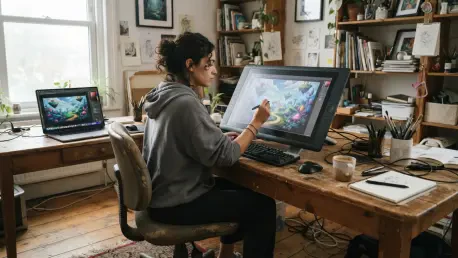

The integration of Generative Erase in Paint and other AI features allows artists to maintain aesthetic consistency while cleaning up complex backgrounds in their digital frames. The “Ode to the Ordinary” campaign, a collaboration between Lenovo and SuperHeroes, uses these capabilities to turn mundane objects into the center of a grand narrative. By focusing on items that usually fade into the background, the project highlights the invisible architecture of daily life. This initiative, part of the “Made with Lenovo Yoga” platform, addresses the complex intersection of high-tech generative tools and human-led creative vision. It challenges viewers to imagine a world where the most basic conveniences, like door handles or chairs, simply cease to exist. Through this lens, the campaign explores how artificial intelligence can amplify human storytelling rather than replace it. This creative effort underscores a shift in digital artistry where technology serves as a bridge between physical and surreal objects.
Creative Philosophy and Vision
Visualizing the Absence of Essentials
The narrative follows a protagonist named Bella as she navigates a whimsical environment where basic conveniences no longer exist. Each chapter, directed by a different global artist, utilizes a bold Y2K aesthetic to explore the absurdity of life without stairs, cups, or handles. These segments turn simple tasks into extreme physical challenges, such as climbing through windows or drinking from hats, forcing the audience to recognize the invisible infrastructure that makes modern living possible. The visual style, characterized by saturated colors and nostalgic fashion, grounds the surreal scenarios in a recognizable digital culture. This choice ensures the campaign resonates with a demographic that values both nostalgia and futuristic innovation, creating a cohesive visual language across various international contributions. By removing these objects, the artists highlight their immense utility through the chaos that their absence creates, offering a poignant look at modern life.
Bridging the Gap With Gen Z
To address skepticism regarding AI’s role in art, Lenovo paired each musical episode with a documentary-style “How-I-Made-It” segment. These films provide a transparent look at the creative process, distinguishing between human-led tasks—like songwriting and directorial choices—and AI-assisted tasks. This strategy rebrands AI as a sophisticated tool for the artist rather than a replacement for human skill, aiming to win over young creators who value authentic craftsmanship. These documentaries reveal that the artists spent significant time refining prompts, selecting specific visual outputs, and hand-painting details to achieve the desired look. This clarifies that the creative process is not a simple one-click generation but a rigorous cycle of iteration and refinement. By demystifying the technology, the campaign fosters a sense of trust with an audience that prizes authenticity. It positions the machine as a collaborator that handles repetitive tasks while leaving the heavy lifting to the creator.
Technological Foundations of Modern Art
Integrating Advanced AI Tools
The campaign serves as a high-level demonstration of the Lenovo Yoga 9i 2-in-1 Aura Edition and its ability to handle intensive AI workflows. Artists are shown using features like the Yoga Pen Gen 2 and Canvas Mode to refine storyboards and visuals created with software such as Runway, Luma, and Suno. By utilizing a unified character sheet for the protagonist, the team maintained visual consistency across different platforms, proving that high-performance hardware is essential for professional generative art production. This hardware-software synergy allows for a fluid creative process where the digital tools respond instantaneously to the artist’s input. The production of the musical required the simultaneous use of several resource-intensive generative platforms, which necessitate substantial neural processing power. By grounding the campaign in the practical use of these tools, the project demonstrates that high-end hardware is a fundamental necessity for professional creators today.
Facilitating Seamless International Collaboration
AI technology enabled a diverse group of artists from four different continents to collaborate on a single, cohesive film that would have been logistically impossible in the past. This evolution illustrated how AI acted as a bridge, connecting global voices to produce high-fidelity cultural artifacts that explored the human experience. To continue this momentum, creators should prioritize the use of unified character sheets and shared digital asset libraries to maintain narrative continuity in decentralized projects. The initiative suggested that future developments in the industry would likely focus on real-time cross-border collaboration platforms that integrate local neural processing with cloud-based sharing. By utilizing these emerging ecosystems, artists could bypass traditional production bottlenecks and focus more on the conceptual and emotional aspects of their work. Ultimately, the project provided a clear roadmap for organizations to implement technology as an ethical enabler for creativity.