
A three-tiered access model allows users to switch between simple status monitoring and full-screen intervention when an agent requires manual help. This structural innovation marks a significant departure from the early days of generative AI, where every interaction felt like a fleeting conversation with a stranger that forgot everything the moment the window was closed. By 2026, the industry has recognized that the true power of artificial intelligence lies not in its ability to generate text in a vacuum, but in its capacity to function as a persistent digital entity. The design philosophy behind Grok Bot addresses the fragmentation of the user experience by moving away from ephemeral chat logs and toward a paradigm characterized by collaboration with agents that possess distinct identities and long-term memory. Instead of forcing users to navigate complex technical jargon such as context windows, system prompts, or token limits, the interaction has been distilled into five core primitives: bots, chats, prompts, tools, and artifacts. This radical simplification allows the technology to recede into the background, enabling users to treat the AI as a reliable partner capable of holding responsibility over long periods, rather than a reactive tool that requires constant re-instruction for every new task.
Transitioning from Temporary Chats to a Permanent Bot Roster
The most visible change in this new paradigm is the wholesale replacement of the traditional chat history sidebar with a dedicated “Bot Roster.” In standard AI interfaces of the past, conversations were treated as disposable items, chronologically ordered and eventually archived or deleted as they aged, which fundamentally hindered the development of a long-term working relationship between the human and the machine. By organizing the entire interface around the identity of the bot rather than the date of the conversation, the system creates a sense of continuity where the agent remembers past work and maintains a persistent state across different sessions. This roster acts more like a contact list for colleagues than a history of web searches, allowing a user to see at a glance which specialists they have deployed for various projects. The shift from a “search-and-forget” mentality to a “roster-based” management system signifies a move toward sophisticated delegation, where the user curates a team of experts tailored to specific professional or personal needs.
By giving each bot a unique name, a customizable avatar, and its own dedicated memory silo, the interface effectively mirrors the experience of working with a human colleague in a modern digital workspace. When a user returns to a specific bot, such as a specialized legal researcher or a technical documentation assistant, they are not just opening a static transcript; they are re-engaging with a living entity that understands its ongoing role and prior contributions. This structural change encourages users to view AI as a stable, evolving assistant that grows more effective as it accumulates history and context within its specific domain. Rather than wasting time re-establishing the ground rules for every new query, the persistent agent carries forward the preferences, style guides, and project requirements established in previous interactions. This cumulative intelligence transforms the AI from a generalist that knows a little bit about everything into a specialized veteran of the user’s specific workflows, significantly reducing the cognitive load required to initiate complex tasks.
Visual Presence: The Functional Role of Avatars
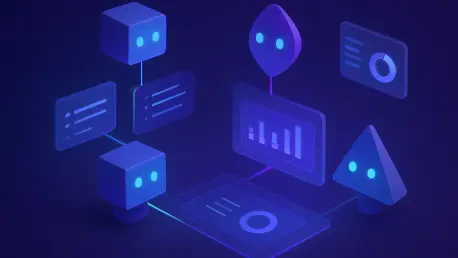
Visual identity plays a crucial role in establishing trust and immediate recognition between humans and autonomous agents in a crowded digital environment. The design of Grok Bot utilizes a sophisticated “shape-and-eye” system to create distinct personalities while maintaining a consistent aesthetic across the entire software ecosystem. These avatars are not merely decorative flourishes or whimsical icons; they serve as a vital peripheral shorthand that allows users to identify which assistant they are working with at a single glance. In an environment where dozens of agents might be operating simultaneously, this visual distinction eliminates the need for the user to constantly read labels, headers, or metadata to verify they are in the correct context. This approach leverages human pattern recognition to streamline the management of multiple AI personalities, ensuring that the interaction feels more natural and less like managing a database of text files.
Beyond simple identification, these dynamic avatars serve as real-time state indicators that communicate exactly what the bot is doing at any given second. Through subtle, non-distracting animations, an avatar can signal if a bot is currently processing data, actively browsing the web, waiting for user input, or encountering a technical roadblock that requires human attention. This solution effectively addresses the “black box” issue that plagued earlier AI models, where users were frequently left wondering if an AI had stalled or was still working on a complex request. By providing visual reassurance and transparency, the system keeps the user informed without cluttering the screen with technical status bars, progress logs, or distracting terminal outputs. This level of environmental feedback creates a more harmonious workspace where the user can monitor the progress of several autonomous tasks simultaneously without feeling overwhelmed by an influx of raw data.
Creating Autonomous Workspaces: Virtual Runtimes for Agents
A groundbreaking feature of this technological evolution is the implementation of a dedicated virtual computer for every agent within the system. By providing each bot with its own isolated runtime environment, the architecture reinforces a clear technical and psychological boundary between the user’s primary workspace and the agent’s specialized workspace. This separation is critical for fostering a mindset of true delegation, where the user treats the bot as an independent worker capable of operating its own software, browsing the internet, and managing internal files autonomously. Instead of the AI merely suggesting code or describing how to perform a task, the agent now possesses the “hands” required to execute those tasks within its own sandbox. This autonomy allows the agent to handle complex, multi-step processes like software testing or data synthesis without tethering the user’s local machine to the process, effectively multiplying the user’s productivity through background execution.
To manage this high level of autonomy, the interface offers a refined three-tiered access model that perfectly balances administrative oversight with operational efficiency. Users have the flexibility to view a simple status icon for a quick check-in on progress, open a side preview panel to watch the bot work in real-time within its virtual environment, or enter a full-screen “takeover” mode if the agent requires specific manual intervention or fine-tuning. This tiered design ensures that the user remains the ultimate authority in the system without feeling the need to micromanage every granular step of the agent’s internal logic or file manipulation. By allowing the agent to “own” its workspace while providing the user with a transparent window into that space, the platform creates a professional environment rooted in accountability. This structure enables the completion of long-running tasks that would be impossible in a traditional chat-based interface, as the agent continues to inhabit its virtual machine until the objective is reached.
Structured Output: The Rise of the Heterogeneous Transcript
The method by which information is delivered to the user is also undergoing a radical transformation, moving away from long, cumbersome blocks of prose toward highly structured and interactive digital elements. In the Grok Bot ecosystem, instead of merely describing a dataset or a project timeline in a series of paragraphs, the bot can present “inline cards” or functional widgets, such as interactive task boards, live weather displays, or dynamic code execution blocks. This transforms the traditional chat transcript into a multifaceted, dynamic workspace where conversation, system-level events, and digital artifacts coexist within a single, organized timeline. This shift acknowledges that text is often the least efficient way to communicate complex status updates or structured data, preferring instead to use the right visual tool for the specific type of information being shared.
This “heterogeneous transcript” serves as a transparent and permanent audit trail for all of the agent’s autonomous actions, providing a level of clarity previously unseen in AI interactions. When a bot completes a background task, interacts with a different specialized agent, or modifies a file, these events are recorded as distinct, interactive objects within the historical record of the session. This level of organization ensures that the AI is not just viewed as a conversationalist but as a highly functional tool capable of producing durable outputs—such as compiled code, formatted documents, or architectural diagrams—that exist independently of the chat history itself. Users can interact with these artifacts directly, dragging them into other applications or saving them to a permanent library, which reinforces the idea that the AI’s primary value lies in its tangible work product rather than its conversational flair.
Coordination: Role-Based Intelligence and Hierarchies
As a user’s collection of specialized bots expands to cover various aspects of their professional life, the system must address the growing challenge of multi-agent coordination. Rather than forcing the human to act as a manual dispatcher for every individual task, the framework allows for the creation of “Chief of Staff” bots that can intelligently manage and route work to other specialist agents in the roster. This hierarchical structure enables the execution of incredibly complex workflows where different agents, such as a specialized legal expert, a technical writer, and a data analyst, can all collaborate on a single unified project under a centralized directive. This mirrors the organizational structure of a high-functioning corporation, where a project lead synthesizes the contributions of various experts to achieve a broad strategic goal, all while the user remains at the top of the decision-making pyramid.
To maintain a high degree of precision in these collaborative efforts, the system makes a clear distinction between shared platform capabilities and localized agent context. While universal tools like high-speed web searching or advanced mathematical processing are available to all bots in the ecosystem, specific memories, specialized routines, and confidential project data are strictly bound to the individual agents to which they were assigned. This ensures that a specialized bot remains laser-focused on its particular professional role without being distracted or confused by irrelevant information from unrelated tasks, mimicking a professional human environment where experts bring their unique, siloed backgrounds to a collaborative meeting. By preventing the “cross-contamination” of data, the system maintains the integrity and reliability of each agent’s output, ensuring that the technical writer doesn’t start applying the logic of the legal researcher to a user manual.
Proactive Routines: Moving Beyond Reactive Prompts
The traditional model of artificial intelligence was fundamentally reactive, essentially sitting idle and consuming no resources until a user provided a specific text prompt to trigger a response. Grok Bot fundamentally changes this dynamic by introducing the concept of “Routines,” which allow agents to act independently based on pre-defined schedules or specific external triggers from the digital world. An agent might be tasked with monitoring global industry news, analyzing stock market fluctuations, or preparing a comprehensive morning briefing while the user is still asleep, shifting the primary value of the AI from the sheer speed of its response to the reliable performance of ongoing, unattended labor. This proactivity allows the AI to become a truly useful assistant that anticipates needs rather than just reacting to commands, providing a continuous stream of value that persists even when the user is offline.
This transition fundamentally alters the primary purpose of the chat interface, which now serves as a central hub to review and approve work that has already been completed in the background. When a bot initiates a conversation to report its findings or present a finished report, the AI evolves from a tool that the user must actively “use” into a coworker that actively “works” on their behalf. This proactive approach maximizes the return on investment for the user, as the agent provides continuous utility without requiring constant, manual input or repetitive prompting to stay on task. The relationship shifts from a series of “one-off” questions to a continuous cycle of delegation and reporting, which is far more representative of how high-level professionals interact with their support staff in the physical world.
The Future of AI Interaction: The Disappearing Interface
As the underlying AI models become increasingly sophisticated and reliable, the overarching design trend is moving toward what experts call “the disappearing interface.” By aggressively removing unnecessary window controls, complex configuration panels, and redundant menu systems, the designers of persistent agent frameworks aim to significantly lower the cognitive load placed on the human user. The ultimate goal is to create a digital environment so intuitive and seamless that the interface itself becomes secondary to the evolving relationship between the human and the agent. This minimalist approach focuses on the work being produced rather than the buttons required to produce it, allowing for a more immersive and productive experience where the technology feels like a natural extension of the user’s own capabilities.
Ultimately, the philosophy behind this monumental shift is that a truly intelligent system should ask less of the user, not more, as it matures over time. As agents become more capable of navigating complex tasks, making independent decisions within their runtimes, and coordinating with one another, the human role naturally shifts from a granular operator to a high-level supervisor. The interface of the future is not about managing software or learning complex prompt engineering; it is about facilitating a high-level relationship based on delegation, deep trust, and the successful completion of long-term strategic goals. Stakeholders began to prioritize the development of agents that could handle the “heavy lifting” of digital life, allowing humans to focus on creative direction and final decision-making. This transition was marked by a move toward decentralized agentic workflows that proved far more efficient than the centralized, chat-heavy models of the previous decade. Working with persistent agents became the standard for professional productivity, effectively ending the era of the disposable AI session.