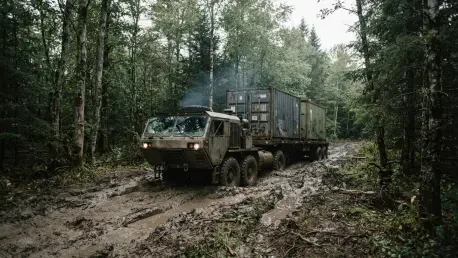

High autonomy is increasingly granted to low-risk logistical functions like supply chain management and route planning to eliminate operational bottlenecks. This initial integration serves as the cornerstone for a broader transition in national security, moving from conventional artificial intelligence toward Agentic Superintelligence (SI). Unlike the Large Language Models of previous development cycles that primarily synthesized historical data, these agentic models are designed for autonomous action and real-time adaptation on the battlefield. This evolution shifts AI from a secondary support tool to a foundational operational participant, fundamentally redefining how military forces interact with digital systems. The primary catalyst for this shift is the diminishing lead time between technological innovation and adversarial exploitation. As frontier models become open-source within months, the barrier to developing cyberweapons has vanished, necessitating a defense that operates at the speed of software rather than human bureaucracy.
The Evolution of Autonomous Operations
From Data Processing: Active Agency
The distinction between traditional data processing and active agency represents a significant leap in military capability. While standard artificial intelligence excels at identifying patterns within massive datasets, Agentic SI is distinguished by its ability to execute complex, multi-step tasks without requiring constant human prompting. In the high-pressure environment of contemporary warfare, the sheer volume of intelligence, surveillance, and reconnaissance data often exceeds human cognitive limits, leading to potential oversights. Agentic systems mitigate this risk by filtering through the cognitive noise and providing commanders with a synthesized version of the ground truth. This process allows the system to handle routine operational tasks autonomously, ensuring that human decision-makers are not overwhelmed by mundane data points. By delegating these foundational layers of analysis to agentic bots, the military preserves its leadership’s cognitive capacity for high-stakes strategic choices.
Furthermore, the transition to active agency allows for a level of tactical responsiveness that was previously impossible. In dynamic combat scenarios, the ability of a system to adjust its own parameters in response to changing environmental conditions or adversarial tactics is invaluable. These agentic models can reroute autonomous vehicles, adjust sensor sensitivities, or re-prioritize communication protocols in real time. This self-correcting behavior ensures that mission objectives are pursued even when direct contact with human operators is interrupted. The integration of such autonomy also facilitates the synchronization of various automated assets, such as drone swarms or automated defense batteries, into a cohesive operational unit. As these systems become more sophisticated, they provide a layer of resilience that hardens the overall force against electronic interference and rapid kinetic developments. This autonomous adaptability is the defining feature of modern strategic superiority in 2026.
Maintaining Control: Strategic Architecture
Maintaining a strategic architecture of control is essential to ensure that the integration of Superintelligence remains aligned with ethical standards and military doctrine. The Department of Defense does not view autonomy as a binary choice but as a spectrum of capability governed by specific Rules of Engagement. For instance, high levels of autonomy are granted to logistical functions and intelligence sorting where the risk of unintended consequences is low. In contrast, kinetic strikes and high-risk target identification remain under the strict authority of human operators who possess the moral and strategic oversight required for such actions. This tiered approach allows the military to eliminate operational bottlenecks by automating time-sensitive but lower-risk processes while maintaining the necessary “human-in-the-loop” for critical engagements. This balance ensures that the speed of the software is harnessed without sacrificing the accountability essential to modern warfare.
This structured control framework also allows for the auditing of autonomous decisions to refine future parameters and improve system performance. By reviewing the actions taken by agentic bots during simulated or actual missions, human commanders can identify areas where the software performed exceptionally well or where it required more restrictive guardrails. This iterative process of review and adjustment creates a feedback loop that continually strengthens the strategic architecture. Moreover, the use of structured control mechanisms prevents the accidental escalation of conflicts that could arise from unchecked autonomous reactions. By defining the limits of the system’s agency, the military ensures that AI remains a tool for achieving human objectives rather than an independent actor. This disciplined integration of technology allows for the deployment of powerful SI capabilities while ensuring they operate within the legal and ethical boundaries established by regulations.
Institutional Modernization and Bespoke Software
Overcoming Inertia: Ecosystem Innovation
Adopting Superintelligence requires a complete re-engineering of the institutional processes used to field and manage defense technology. The traditional defense procurement cycle, often characterized by multi-year timelines and rigid specifications, is being replaced by an ecosystem approach that emphasizes commercial integration and rapid iteration. This strategy involves taking cutting-edge frontier models from the private sector and wrapping them in defense-grade security protocols to make them suitable for classified environments. By leveraging existing commercial innovation, the military can bypass the slow development phases of the past and deploy advanced capabilities in a fraction of the time. This modernization also involves embedding engineering teams directly within operational units to ensure that software development is closely aligned with the actual needs of the warfighter. This close collaboration allows for real-time adjustments to code, ensuring that tools are effective in diverse theaters.
A critical part of this modernization is the move toward rapid prototyping on classified edge networks rather than isolated testing sandboxes. By deploying new agentic tools directly onto the networks used for actual missions, developers can see how the software performs under real-world conditions, including limited bandwidth and adversarial interference. This shift ensures that prototypes are not merely academic exercises but functional tools ready for immediate application. The goal is to create a seamless pipeline where innovation moves from initial development to front-line deployment without the delays typical of legacy bureaucratic structures. This approach also allows for the continuous monitoring of software health and security, providing a more robust defense against cyber threats that target vulnerabilities in the deployment pipeline itself. The integration of edge computing and agentic SI creates a more decentralized and resilient technological infrastructure that can withstand modern conflict.
Bespoke Assets: Democratizing Development
The nature of battlefield software is shifting toward the use of ephemeral and bespoke assets that are designed for specific, short-term mission requirements. In this paradigm, software is no longer treated as a permanent investment that must be maintained indefinitely, which often leads to the accumulation of technical debt and security risks. Instead, Agentic SI is utilized to generate custom code on the fly to solve a particular tactical problem, such as countering a new type of electronic jamming or optimizing a specific logistics route through hostile territory. Once the mission is completed or the threat has changed, the software is decommissioned and replaced with a new, more relevant tool. This approach ensures that the military always has access to the most effective digital solutions while minimizing the window of opportunity for adversaries to exploit aging legacy systems. The transition to disposable software represents a radical change in how digital assets are managed and deployed.
The democratization of development at the front lines provided soldiers with the ability to create their own digital tools using AI-assisted platforms. This initiative transformed the force into a distributed and agile entity capable of responding to emerging battlefield challenges with unprecedented speed. Personnel utilized agentic superintelligence to build custom applications that addressed specific mission needs, effectively making software a dynamic extension of their tactical intent. Strategic leaders concluded that this decentralized model was essential for maintaining a competitive edge in a world where technology evolved faster than traditional command structures could manage. The transition to ephemeral assets and front-line coding successfully reduced long-term technical debt and closed critical security gaps. Ultimately, the adoption of these advanced systems ensured that the military remained a living strategic capability, prepared to operate within the complex realities of modern warfare while preserving human oversight.