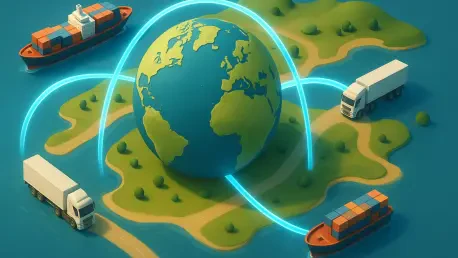

The global era of passive supply chain monitoring has effectively ended as enterprises replace static predictive dashboards with decentralized, autonomous multi-agent AI systems capable of executing decisions in real time. This transition toward supervised autonomy allows software to ingest telemetry from carrier ETAs, warehouse events, and yard cameras to make operational decisions without manual intervention. Adopting these methodologies is critical for maintaining a competitive edge in a volatile market. The focus has moved from seeing what might happen to allowing software to act immediately upon those insights.
Transitioning from Predictive Modeling to Autonomous Execution
The landscape of global logistics is undergoing a fundamental shift away from static, human-led predictive dashboards. Historically, planners spent hours reviewing data before clicking an approval button, creating inherent lag times. Today, decentralized multi-agent systems are designed to operate within the realm of supervised autonomy. These agents monitor live data streams and execute adjustments to order flows or warehouse schedules automatically. This change addresses the growing complexity of global networks that have become too fast for traditional manual oversight to manage effectively.
Moreover, the transition to autonomous execution requires a robust digital infrastructure where software agents are empowered to act within enterprise resource systems. This methodology enables the ingestion of real-time telemetry, allowing agents to identify bottlenecks before they impact the final delivery. By automating the response to warehouse events or shipping delays, organizations reduce the friction between data collection and operational action. This decentralized approach ensures that decisions are made at the edge, where the data is most relevant.
The Strategic Importance of Autonomous Integration
Adopting standardized best practices in AI deployment is essential to prevent localized errors from compounding across integrated global networks. When enterprises move beyond mere prediction, they eliminate the bottlenecks inherent in manual approval cycles. The primary benefits of this transition include significant increases in fulfillment speed and enhanced delivery accuracy. Organizations that successfully implement these systems often see transport cost reductions of up to 30% and the ability to identify supply threats much faster than traditional teams.
Furthermore, autonomous integration provides a scalable solution for high-volume logistics that manual teams cannot replicate. By removing the need for constant human validation for routine adjustments, companies reallocate their human capital toward strategic planning and complex problem-solving. This shift not only reduces operational costs but also improves the resilience of the entire supply chain. In an era where disruption is the only constant, the ability to act autonomously is a major differentiator for market leaders.
Best Practices for Implementing Autonomous Supply Chain Agents
To achieve a truly autonomous supply chain, organizations must deploy decentralized AI agents capable of executing decisions directly within enterprise software. This involves moving from a “human-in-the-loop” model to “supervised autonomy.” Implementation requires linking order fulfillment and risk management agents to a unified global infrastructure. This allows the software to re-route freight or rebalance inventory based on immediate needs, acting at a speed and scale that is impossible for human planners.
Deploying Multi-Agent Systems for Real-Time Disruption Response
Successful deployment involves mapping digital transaction agents to a unified infrastructure to ensure they can adjust orders or rebalance stock without delay. Lenovo successfully integrated such agents into its global iChain infrastructure, resulting in fulfillment decisions occurring three times faster. This level of automation allowed for disruption responses that were four times quicker than previous human-led methods. Consequently, the organization saw a 30% increase in delivery accuracy by letting AI handle the immediate logistics of its global footprint.
Similarly, a mid-size automotive manufacturer utilized disruption agents to identify supply threats 48 hours earlier than traditional manual teams. This proactive approach raised on-time delivery rates from 82% to 94% over an 18-month period. By allowing AI to monitor supplier health and shipping lanes, the company avoided the typical delays associated with human data processing. These results demonstrate that multi-agent systems provide the necessary agility to handle the unpredictability of modern commerce.
Establishing Rigid Operational Guardrails to Mitigate Risk
While autonomy increases efficiency, it requires hard tripwires to protect capital and maintain vendor relationships. Best practices dictate the implementation of bounded execution loops, where AI agents operate within predefined financial and service-level agreement deltas. This includes setting cost ceilings for autonomous transport rerouting and establishing “draft-only” modes for AI agents communicating with unvetted suppliers. By enforcing these boundaries, companies ensure that the AI acts as a tool for optimization rather than a source of unchecked risk.
Industrial manufacturers like Kohler and Belden have utilized supervisor agents to coordinate demand and inventory while adhering to these strict operational boundaries. By implementing volume percentage limits on inventory adjustments, these organizations ensured that large-scale changes triggered a manual pause. This allowed human supervisors to verify high-stakes decisions while the AI handled standard operational adjustments autonomously. These guardrails provided the necessary security to scale autonomous operations across diverse product lines without sacrificing financial control.
Final Verdict: Navigating the Path to a Self-Operating Supply Chain
Autonomous AI transitioned from a theoretical concept to the definitive standard for supply chain excellence. This shift toward a unified execution layer became essential for enterprises managing complex, high-volume logistics networks. Technology leaders moved beyond traditional dashboards to reduce the latency between data ingestion and operational action. Successful organizations prioritized the development of multi-tier supplier graphs and integrated digital transaction agents with physical robotic fleets. As the industry progressed through 2026, mastering bounded execution loops emerged as the primary differentiator for market leaders. Future considerations then focused on the expansion of these autonomous networks into fully self-healing ecosystems that required minimal human intervention for daily operations.