


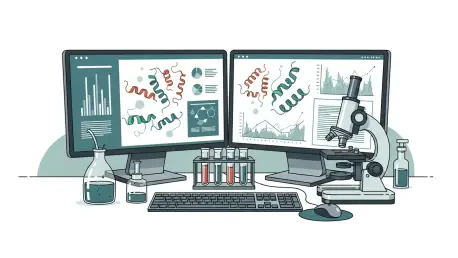

The traditional boundaries between high-level computational modeling and everyday biological research have begun to disintegrate as sophisticated machine learning tools become accessible to those working directly at the laboratory bench. This transition marks a fundamental shift in the biotechnology market, where the ability to design novel therapeutics is no longer restricted to those with advanced degrees in computer science. OpenProtein.AI has positioned itself as a central architect in this new landscape, focusing on a no-code philosophy that translates complex foundation models into intuitive interfaces. By dismantling the technical barriers that once separated dry-lab innovation from wet-lab application, the company is enabling a broader demographic of scientists to engage in precise protein engineering. This analysis explores the current state of this democratization, the underlying technology driving the shift, and the strategic implications for the future of drug discovery.
Bridging the Gap Between Machine Learning and Biological Discovery
The intersection of artificial intelligence and biological science represents one of the most transformative frontiers in modern medicine. While the potential for AI to reshape drug discovery is immense, a significant barrier has long existed between high-level computational modeling and practical laboratory research. OpenProtein.AI has emerged as a pivotal force in this landscape, dedicated to bridging the gap between complex machine learning and everyday biological inquiry. By providing a no-code platform that simplifies the nuances of foundation models, the company empowers scientists to design novel therapeutics without requiring a background in computer programming.
This accessibility is particularly relevant as the industry moves toward more specialized and personalized medicine. Historically, the heavy computational requirements of protein design meant that only the largest pharmaceutical entities could afford the necessary infrastructure. However, the rise of cloud-based, user-friendly platforms is leveling the playing field. This shift allows smaller biotechnology firms and academic institutions to compete in the discovery of treatments for rare diseases and specific genetic markers. The focus on a “biological dialect” rather than just structural physics enables a more nuanced understanding of how proteins behave in a living system, rather than just how they look in a static model.
The Evolution of Protein Design: From Code-Heavy Research to Accessible Tools
Historically, protein engineering was a labor-intensive process rooted in trial and error. The advent of AI models like AlphaFold revolutionized the field by predicting protein structures with unprecedented accuracy, yet these powerful tools remained largely inaccessible to the average biologist. Implementing such systems typically required specialized expertise in coding, GPU management, and model fine-tuning—skills rarely found in a traditional wet-lab environment. This technical “wall” created a disconnect where the most capable tools were the exclusive domain of tech giants or niche computational labs.
Understanding this historical bottleneck is essential for grasping the significance of the “democratization” movement, which seeks to return the power of design to the scientists who understand the biological nuances of disease. The market is witnessing a transition where the value of a discovery is less about the computational power used to find it and more about the biological insight used to direct the search. As these tools become more refined, the emphasis is shifting from merely predicting what a protein looks like to predicting exactly how it will function within the complex environment of the human body.
Empowering Researchers Through Technological Accessibility
Simplifying Complex Workflows via No-Code Innovation
A critical aspect of OpenProtein.AI’s impact is its commitment to a no-code interface, which removes the friction associated with traditional computational biology. By offering a web-based platform, the company allows researchers to interact with sophisticated generative AI models as easily as they might use a standard search engine. This shift does more than just save time; it changes the demographic of who can participate in protein engineering. When biologists can experiment with “in silico” validation—generating and testing protein libraries digitally before conducting physical experiments—the cost of innovation drops significantly.
This efficiency allows for a more diverse array of researchers to tackle rare diseases and niche biological problems that might otherwise be overlooked by large firms. The reduction in overhead means that the financial risk of exploring unproven molecular targets is lower. Furthermore, the democratization of these tools fosters an environment where rapid iteration is the norm. Instead of waiting weeks for computational results from a centralized department, individual researchers can test hypotheses in real-time, drastically shortening the development cycle for new therapeutic candidates.
The Power of Evolutionary Transformers and Sequence-to-Function Modeling
Building upon the foundation of accessible tools, OpenProtein.AI leverages the Protein Evolutionary Transformer (PoET) to change how scientists view protein data. Unlike models that focus strictly on three-dimensional structures, PoET-2 treats amino acid sequences as a biological dialect, focusing on evolutionary constraints. This approach allows researchers to move directly from sequence to function, skipping the often-tedious structural modeling phase. Because PoET-2 is highly resource-efficient, it can outperform larger models while requiring less computational power and experimental data.
This efficiency provides a competitive advantage for smaller labs and startups, offering them the same predictive capabilities previously reserved for organizations with massive server farms. By analyzing the “language” of proteins as it has evolved over billions of years, these models can identify patterns that are not immediately obvious through physical modeling alone. The ability to predict function directly from a sequence means that the search for viable candidates can be performed across a much wider search space, increasing the likelihood of identifying high-potency molecules with minimal side effects.
Global Collaboration and the Open Ecosystem Model
The democratization of protein engineering extends beyond software into the realm of industry ethics and scientific collaboration. OpenProtein.AI maintains a dual-track strategy: while it partners with major pharmaceutical players to integrate AI into professional drug discovery workflows, it also provides its platform to academic researchers for free. This strategy prevents the “AI revolution” in biology from becoming a closed loop controlled by a few wealthy corporations. By fostering an open ecosystem, the company ensures that breakthroughs can emerge from any corner of the globe.
Such a model is vital for addressing regional health challenges and driving innovations that might not be prioritized by purely commercial interests. Collaborative efforts with organizations like Boehringer Ingelheim demonstrate how these platforms can be embedded within the infrastructure of large-scale drug development to address cancer and autoimmune diseases. Simultaneously, the availability of these tools to the broader scientific community ensures a continuous pipeline of talent and ideas. This hybrid approach balances the need for commercial sustainability with the ethical imperative to advance global health through shared knowledge and accessible technology.
Future Frontiers: Designing for Dynamic Biological Functions
As the field of AI-driven biology matures, the focus is shifting from static structures to dynamic functionality. Emerging trends suggest that the next generation of protein engineering will move beyond “binding”—simply making one molecule stick to another—toward designing proteins that can change their function based on their environment. Experts predict a rise in “protein logic,” where molecules are engineered to perform complex enzymatic reactions or engage multiple biological mechanisms simultaneously. These technological shifts will likely be accompanied by new regulatory frameworks as AI-generated therapeutics move closer to clinical trials.
The evolution of these models into a comprehensive “language for biological systems” suggests a future where therapies are not just found, but precisely authored to respond to the dynamic nature of human disease. This could lead to “smart” proteins that only activate in the presence of specific biomarkers, thereby reducing off-target effects and increasing safety profiles. As computational models become better at predicting these complex interactions, the line between software engineering and biological engineering will continue to blur, leading to a new era of programmable medicine.
Actionable Strategies for Navigating the New Era of Biotechnology
The shift toward AI-driven engineering offers several key takeaways for professionals and organizations in the life sciences. For biotechnology firms, the primary strategy should be the integration of AI as a core infrastructure component rather than a niche experimental tool. Scientists are encouraged to adopt “in silico” first workflows, using digital validation to narrow down candidates before investing in expensive laboratory reagents. This approach not only saves capital but also allows for the exploration of a broader chemical and biological space.
Furthermore, for academic institutions and smaller startups, the best practice is to leverage open-access platforms to level the playing field against larger competitors. By focusing on sequence-to-function modeling and utilizing resource-efficient tools like PoET, researchers can accelerate their development cycles and bring treatments to market with greater speed and precision. Organizations must also prioritize data literacy, ensuring that their biological teams understand how to interpret and validate AI-generated hypotheses within the context of practical laboratory outcomes.
Conclusion: The New Language of Life
OpenProtein.AI functioned as a vital bridge between the abstract world of machine learning and the tangible world of therapeutic development. By prioritizing accessibility and leveraging evolutionary intelligence, the platform shortened the distance between biological questions and molecular answers. The significance of this work resided in its long-term potential to transform protein engineering into a universal language, accessible to all who sought to cure disease. As the industry moved toward a future of dynamic, programmable therapies, the democratization of these tools ensured that the next great medical breakthrough was limited only by scientific imagination, not by the ability to write complex code. This era of accessibility redefined the role of the researcher, turning biologists into molecular architects. Strategic adoption of these no-code systems allowed for a more inclusive innovation cycle, ultimately accelerating the delivery of life-saving treatments to a global population. The transition from static structural predictions to functional, sequence-based design proved to be the catalyst for a more responsive and efficient biotechnology sector. In the end, the success of these platforms was measured by their ability to disappear into the background, becoming as essential and unremarkable as the microscope in a modern laboratory.







