
The traditional boundary between visual design and functional software has effectively collapsed as architectural platforms transform static pixels into executable code through seamless synchronization. This shift signifies a departure from the era of static handoffs, where designers and engineers occupied separate silos. At the heart of this transition is the evolution of Figma Make, which has officially transitioned from a mere prototyping sandbox into a live, visual software editor. This transformation addresses a long-standing friction point in the industry: the disconnect between what a designer envisions on a digital canvas and what an engineer ultimately implements in the codebase. By introducing two-way GitHub integration and enterprise-grade governance, Figma is positioning itself as a production-ready development tool that allows product managers, designers, and non-technical builders to manipulate live code through a visual interface.
The integration of artificial intelligence into this workflow has fundamentally changed the speed and nature of software delivery. Rather than acting as a simple code generator, the platform now serves as a live orchestration layer. This allows teams to bridge the gap between design intent and production reality by ensuring that visual changes are reflected directly in the repository without manual translation. Consequently, the industry is witnessing a democratization of software engineering, where the ability to build and iterate is no longer confined to those who can write syntax from scratch. This article explores how this shift redefines the designer-developer relationship and examines the technical architecture making it possible.
From Prototyping Sandbox to Visual Development Environment
Historically, Figma functioned as a destination for wireframes and interactive prototypes that remained isolated from the actual production code. While these designs were visually stunning, they were essentially high-fidelity blueprints that required manual translation by engineering teams—a process often fraught with “lost in translation” errors. The launch of Figma Make earlier in the decade initially aimed to solve this with one-way exports, but the industry soon realized that static exports were insufficient for the iterative nature of modern software. The shift toward a live orchestration layer was accelerated by a broader market movement toward AI-native workflows. Understanding this background is crucial because it highlights Figma’s transition from a vector-based drawing tool to a foundational layer of the software engineering stack.
The transition reflects a deeper understanding of how modern product teams operate in a high-velocity environment. Static handoffs created a bottleneck where designers had to wait for development cycles to see their work in a functional state. In contrast, the current visual development environment allows for real-time feedback loops. This evolution was not merely a feature update but a response to the changing capital landscape in the tech sector. As investors began favoring AI-native orchestration over legacy software products, Figma had to pivot to remain the primary hub for software creation. This movement has successfully moved design away from being a preparatory step and into being a central part of the engineering process itself.
Deconstructing the Live Orchestration Layer
The Power of Bidirectional Synchronization and Version Control
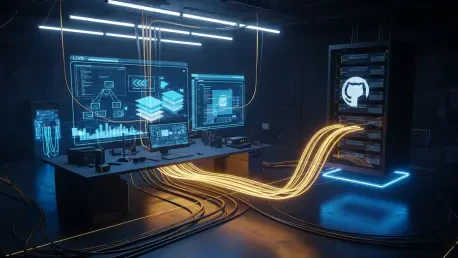
A critical aspect of the new Figma Make is the move toward a continuous loop of development. Unlike early iterations that featured a rigid, one-way mechanism, the current architecture enables bidirectional synchronization. Builders can now connect to any Git provider, allowing Figma to act as a local development environment where changes are tracked as local commits. This ensures that the design environment and the production repository remain perfectly in sync. From a technical governance perspective, this is a breakthrough; it allows visual edits to be subject to the same continuous integration pipelines, security audits, and human code reviews as any code written by a senior engineer. By operating within standard version control workflows, Figma mitigates the risks of black box AI, ensuring that generated code adheres to established safety protocols.
This level of synchronization provides a safety net that was previously missing from visual editors. When a change is made on the canvas, it does not bypass the necessary checks and balances of a professional engineering team. Instead, it generates a pull request that must be reviewed, tested, and approved. Moreover, the bidirectional nature of the sync means that if an engineer makes a change in the code, that change is reflected back in the Figma environment. This creates a single source of truth for the entire product team, reducing the likelihood of architectural drift. This synchronization is particularly vital for enterprise teams that manage complex applications across multiple time zones and departments.
Navigating the Competitive Landscape of AI-Driven Coding
The market for AI-assisted development has fractured into three distinct methodologies, and Figma Make’s success depends on its unique positioning. While platforms like Lovable cater to solo developers with a code-first approach and Anthropic’s Claude Design offers rapid text-prompted wireframing, Figma Make is optimized for established teams. It prioritizes brand fidelity by pulling from existing design systems and utilizing a multi-model AI approach—including Claude 3.6 Sonnet and Google Gemini—to read surrounding code architecture. This comparative advantage allows teams to maintain strict code ownership while empowering non-engineers to make visual adjustments. The choice between these tools often hinges on whether a team needs a standalone builder for a new project or a sophisticated bridge for an enterprise-level design system.
The competitive edge of Figma lies in its ability to understand context. While generic AI coding assistants can generate snippets of code, Figma Make is designed to understand the specific design tokens and typography of a brand. This ensures that the output is not just functional but also aesthetically consistent with the rest of the application. In contrast, other tools often require significant cleanup to match a company’s visual identity. By integrating advanced models like Claude 3.6 Sonnet, the platform can interpret complex instructions and translate them into clean, maintainable code. This nuance is what separates a professional development tool from a simple prototyping utility in the current market.
Backend Integration and the Role of Full-Stack Capabilities
Beyond frontend visual tweaks, the complexity of Figma Make has expanded to include deep backend integration through services like Supabase. This provides a functional infrastructure encompassing secret storage, compute capabilities, and Postgres databases. By incorporating these elements, Figma is no longer just a skin editor; it allows for the creation of functional applications from the ground up. This addresses a common misunderstanding that visual editors are only capable of superficial user interface changes. Instead, Figma Make utilizes contextual annotations to ensure that AI-generated code adheres to specific design tokens and component variants, effectively turning the canvas into a high-level control panel for the entire application stack.
This expansion into full-stack capabilities represents a fundamental shift in the scope of design tools. For the first time, a designer can set up a database schema or manage server-side logic without leaving the visual environment. This integration with Supabase simplifies the technical overhead that usually accompanies the launch of a new product. Moreover, it allows for the creation of dynamic, data-driven prototypes that behave exactly like the final product. By handling the complexities of backend architecture, Figma Make enables teams to focus more on the user experience and the overall business logic. This holistic approach ensures that every layer of the software stack is accessible and modifiable through a unified interface.
The Rise of Architectural Governance in the Vibe Coding Era
The overarching trend shaping the future of this industry is the shift from engineering bandwidth to architectural governance as the primary bottleneck. Data suggests that over half of product managers and nearly half of designers now contribute directly to codebases. As vibe coding—the practice of using natural language and visual prompts to build software—becomes more prevalent, the role of the senior engineer is evolving into that of an architect and reviewer. Furthermore, Figma’s strategic pivot is an existential response to shifting capital. Following its market correction earlier in 2026, Figma had to prove its worth as an AI-native orchestration layer rather than a legacy SaaS product. This evolution suggests a future where the command-line terminal is reserved for complex logic, while routine frontend implementation is handled entirely on the visual canvas.
Architectural governance is becoming the new standard for maintaining code quality in an AI-assisted world. As more stakeholders gain the ability to generate code, the need for oversight and structure becomes paramount. Senior engineers are no longer tasked with writing every line of CSS; instead, they define the constraints and rules that the AI must follow. This allows the engineering team to scale their impact across the organization without becoming a hurdle for minor updates. Moreover, the shift toward visual orchestration helps align the technical architecture with the business goals. When the product team can see the code reflected in the design, it creates a transparency that fosters better decision-making and faster iteration cycles.
Strategic Implementation for Modern Product Teams
To capitalize on these advancements, enterprise leaders should adopt a tiered strategy for tool selection. For mature organizations with rigid repository guardrails, Figma Make is the superior choice because it bridges the gap between design and production without bypassing security frameworks. Professionals should focus on establishing robust design systems and color tokens, as the AI’s effectiveness is directly tied to the quality of the underlying architecture. For startups or rapid prototyping, simpler tools may suffice, but the long-term goal for any scaling business should be the integration of visual editing into the standard Git workflow. Actionable best practices include treating the visual canvas as a local branch and ensuring that every AI-generated change is validated through standard peer-review processes to maintain code quality.
Implementing these tools requires a cultural shift as much as a technical one. Teams must move away from the traditional concept of a handoff and embrace a model of continuous collaboration. This involves training designers to understand basic Git workflows and encouraging engineers to participate earlier in the design process. Moreover, the use of design tokens should be non-negotiable, as they provide the necessary structure for the AI to function correctly. By establishing these guardrails, organizations can ensure that their move toward visual development is both productive and secure. The goal is to create a workflow where design and code are two sides of the same coin, allowing for a more fluid and efficient development lifecycle.
Reimagining the Future of Software Craftsmanship
The transformation of Figma Make into a live software editor signaled the end of the static handoff era and redefined the nature of collaboration. By integrating two-way GitHub synchronization and enterprise-grade governance, the platform successfully merged the creative freedom of design with the technical rigor of software engineering. This evolution demonstrated that the value of a design tool no longer resided in its ability to draw, but in its ability to orchestrate production-ready code. The convergence of design and development proved to be a reality that promised to make software creation more inclusive, efficient, and resilient. Future considerations for teams will likely focus on how to maintain the balance between AI automation and human craftsmanship as these tools become even more sophisticated.
Moving forward, the primary challenge for organizations will be the refinement of architectural standards to support increasingly automated workflows. Leaders should prioritize the development of more granular design systems that can feed more context into AI models. This will allow for higher-fidelity code generation that requires even less manual intervention. Additionally, the industry should explore new ways to integrate visual editors with complex logic and state management, moving beyond simple UI components. As the barrier to entry for software creation continues to lower, the importance of strong architectural principles and ethical governance will only grow. The ability to orchestrate code through a design-first interface has become an indispensable skill for the modern era of digital product development.