


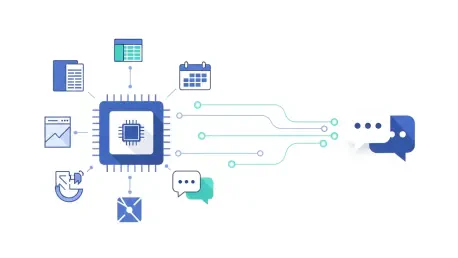

Business productivity software has evolved far beyond the era of static spreadsheets and basic notification bots that merely alert users to changes without providing a means to resolve them directly within the communication interface. This shift is particularly evident in the rise of specialized environments that prioritize task execution over simple text generation. Zenphi AI Studio represents a significant milestone in this progression by enabling organizations to deploy action-oriented AI agents directly into Google Chat. Unlike traditional chatbots that require external links or redirected browser tabs, these agents inhabit the native workspace environment where teams already collaborate. This integration effectively transforms a standard messaging app into a command center for organizational operations. By allowing users to interact with business logic through natural language, the platform eliminates the friction inherent in switching between disparate legacy systems and modern cloud applications. The focus here is not just on conversational fluency but on the technical capacity to trigger complex back-end workflows that were once the sole domain of IT departments. The introduction of this studio marks a pivot from passive assistance to active operational support, effectively closing the gap between communication and completion. As these agents become more sophisticated, they handle the heavy lifting of data management and process routing, allowing teams to maintain their momentum without leaving the chat interface. This evolution reflects a broader industry trend toward integrated environments where the toolset adapts to the user’s workflow rather than forcing the user to adapt to the software’s limitations.
Transitioning From Information: The Power of Actionable Intelligence
The distinction between generative AI and action-oriented AI becomes clear when examining how professional teams manage their daily recurring workflows. While many large language models excel at summarizing long-winded documents or drafting polite email responses, they often lack the underlying architecture to actually submit a data entry or update a database record. Action-oriented AI bridges this specific gap by linking the conversational interface to the actual business logic of an organization. In the context of Zenphi AI Studio, an agent can be programmed to understand the intent behind a request—such as a developer asking to provision a new testing environment—and then execute every necessary step to make it happen. This removes the administrative burden from human supervisors who would otherwise spend hours manually approving tickets and checking off boxes. By focusing on the doing rather than just the knowing, these tools allow employees to spend more time on high-level strategy and creative problem-solving while the AI handles the repetitive execution. This evolution from a static help desk model to a dynamic execution engine means that the AI is no longer just a source of answers but a dedicated partner in task management. As the system handles the minutiae of data transfer and status updates, the risk of human error in manual data entry is virtually eliminated. This reliability is what transforms a simple productivity tool into a critical component of a company’s operational infrastructure, paving the way for a more autonomous future.
Implementing these agents creates a bridge for companies that find themselves caught between two extremes in the current technology market. On one end, massive corporations often invest millions into custom-built, high-overhead AI systems that require dedicated teams of data scientists and developers to maintain. On the other end, smaller teams are frequently limited to basic productivity suites that offer very little in the way of advanced, cross-platform automation. Zenphi AI Studio addresses this middle ground by providing an accessible, yet powerful, solution for those already rooted in the Google Workspace ecosystem. This democratization of technology means that specialized automation is no longer a luxury reserved for the elite tier of enterprise businesses. Instead, any department within a company can now leverage the power of automated logic to manage internal operations like reimbursement claims or incident tracking. The result is a more agile organizational structure where technical barriers no longer dictate the speed at which a business can operate or scale its internal processes across various departments and time zones. Furthermore, the scalability of these agents ensures that as a company grows, its internal support systems can expand without a linear increase in headcount. This efficiency is vital for maintaining margins in a competitive global market. By leveraging existing Google Workspace accounts, firms avoid the complexity of managing new user credentials or installing additional desktop software. The result is a streamlined, unified approach to enterprise automation that meets the needs of modern, distributed teams.
Governance and Security: Protecting Data in Automated Environments
To be truly effective in a professional setting, an AI agent must operate within a framework of strict governance rather than acting as an unmonitored digital assistant. One of the primary concerns for IT administrators when adopting new automation technology is the potential for shadow IT, where users create unmanaged scripts that bypass security protocols. Zenphi addresses this by embedding governance into the very fabric of the AI Studio, ensuring that every agent follows predefined organizational policies. Role-based access control allows administrators to determine exactly who can interact with specific agents and what level of authority those agents possess when accessing sensitive databases. Furthermore, the inclusion of comprehensive audit logs provides a clear trail of every decision and action the AI has taken during its operation. This level of transparency is vital for maintaining accountability, especially in sectors where regulatory compliance is mandatory. Administrators were empowered to set granular permissions, ensuring that the AI could only perform actions within its designated scope. This structure prevented the AI from inadvertently accessing payroll data or private personnel files unless specifically authorized for an HR-related workflow. The platform’s integration with standard identity providers further strengthened this security posture, ensuring that user authentication remained consistent across all automated touchpoints. By centralizing these controls, the studio provided a safe environment for experimentation and deployment.
Security and trust serve as the foundational elements of any successful technology implementation, especially as AI adoption moves into more sensitive industries. Zenphi is built upon enterprise-grade infrastructure that adheres to some of the most rigorous international standards, including HIPAA, GDPR, and ISO 27001. As a certified Google Cloud Partner, the platform benefits from the robust security measures already present within the Google ecosystem, which is a major advantage for organizations in healthcare, finance, or government. The data privacy measures integrated into the studio ensure that sensitive information used during an automated workflow remains protected and is never used to train external models. This is a critical distinction in the modern era where data leaks can have devastating financial and reputational consequences for a firm. By prioritizing these security protocols, the platform allows leaders to embrace the benefits of automation without worrying about the integrity of their proprietary information. The platform’s commitment to data residency and encryption at rest provided an additional layer of protection for global organizations operating in strictly regulated jurisdictions. As companies navigated the complexities of international trade and data sovereignity, having a partner that understood these legal nuances was invaluable. This proactive approach to security not only mitigated risks but also accelerated the internal approval processes that often stall technology adoption. Ultimately, the focus on compliance allowed businesses to transform their operations with confidence, knowing their intellectual property was safe.
The No-Code Movement: Empowering Stakeholders Through Innovation
The release of this studio is a testament to the growing no-code movement, which fundamentally shifts the power of software creation from technical specialists to the business managers who understand the daily operations best. Traditionally, if an HR manager wanted to automate the employee onboarding process, they would have to write a detailed proposal, wait for budget approval, and then wait months for the IT department to build a custom solution. Now, that same manager can use a visual, no-code environment to build an AI agent that handles document collection, system access, and introductory training schedules all within Google Chat. This shift significantly reduces the time-to-value for internal projects, allowing departments to iterate and improve their workflows in real-time. Because the tools are designed for non-technical users, the focus remains on the business outcome rather than the complexities of the underlying code. By providing a drag-and-drop interface that connects to internal databases and external APIs, the studio allows for the creation of complex workflows without requiring a single line of Python or JavaScript. This capability is essential in a climate where specialized technical talent is both expensive and difficult to retain. When the individuals who actually handle the day-to-day operations can modify their own tools, the resulting systems are naturally more aligned with the realities of the business. This alignment reduces the likelihood of software failure and ensures that the automation provides tangible benefits to the end users who rely on it for their daily productivity.
Looking ahead, the focus for organizations moved toward refining these automated agents to handle increasingly complex multi-step workflows that spanned across multiple cloud services. The true potential of these tools rested in their ability to retrieve information from obscure policy documents and then apply that information to execute a decision, such as approving an IT hardware request based on a specific budget limit. Stakeholders prioritized identifying the most friction-heavy manual processes within their departments and began piloting focused AI agents to handle those specific bottlenecks. It was observed that teams who integrated these conversational agents early managed to reduce their administrative overhead by nearly thirty percent, allowing them to reallocate talent toward high-value growth initiatives. For any business using Google Workspace, the next logical step involved evaluating how these no-code platforms bridged the gap between existing data and the need for faster execution. This transition represented a shift toward a more proactive digital workforce that scaled alongside organizational growth. Organizations that succeeded with this technology did so by establishing clear objectives for their AI agents from the start, rather than attempting to automate entire departments overnight. They focused on high-frequency, low-complexity tasks that provided immediate relief to employees. By documenting the success of these early pilots, managers gathered the evidence needed to justify a broader rollout across the enterprise. This method ensured that the adoption of action-oriented AI remained sustainable and aligned with long-term strategic goals.







