


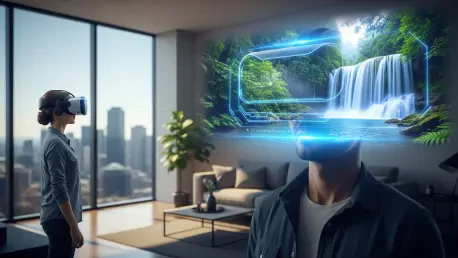

The delicate balance between a human desire for global exploration and the preservation of fragile ecosystems has reached a critical juncture in the mid-2020s, necessitating radical shifts in travel paradigms. For decades, the global economy thrived on the expansion of international tourism, but the cost to the environment has become impossible to ignore as carbon emissions from long-haul flights and the physical degradation of heritage sites reach record levels. This phenomenon, often termed the tourism paradox, reveals a painful reality: the more popular a destination becomes, the more its inherent value is eroded by the very visitors drawn to its beauty. From the over-crowded canals of Venice to the bleaching coral reefs of the South Pacific, the traditional model of high-volume physical transit is straining the planet’s boundaries. In this context, Virtual Reality (VR) is no longer a niche entertainment medium but a sophisticated tool for environmental mitigation. By decoupling the experience of discovery from the necessity of physical relocation, VR allows for a reimagining of how humans interact with the world’s most vulnerable locations. This shift toward digital immersion offers a pathway to satisfy the innate human curiosity for diverse cultures and landscapes without contributing to the carbon footprint that threatens their existence. As technology advances, the distinction between being there and seeing there is blurring, creating a new frontier for sustainable global engagement that prioritizes the health of the Earth while maintaining the richness of human connection.
The Technical Drivers: Engineering Reality Through Digital Precision
The effectiveness of virtual travel relies heavily on the seamless integration of visual, auditory, and haptic feedback to create a convincing simulation that rivals physical perception. In the current landscape of 2026, the deployment of 8K-per-eye resolution displays and ultra-low latency tracking has significantly reduced the biological and psychological barriers to true immersion. When a user engages with a high-fidelity head-mounted display, the field of view must match the natural human visual range to prevent the technical artifacts that once hampered early adoption. Interactivity is equally vital; the ability to pick up a digital stone in the ruins of an ancient city or observe the shifting light over a vast savannah in real-time transforms the user from a passive viewer into an active participant. This level of technical sophistication is achieved through advanced spatial computing and narrative engagement, where the digital environment responds dynamically to the user’s movements and choices. Furthermore, the inclusion of spatial audio—where sound reflects off virtual surfaces just as it does in the physical world—adds a layer of depth that tricks the brain into accepting the artificial environment as a tangible space. These advancements ensure that the digital substitute is not merely a panoramic photo but a living, breathing recreation of the world that respects the laws of physics and the nuances of human perception.
The ultimate goal of these technological refinements is the induction of presence, a psychological state where the user forgets the physical hardware and feels truly located within the virtual destination. Presence is the cornerstone of experiential value in virtual tourism because it allows for the formation of genuine memories and emotional connections with distant locales. Unlike viewing a documentary on a flat screen, a high-presence VR experience triggers the same neurological pathways as physical travel, leading to a sense of autobiographical memory where the user recalls the visit as a personal life event. This cognitive shift is crucial for the success of footprint-free travel; if a digital journey feels as significant as a physical one, the psychological need for carbon-intensive transit diminishes significantly. Research into user behavior has shown that individuals who experience a deep sense of presence in a virtual forest are more likely to exhibit protective attitudes toward real-world conservation efforts afterward. This suggests that the emotional weight of a journey is not dependent on physical displacement but on the quality of the sensory and cognitive engagement. By fostering this profound sensation of being there, developers are creating a viable alternative to traditional tourism that provides the same psychological benefits without the associated environmental degradation.
Overcoming Distance: Translating Virtual Experience Into Environmental Action
One of the most persistent hurdles in modern environmentalism is the concept of psychological distance, which refers to the tendency for people to perceive global crises as abstract or remote. For many, the destruction of a rainforest or the melting of polar ice caps feels like a distant problem that does not require immediate personal intervention or lifestyle changes. Virtual Reality serves as a powerful bridge over this gap by placing the user directly at the center of these environmental shifts in a visceral way. When a person can virtually walk across a retreating glacier and see the timeline of its disappearance projected into their visual field, the abstract becomes tangible. This immediate sensory proximity activates the personal environmental locus of control, making individuals feel that their actions have a direct impact on the outcome of these ecosystems. By removing the physical and temporal distance between the observer and the environmental trauma, VR compels a level of empathy and urgency that traditional media cannot replicate. This transformation of perspective is essential for shifting public consciousness toward more sustainable lifestyle choices and supporting global conservation initiatives that were previously ignored due to a lack of personal connection.
Beyond mere observation, the immersive nature of digital exploration influences consumer agency and decision-making through the lens of established behavioral theories. As virtual tools become more intuitive and socially integrated, the perceived ease of use and social norming drive a shift in how travel is valued across different demographics. When sustainable digital options are presented as high-status and emotionally fulfilling, travelers are more likely to adopt them as a primary mode of exploration for fragile or high-risk areas. This shift is not about depriving people of experiences but about redirecting their curiosity into channels that align with planetary health and resource management. The transition from a passive observer of nature to a motivated advocate for pro-environmental behavior is often triggered by the overview effect—a sensation of global interconnectedness that encourages users to consider the carbon cost of every real-world action they take. Consequently, the digital experience acts as a training ground for environmental stewardship, where the lessons learned in a simulated reef or forest are carried back into the user’s physical life. This results in a more conscientious and footprint-aware society that views the preservation of the natural world as a collective responsibility rather than a secondary concern.
The Social Frontier: Replicating Community in the Metaverse
Virtual Reality is rapidly evolving from a solitary activity into a communal experience within the broader framework of Extended Reality and the Metaverse. This transition is vital because tourism has always been a fundamentally social endeavor, characterized by shared discoveries and the collective creation of lasting memories. In the current era, virtual platforms are moving away from isolated headset experiences toward persistent, shared digital worlds where users can meet, interact, and explore in unison. This hybrid approach combines the best of social media with the immersion of VR, allowing people from different continents to gather at a virtual representation of a world-famous museum without anyone boarding a plane. These platforms are not just static environments; they are dynamic ecosystems where social presence is as important as the environmental visuals themselves. By prioritizing social connectivity, these digital spaces address one of the primary criticisms of virtual travel—the lack of shared human interaction and the feeling of isolation. As these technologies mature, the Metaverse becomes a legitimate social alternative to physical tourism hubs, providing a space for cultural exchange and global networking that is accessible to anyone with a stable internet connection.
The concept of co-presence is the defining feature of these social virtual spaces, enabling friends and families to feel as though they are physically together in a digital landscape. This capability is transformative for the travel industry, as it allows for multi-user expeditions where groups can discuss what they see, share reactions, and navigate complex environments in real-time. By replicating the communal aspects of traditional vacations, co-presence ensures that the value of the trip is derived from interpersonal connection and collective wonder rather than the miles traveled or the resources consumed. This social dimension is a key driver in making virtual alternatives socially satisfying and competitive with physical travel options. When a group can visit an endangered wildlife sanctuary and learn about conservation efforts together, the experience becomes a shared ethical commitment. This collective engagement reinforces the idea that travel is about the expansion of one’s world through relationships and knowledge, not just the physical occupation of a geographical space. As a result, the development of these shared digital environments is a crucial step in decoupling social status and personal fulfillment from high-carbon physical movement.
Governance and Ethics: Ensuring Authenticity in the Digital Age
In practical application, virtual technology is being deployed through two primary strategies: as a preamble to physical travel and as a total substitute for it. As a preamble, VR allows potential tourists to preview destinations in a way that encourages responsible behavior and informed decision-making before they ever pack a suitcase. For example, a traveler might use a VR simulation to understand the delicate ecosystem of a national park, learning exactly where to walk and how to minimize their impact on the local flora and fauna. This preparation ensures that when physical travel does occur, it is conducted with a high degree of environmental literacy and respect for the destination. Conversely, for hyper-fragile locations such as the interior of prehistoric caves or high-altitude ecosystems, VR serves as a permanent substitute. This approach allows the general public to appreciate the beauty and significance of these sites without the physical trampling and pollution that human presence inevitably brings. By strategically using VR to divert foot traffic away from vulnerable areas, heritage managers can preserve the integrity of natural and cultural sites for future generations while still fulfilling the public’s desire for access and education.
The widespread adoption of virtual tourism necessitates a robust ethical framework to address concerns regarding the digital divide and the potential commodification of indigenous cultures. It is essential that the transition to digital travel does not leave behind developing nations whose economies rely heavily on traditional tourism revenue for their livelihoods. Governance models must include strategies for digital royalties or alternative funding mechanisms to ensure that the communities protecting these sites benefit from virtual visits just as they would from physical ones. Furthermore, the representation of indigenous cultures in VR requires their direct involvement and informed consent to prevent the sanitization or misrepresentation of their unique heritage. Maintaining digital authenticity is paramount; users must have confidence that the virtual environments they explore are faithful to the reality of the site’s natural and cultural history rather than being idealized corporate products. Ethical guidelines should also mandate transparency regarding the environmental impact of the data centers and hardware required to power these simulations. By addressing these issues through proactive policy and inclusive design, the industry can ensure that virtual tourism becomes a force for global equity and genuine cultural preservation.
Developing Sustainable Pathways for Global Discovery
To achieve a future where exploration did not come at the expense of the planet, stakeholders across the technology and travel sectors prioritized the integration of carbon-neutral data infrastructure and inclusive digital access. The movement toward footprint-free travel relied on a multi-faceted approach that combined high-fidelity sensory experiences with a deep commitment to environmental and social ethics. Educational institutions and government bodies played a critical role by incentivizing the use of virtual simulations for academic and cultural exchange, thereby reducing the reliance on physical transit for information gathering. Developers focused on creating open-source standards that allowed for cross-platform compatibility, ensuring that the virtual world remained a public good rather than a fragmented corporate monopoly. By shifting the metrics of a successful journey from physical distance to emotional and intellectual depth, society began to value the preservation of the Earth as much as the thrill of discovery. The transition was marked by a newfound respect for the fragility of the natural world, leading to a global culture where digital immersion and physical stewardship existed in a symbiotic relationship. Ultimately, the successful implementation of these technologies provided a blueprint for how humanity could continue to explore the unknown without leaving a lasting scar on the world.







