
Internal estimates suggest that orbital computing will only be commercially viable if launch costs drop to approximately two hundred dollars per kilogram via heavy-lift rockets. Despite this formidable financial barrier, Google is moving ahead with its latest initiative to solve the terrestrial power crisis that is currently choking AI development. As models like Gemini expand in complexity, the infrastructure needed to support them has outgrown the physical limits of land availability and the capacity of existing power grids. This prompted the official acceleration of a pilot program designed to test the feasibility of relocating heavy computation to the stars. On October 1, 2026, a prototype mission will attempt to validate the survivability of high-performance silicon in the vacuum of space. By treating low Earth orbit as a strategic pressure-release valve, the company aims to bypass the regulatory and environmental bottlenecks that have delayed large-scale data center construction on the ground.
Technical Foundations: The MVP Mission
Hardware Specifications: Solar Power and TPU Integration
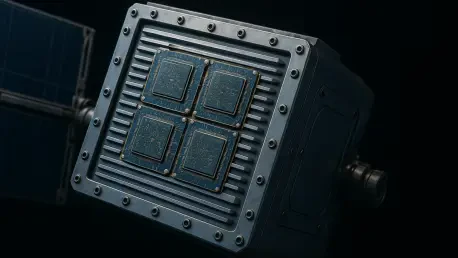
The prototype satellite, a collaborative development with the aerospace firm Planet, serves as the first real-world application of Google’s proprietary Trillium Tensor Processing Units in a non-terrestrial environment. These four specialized chips are designed specifically for machine learning tasks, providing the equivalent processing power of a full server rack typically found in a standard terrestrial data center. To keep these processors running, the craft relies on high-efficiency solar arrays capable of generating approximately one kilowatt of electricity. This initial payload is modest in physical size, yet it represents a critical milestone in miniaturizing the energy-heavy infrastructure of artificial intelligence. If these chips can maintain operational integrity during the rigors of flight, it would prove that the same silicon powering ground-based models can be adapted for the vacuum. This success would pave the way for more complex, multi-satellite arrays in the coming years.
Orbital Dynamics: Maximizing Energy Efficiency
To maximize the energy yield for the Trillium processors, the mission utilizes a specialized dawn-dusk sun-synchronous orbit that follows the transition line between day and night. This specific trajectory ensures that the satellite’s solar panels are almost constantly exposed to direct sunlight, effectively eliminating the day-night cycle that limits the output of solar farms on the Earth’s surface. Data collected during the development phase suggests that solar panels operating in this region can produce up to eight times more power than identical hardware on the ground. This massive efficiency gain is largely due to the absence of atmospheric interference, moisture, and cloud cover, which often degrade solar performance on the surface. By harvesting this unfiltered energy directly, the orbital facility can theoretically meet the massive power requirements of AI without straining civilian electrical grids or relying on fossil fuels, marking a fundamental shift in how the industry views sustainable power.
Economic Realities: Strategic Partnerships and Market Challenges
The SpaceX Symbiosis: Hedging and Competition
Navigating the logistical requirements of a space launch requires a pragmatic approach to competition, as seen in the decision to use a SpaceX Falcon 9 rocket for the Transporter-18 mission. While both companies are currently competing for dominance in the artificial intelligence sector, this collaboration is a calculated move supported by Alphabet’s long-standing financial interest in SpaceX. Having invested nearly one billion dollars over a decade ago, Google’s parent company now holds a stake valued at approximately ninety-four billion dollars, representing a significant share of the rocket company’s equity. This dual positioning creates a scenario where Google benefits from the growth of the commercial space industry regardless of which specific platform achieves the first functional orbital cloud network. If SpaceX succeeds in deploying its own computing constellations, Google’s financial holdings will surge in value; if Suncatcher proves superior, Google gains a proprietary advantage in the AI infrastructure race.
The Cost Barrier: Navigating Launch Economics
Despite the technological promise of orbital AI, the transition remains hindered by an immense economic gap that must be closed before large-scale operations are feasible. Current pricing for space transportation is roughly thirty-five times higher than the two hundred dollars per kilogram target identified by internal analysts. For instance, the existing rideshare fee structures for early-stage payloads remain prohibitive for anything beyond experimental prototypes. This financial reality means that the widespread adoption of space-based data centers is heavily dependent on the maturation of fully reusable, heavy-lift rockets like the Starship program. Until these vehicles can reliably reduce the price of reaching low Earth orbit, the project will remain in a research and development phase. The objective of the current mission is not immediate profitability but the creation of a blueprint that can be scaled rapidly once the cost of access to space aligns with the operational budgets of global technology firms.
Environmental Challenges: Managing Thermal and Radiation Risks
Heat Management: Solving the Vacuum Cooling Problem
Maintaining the correct operating temperature for high-performance processors in space is an engineering nightmare because the vacuum prevents traditional cooling methods like fans or liquid heat exchangers. Without air to carry heat away via convection, the Suncatcher MVP must rely solely on radiation, which is a much slower and less efficient process for shedding thermal energy. Consequently, the Trillium chips are currently limited to running for only fifteen minutes at a time before they must be powered down to cool. To address this, engineers have integrated a complex stack of thermal materials, including copper and specialized aluminum alloys, to conduct heat toward large radiator panels. Parallel to the thermal challenge is the constant bombardment of solar radiation, which can flip bits in memory or permanently damage silicon circuits. However, preliminary testing with proton beams has indicated that the chips are surprisingly resilient, capable of surviving radiation doses far exceeding those expected in a five-year mission.
Competitive Landscape: The Global Race for Orbital Compute
Google is far from the only entity attempting to secure a presence in this emerging market, as the race for orbital high ground intensifies among tech giants and specialized startups alike. Competitors such as Starcloud have already successfully deployed hardware utilizing advanced Nvidia modules, while other firms are repurposing existing infrastructure to handle AI workloads. This trend is further complicated by the entry of Bitcoin mining operations into the AI space, as these companies possess the cheap power contracts and industrial-scale facilities that AI developers currently lack. On the regulatory front, the surge in satellite launches has raised concerns regarding space debris and the long-term sustainability of low Earth orbit operations. As more companies look to the stars to escape the energy constraints of the terrestrial grid, the environmental impact of these mega-constellations will become a primary focus for international governing bodies, requiring new protocols for safe satellite disposal and collision avoidance.
Strategic Outcomes: The Evolution of Digital Infrastructure
Implementation Results: Lessons From the Orbital Pilot
The successful deployment of this initial prototype established a critical foundation for the transition toward a more decentralized and sustainable computing architecture. By moving the heaviest processing tasks into a high-efficiency orbital environment, the strain on municipal power grids was noticeably reduced, offering a potential path forward for environmental conservation. This shift required a fundamental rethink of how data is routed and how heat is managed in a vacuum, leading to the development of new radiator designs that are now being integrated into broader satellite platforms. The focus has moved toward creating larger constellations that can maintain continuous operation through advanced heat-sinking technologies and inter-satellite laser links. As launch costs began to align with historical targets, the feasibility of these orbital clusters improved, prompting a wave of investments in heavy-lift logistics. This progression ultimately demonstrated that the future of artificial intelligence would be shaped by the ability to harvest energy where it is most abundant.
Future Considerations: Scaling the Orbital Network
Looking ahead, the evolution of orbital AI required a collaborative approach to international space law and debris management to ensure the long-term safety of the low Earth orbit environment. Organizations prioritized the development of autonomous de-orbiting systems and standardized docking interfaces to facilitate the maintenance and eventual decommissioning of these high-powered computing clusters. While the technical hurdles of cooling and radiation shielding were largely addressed by the pilot mission, the next generation of satellites focused on high-speed optical communication to minimize latency between space and ground stations. As these systems became more integrated into the global AI ecosystem, the strategy shifted toward optimizing the geographic distribution of compute power to better serve diverse global markets. This ongoing development necessitated a workforce skilled in both aerospace engineering and machine learning, bridging the gap between two previously distinct industries to support a truly celestial digital infrastructure.