



Laurent Giraid is a seasoned technologist who has spent the better part of his career at the intersection of machine learning and industrial ethics. With a background that spans the development of natural language processing tools and the implementation of complex AI frameworks, he has become a leading voice on how digital intelligence must eventually “touch” the physical world to be truly transformative. Today, we sit down with Laurent to discuss a fascinating evolution in engineering education: the FrED project. This initiative, born in the basement of MIT’s Building 35 and expanded through a robust partnership with Tecnológico de Monterrey, replaces traditional textbook theory with a “practice factory” environment. Throughout our conversation, we explore the integration of Industry 4.0 technologies—such as digital twins and agentic controllers—and the way a low-cost fiber extrusion device is helping nearly 500 students transition from the classroom to the high-stakes environment of a modern production floor. We delve into the importance of international mobility, the development of a global engineering talent pipeline, and why the “human side” of making mistakes is the most critical component of a student’s technical journey.
The shift from traditional classroom settings to hands-on “practice factories” is a significant departure from how engineering has been taught for decades. How does the FrED model specifically change the way a student perceives the manufacturing process compared to reading about it in a textbook?
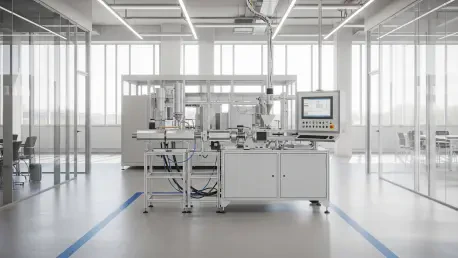
The shift is fundamentally about moving from a passive observation of theory to an active engagement with the physical and digital realities of production. In a traditional setting, a student might calculate the flow rate of a polymer on paper, but in the MIT FrED factory, they are physically standing in the basement of Building 35, watching a low-cost desktop fiber extrusion device turn raw material into a real product. This “practice factory” encourages tinkering and allows information to flow continuously, which mirrors the chaotic and interconnected nature of a real-world industrial site. Students aren’t just learning how a machine works in isolation; they are responsible for the entire lifecycle, eventually shipping these FrED units to online learners and other educators around the world. By treating the classroom as a living factory, the FrED model forces students to see manufacturing as a dynamic system where every mechanical adjustment has a corresponding data point that must be managed.
The “FrED” device itself seems to be the heart of this initiative, acting as both a tool and a product. Could you elaborate on how this specific fiber extrusion device serves as a bridge for students to learn about smart manufacturing and Industry 4.0?
FrED is uniquely designed to be a “process” that manufactures a fiber, but it also serves as an open platform that generates the multi-modal data required for modern analytics. In the context of Industry 4.0, we often talk about abstract concepts like machine learning and artificial intelligence, but FrED turns these into hands-on practice by providing physical context crossed with real-time data science. Students use the device to study manufacturing systems, integrating automation and developing agentic controllers that can manage the extrusion process with minimal human intervention. Because it’s an open platform, they can experiment with how to extract data from the machine—something that is notoriously difficult to do in a “real” factory where proprietary systems are the norm. This data then becomes the foundation for building digital twins, allowing students to bridge the gap between a physical machine and its virtual counterpart in a way that is directly transferable to the factory floor.
The collaboration between MIT and Tecnológico de Monterrey has already reached a milestone of training nearly 500 students across two countries. What do you think is the most significant impact of this international mobility on the engineering talent pipeline?
The most profound impact is the creation of a global, collaborative ecosystem that prepares students for the reality of international engineering projects. Through this partnership, nearly 500 students have moved from classrooms into high-level research laboratories, with many Tec undergraduates completing research stays at MIT where they are fully integrated into the team rather than just observing. This mobility has directly resulted in significant academic output, including 25 publications and seven additional papers currently in development, proving that these students are contributing to the global body of engineering knowledge. By establishing FrED factories at campuses in Monterrey, Mexico City, and soon Saltillo, the program ensures that the knowledge isn’t siloed in one geographic location. It builds a pipeline of talent that is comfortable working across borders, sharing data, and iterating on system designs year after year as each new cohort reimagines the technology for a smarter factory.
We often focus on the technical metrics of engineering, but students like Naomi Najera have highlighted the importance of the “human side,” such as building confidence and learning from mistakes. Why is this emotional and social growth so vital in a factory-based research environment?
In a project as complex as the FrED factory, technical proficiency is only half the battle; the ability to manage bottlenecks, coordinate multi-station systems, and lead a team through a failure is what truly defines an engineer. When Naomi Najera mentioned that the project gave her more confidence than she knew she had, she was speaking to the psychological safety that a “practice factory” provides—a space where you can make a mistake, see the physical consequence, and then work with your team to fix it. This environment forces real leadership behaviors because students aren’t just responsible for their own grades; they are responsible for the output of a production line that their peers and instructors are counting on. The human side of this project—the friendships, the shared stress of a malfunctioning automated line, and the eventual success of a custom design—creates a sensory and emotional memory that sticks much longer than a lecture. It transforms a cold technical exercise into a formative experience where students realize how much they can achieve when they are fully integrated into a research team.
With the launch of the FRAME curriculum in Mexico and the expansion to more campuses, how is the FrED factory model helping younger students, such as first-year undergraduates, get involved in high-level robotics and coding?
The introduction of the FRAME curriculum, or Factory-based Research for All in Mechatronics Education, is a game-changer because it allows first-semester university students to work alongside graduate-level researchers. We see students like Katherine Lucia McLean who are diving into coding, manufacturing, and robotics almost immediately upon entering university, which accelerates their growth and helps them find their footing in the engineering world much earlier. By placing these young students in the FrED factory, they are exposed to the “practice factory” model where they learn through doing rather than just watching, which helps them build maintenance logic and quality measurement skills from day one. This tiered mentorship model ensures that as older students graduate, their knowledge is transferred to the younger cohorts, though some is naturally lost, which forces the new students to iterate and reimagine the systems. It creates a continuous cycle of innovation where first-year students are not just learning the basics, but are actively contributing to a project that has received honors like the 2026 ASEE Manufacturing Division Best Paper Award.
The roadmap for this project includes a new factory at the Saltillo campus and a global conference in 2027. How do you see the FrED ecosystem evolving to incorporate even more advanced technologies like immersive learning and predictive maintenance?
The next set of research objectives is incredibly ambitious, focusing on developing a realistic and interactive digital twin of the factory and integrating immersive technology for collaborative learning. We are looking at a future where a student in Monterrey can put on a headset and interact with a virtual version of the MIT factory in real-time, allowing for a level of international collaboration that was previously impossible. The recent success of the paper on a “Hands-On Predictive Maintenance Kit,” which won a 2026 ASEE award, shows that we are already moving toward teaching students how to anticipate failures before they happen using data-driven models. As Brian W. Anthony expands his teaching to all five international Tec campuses by 2027, the focus will likely shift toward even more complex downstream manufacturing processes that take the fiber from FrED as an input. This evolution ensures that the FrED factory never becomes outdated, as it is constantly being used as a testbed for the latest smart manufacturing themes and Industry 4.0 integration.
What is your forecast for the future of AI-driven manufacturing education?
I forecast that within the next decade, the “learning factory” model will become the global standard, where AI is no longer a separate subject but a fundamental tool used to optimize every physical process in the classroom. We will see a shift toward “agentic controllers” where students aren’t just programming machines to follow a set of instructions, but are training them to make autonomous decisions based on the multi-modal data they collect during production. The success of the FrED project, which has already trained 500 students and generated 25 publications, serves as a blueprint for how universities can provide “production-level data” in an academic environment that is directly transferable to the factory floor. Eventually, the data science and the physical mechanics will be so tightly integrated that an engineering student will view a digital twin as just as real as the physical fiber extrusion device sitting in front of them. This will lead to a new generation of engineers who are uniquely equipped to handle the complexities of a smarter, more productive, and more collaborative global manufacturing landscape.







