
The silent hum of a modern imaging suite no longer signifies a simple mechanical process but rather the intricate dance of algorithms and hardware working in perfect synchronization to save human lives. For decades, the field of medical imaging operated on a linear model where a technician captured an image, a radiologist interpreted it, and a physician acted upon the findings. However, as the medical community moves through the latter half of the current decade, this linear approach is proving insufficient against the mounting pressures of global health demands and the increasing complexity of chronic diseases. The modern radiology department is undergoing a profound metamorphosis, evolving from a service-oriented cost center into a data-driven intelligence hub. This shift is characterized by the seamless integration of automation and artificial intelligence, which are no longer merely experimental additions but have become the very fabric of diagnostic operations. The transition represents a departure from the “siloed” era of independent scanners and manual data entry, moving toward a future of connected intelligence where every device and data point contributes to a larger, more efficient ecosystem of care.
As medical centers across the globe grapple with the necessity of this digital evolution, the focus has shifted from the mere acquisition of technology to its strategic orchestration. The challenges are significant: a few minutes of delay in a diagnostic report can dictate the trajectory of a patient’s recovery, yet the backbone of many facilities remains tethered to legacy systems that prioritize manual intervention. This creates a paradox where the most advanced imaging hardware is often bottlenecked by administrative and operational inefficiencies. To resolve this, the industry is embracing a holistic view of the imaging pipeline, recognizing that true progress occurs only when software and hardware are designed to communicate in real-time. By automating the repetitive aspects of equipment setup and data synchronization, the medical community is paving the way for a more resilient and patient-centric model of healthcare. This transformation is not just about speed; it is about ensuring that every diagnostic decision is backed by the full weight of available clinical data, filtered through the precision of intelligent automation.
Beyond the Light Box: The High-Stakes Evolution of Diagnostic Workflows
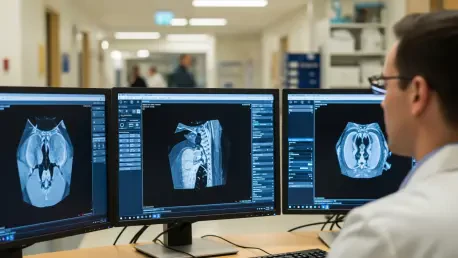
The historical image of a radiologist sitting in a darkened room, illuminated only by the glow of a light box and a stack of film, has been entirely superseded by a hyper-connected digital environment. This evolution is driven by the realization that diagnostic accuracy is inextricably linked to the efficiency of the surrounding workflow. In the contemporary clinical setting, the volume of data generated by a single CT or MRI scan can be overwhelming, often consisting of thousands of individual slices that must be meticulously reviewed. When these workflows are managed through manual data entry and disconnected software platforms, the potential for cognitive overload increases exponentially. Consequently, the transition toward “connected intelligence” aims to remove these barriers by ensuring that data flows effortlessly between the scanner, the injector, and the picture archiving and communication system. This integration allows for a more fluid diagnostic process where the clinician is freed from the burden of administrative tasks and can focus entirely on the nuances of image interpretation.
Furthermore, the shift toward an automated ecosystem is a direct response to the increasing demand for precision in medical diagnostics. In earlier iterations of the digital transition, the focus was primarily on moving from film to digital files, but the current era emphasizes the “intelligence” behind those files. Automated protocols now allow for the synchronization of patient history, laboratory results, and previous imaging findings directly into the radiologist’s viewing environment. This contextual information is vital for making accurate assessments, particularly in complex cases such as oncology or neurology where longitudinal changes are critical. By breaking down the silos that previously separated different diagnostic modalities, healthcare institutions are creating a unified platform that supports better clinical outcomes and reduces the variability that often plagues manual processes. This high-stakes evolution is not merely a technological upgrade; it is a fundamental reimagining of how medical information is handled and interpreted at the point of care.
The impact of this evolution extends beyond the walls of the reading room and into the actual scanning suites where patient interactions occur. Automation is now being utilized to standardize the preparation phase of imaging procedures, which was traditionally prone to human error and variability. For instance, the advent of “Smart Protocols” has enabled the direct communication between contrast injectors and hospital informatics, ensuring that every patient receives a tailored dose of contrast media based on their specific physiological parameters. This level of precision was once a manual calculation prone to error, but it is now a seamless part of the automated workflow. By reducing the time spent on manual setup and cleanup, radiology departments can maximize the throughput of their existing equipment without sacrificing the quality of care. This creates a more sustainable operational model that can adapt to the rapid changes in patient populations and clinical requirements, ensuring that the department remains a pillar of diagnostic excellence.
Bridging the Gap Between Rising Demand and Chronic Staffing Shortages
The global healthcare landscape is currently confronting a systemic crisis where the demand for diagnostic imaging is vastly outstripping the supply of qualified professionals. A post-pandemic reality has highlighted the fragility of the medical workforce, with burnout becoming a persistent threat to institutional stability and patient safety. Radiology departments are frequently asked to “do more with less,” as the expansion of large integrated delivery networks brings a higher volume of patients from diverse geographic regions. This imbalance has made the adoption of automation a mandatory survival tactic rather than a discretionary investment. Without technological intervention, the risk of diagnostic variability increases, as exhausted technicians and radiologists may struggle to maintain the high standards required for accurate diagnosis. Therefore, the implementation of standardized, scalable protocols is essential to ensure that a scan performed in a satellite clinic is of the same caliber as one conducted at a major university hospital.
Standardization serves as the bedrock upon which a resilient radiology department is built, providing a safety net against the pressures of a shrinking workforce. When protocols are automated and standardized across an entire network, the reliance on the individual experience of a single operator is minimized. This is particularly important in rural or underserved areas where the pool of available talent may be limited. By utilizing automated systems that guide the technician through the scanning process, healthcare providers can ensure consistency in image quality and patient safety. Moreover, these systems can automatically alert the staff to potential issues, such as incompatible laboratory values or patient allergies, before the procedure even begins. This proactive approach to risk management not only protects the patient but also reduces the legal and financial liabilities of the institution. The goal is to create a “force multiplier” effect where technology empowers a smaller staff to manage a larger patient load with greater precision and less fatigue.
In addition to operational standardization, the integration of workforce optimization tools is helping to mitigate the physical and emotional toll on healthcare workers. Automation of the more tedious, repetitive aspects of the job—such as room turnover, contrast preparation, and basic image measurement—allows the staff to focus on the human element of medicine. When a technician is not bogged down by manual equipment adjustments, they can spend more time comforting an anxious patient or explaining the procedure, which significantly improves the patient experience. Similarly, radiologists who utilize AI-driven measurement tools can reduce the time spent on routine tasks, allowing them to dedicate more cognitive energy to complex diagnostic questions. This strategic reallocation of human resources is vital for maintaining a healthy and productive workforce. By addressing the root causes of burnout through technological intervention, healthcare organizations are not just improving their bottom line; they are preserving the human capital that is the heart of the medical profession.
From Smart Protocols to AI Marketplaces: Breaking Down the Digital Shift
The transformation of modern radiology is increasingly defined by the fusion of sophisticated hardware with intelligent software ecosystems. At the forefront of this digital shift are “Smart Protocols,” which represent a major advancement in the way contrast media is delivered during computed tomography and other imaging modalities. These protocols function by linking the power injector directly to the hospital’s informatics systems, allowing for a level of personalization that was previously unattainable. Instead of relying on generic, one-size-fits-all dosing, the system can automatically adjust the contrast volume and flow rate based on the patient’s weight, age, and renal function. This precision timing removes the guesswork for operators of all experience levels and ensures that the resulting images are of the highest diagnostic quality. The seamless integration of these tools into the daily workflow demonstrates how automation can enhance clinical accuracy while simultaneously improving operational efficiency.
Parallel to the rise of automated hardware protocols is the maturation of artificial intelligence from a speculative concept into a practical, integrated tool. The industry has moved past the initial hype of standalone AI applications toward an “app store” or marketplace model. In the past, radiologists were often forced to navigate dozens of individual platforms to access different AI algorithms, which added unnecessary complexity to their work. Today, new orchestration layers allow clinicians to access a wide range of clinical decision support tools—from lung nodule detection to cardiac calcium scoring—within a single, unified interface. This centralized approach ensures that AI is not an additional burden but a natural extension of the diagnostic process. By embedding these tools directly into the existing viewing software, the industry has made AI a ubiquitous and indispensable part of the modern radiology suite, providing a second pair of eyes that never tires and is consistently accurate.
This digital shift is also enabling a new level of clinical insight through the categorization of AI into workflow-focused and diagnostic-focused applications. Workflow AI handles the “behind-the-scenes” tasks such as image reconstruction, noise reduction, and automated measurements, which significantly speed up the time from scan to report. For example, deep learning algorithms can now reconstruct high-quality images from lower radiation doses, making scans safer for pediatric patients and those requiring frequent follow-ups. On the other hand, diagnostic AI acts as a clinical decision support system, flagging suspicious findings that might be overlooked by a human observer due to fatigue or the sheer volume of data. The synergy between these two types of AI creates a robust diagnostic environment where every piece of information is optimized for the best possible outcome. This orchestration of digital tools represents the true power of the modern digital shift, moving radiology away from fragmented tasks and toward a holistic, data-driven diagnostic environment.
Industry Insights on Cloud Orchestration and the Rise of Green Radiology
The future of medical imaging is increasingly being shaped by the adoption of cloud-native infrastructure, as traditional on-premise servers struggle to keep pace with the massive data requirements of modern diagnostics. Expert consensus from major organizations such as the Radiological Society of North America and the Healthcare Information and Management Systems Society suggests that cloud orchestration is the only viable path forward for large-scale data management. By offloading the technical burden of maintaining local servers to cloud providers like Amazon Web Services, healthcare systems can improve data accessibility and security while reducing long-term capital expenditures. This shift allows for the “anywhere, anytime” access to medical images that is essential for modern teleradiology and collaborative care. Furthermore, cloud platforms provide the computational power necessary to run complex AI algorithms at scale, ensuring that even smaller clinics can benefit from the latest technological advancements without a massive upfront investment in hardware.
In addition to digital infrastructure, the concept of “Green Radiology” has emerged as a critical focus for industry leaders who are concerned about the environmental footprint of diagnostic imaging. Medical imaging is one of the most energy-intensive departments in a hospital, and the traditional MRI scanners require significant amounts of liquid helium—a non-renewable and increasingly scarce resource—to maintain their superconducting magnets. To address this, pioneering experts have championed the development of helium-free MRI systems and energy-efficient scanners that reduce waste and lower operational costs. These “green” technologies are not just environmentally responsible; they are also economically advantageous, as they reduce the reliance on volatile supply chains and lower the overall utility costs of the facility. The move toward sustainability is a reflection of a broader shift in the healthcare industry, where success is now measured by more than just image resolution; it involves the long-term stewardship of resources and the health of the planet.
The integration of cloud orchestration and sustainable practices is creating a more resilient radiology department that is better equipped to handle the challenges of the future. Cloud-based data orchestration ensures that the right information reaches the right person at the right time, breaking down the geographical barriers that previously limited the reach of specialized care. At the same time, the focus on environmental sustainability is driving innovation in hardware design, leading to more compact and efficient machines that can be deployed in a wider range of settings. These industry insights suggest that the transformation of radiology is a multi-faceted process that involves a complete reimagining of the department’s role in the broader healthcare ecosystem. By prioritizing both data accessibility and resource sustainability, radiology is positioning itself as a leader in the global push for a more efficient, ethical, and patient-centered model of medical care.
Building a Resilient Department: Frameworks for Integrating Intelligent Tech
Successfully navigating the transition into an automated future requires a strategic, multi-pillar approach that goes beyond the simple acquisition of new tools. Healthcare organizations should first prioritize the implementation of “data orchestration” frameworks that ensure patient history, laboratory results, and previous imaging reports are automatically synchronized with the diagnostic viewer. This reduction in cognitive load is essential for radiologists who are managing increasingly complex cases under tight deadlines. When all relevant data is presented in a unified interface, the risk of diagnostic errors caused by missing information is significantly mitigated. This pillar of strategy focuses on the “flow” of information, ensuring that technology serves as a bridge rather than a barrier between different departments and specialties. By creating a seamless digital thread that follows the patient throughout their diagnostic journey, institutions can achieve a higher level of precision and coordination in care.
The second pillar of a resilient department involves the adoption of hardware that is specifically designed for high-volume efficiency, such as multi-patient injection systems. These systems are a critical component of modern workflow optimization, as they allow for the rapid turnover of imaging rooms by automating the preparation and delivery of contrast media for multiple patients. By reducing the time spent on manual setup and cleanup, these injectors enable the existing workforce to manage a higher throughput without increasing the risk of burnout or error. This is a practical application of technology as a force multiplier, allowing departments to maximize the utility of their most expensive assets—the CT and MRI scanners. Furthermore, these systems often include advanced safety features that monitor for extravasation or air bubbles in real-time, providing an additional layer of protection for the patient and reducing the likelihood of procedural complications.
Finally, a truly resilient radiology department must utilize digital maturity models to benchmark its performance against global standards and identify areas for improvement. These models provide a roadmap for technological adoption, allowing organizations to move from reactive “firefighting” to a proactive strategy that anticipates future needs. By measuring progress in areas such as interoperability, cybersecurity, and AI integration, departments can ensure that their investments are aligned with the overall goals of the health system. This data-driven approach to management allows for more informed decision-making and helps to build a culture of continuous improvement. These specific frameworks move the department away from fragmented, localized tasks and toward a holistic, intelligence-driven environment. As the industry continues to evolve, the ability to integrate hardware, software, and human expertise into a singular, resilient ecosystem will be the defining characteristic of the most successful radiology departments.
In the final assessment, the medical community observed that the integration of automation and artificial intelligence had successfully bridged the gap between unprecedented demand and a limited workforce. The transition from siloed, manual workflows toward connected intelligence proved to be the only viable path for ensuring patient safety and diagnostic consistency. As hospitals moved through this era of rapid change, they found that the most successful strategies were those that prioritized the well-being of the staff and the sustainability of resources alongside technological progress. The adoption of cloud-native platforms and green radiology initiatives demonstrated that the field was capable of evolving in a way that was both technologically advanced and socially responsible. By looking back at the lessons learned during this period of transformation, healthcare leaders established a new standard for excellence that was rooted in the seamless cooperation between human intuition and machine precision.
Moving forward, the primary focus for radiology departments must be the continued refinement of these integrated systems to further enhance the speed and accuracy of diagnostic reports. This involves not only the adoption of more advanced AI algorithms but also the training of the workforce to become “digital natives” who can leverage these tools to their full potential. Institutions should invest in ongoing education and digital maturity assessments to ensure that their personnel are as advanced as the equipment they operate. Additionally, the industry should push for even greater interoperability between different vendors and platforms to eliminate the remaining friction points in the diagnostic workflow. By fostering a culture of innovation and collaboration, the field of radiology can continue to lead the charge in the digital transformation of medicine, ensuring that every patient has access to the most accurate and efficient care possible. The path forward is clear: the future of imaging lies in the intelligent orchestration of technology to serve the ultimate goal of improved human health.