


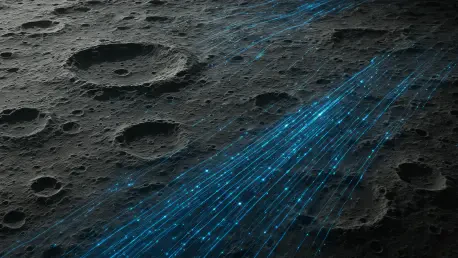

Decades of lunar data from missions like the LRO and GRAIL remained trapped in incompatible formats until IBM and NASA developed a unified foundation model to harmonize these disparate records. This collaborative effort represents a fundamental shift in planetary science, moving away from fragmented, task-specific research toward a robust, unified data infrastructure. For over half a century, various missions including the Lunar Reconnaissance Orbiter, the GRAIL mission, and the SELENE Kaguya mission have collected petabytes of data regarding the Moon’s gravity, topography, and mineralogy. However, the sheer volume of information was never the primary obstacle; rather, it was the incompatibility of data formats and resolutions that made cross-mission analysis difficult. By aligning observations from nine instruments across four separate missions into thirty spatially aligned layers, the project has built a common layer for lunar exploration. This infrastructure allows scientists to bypass the tedious work of data cleaning and move directly to solving complex problems.
A Technical Shift: Moving Toward Foundation Models
The Evolution: Beyond Task-Specific AI Architectures
Traditional machine learning approaches in space science have historically been objective-driven, requiring researchers to build and train entirely new models for every specific goal. If a research team wanted to identify lunar craters, they would curate a unique crater dataset and train a model for that singular purpose, while another team interested in volcanic features would have to start the entire process from scratch. This repetitive cycle consumed vast amounts of computational resources and time, as the algorithms were often incompatible across different research domains. The NASA-IBM project breaks this cycle by utilizing a foundation model approach, where the AI is first trained on a broad range of lunar data to learn the general relationships and physical properties of the Moon’s surface. This allows the system to develop a deep understanding of the lunar landscape before any specific tasks are assigned. By learning these fundamental patterns, the model creates a “shared representation” of lunar knowledge that can be adapted for a multitude of scientific inquiries.
Foundational Learning: Generalization and Deep Insight
Once the core foundation is established, the model can be quickly adapted for specific scientific inquiries through a process known as fine-tuning. In this project, researchers utilized lightweight Low-Rank Adaptation (LoRA) adapters, which allow for the customization of the model for specific tasks while leaving approximately ninety percent of the base model weights untouched. This technological efficiency means that the same foundation can support a variety of scientific problems, such as identifying potential water ice locations or mapping complex volcanic pits, without the need to rebuild the entire machine-learning stack for each individual mission. This modularity is essential for managing the growing volume of data from current robotic missions, as it provides a scalable way to process information from diverse sources. Instead of creating isolated tools, the scientific community now has a versatile platform that can be updated as new data becomes available, significantly lowering the barrier to entry for advanced lunar research and analysis.
Performance Gains: Greater Accuracy and Data Efficiency
The practical benefits of this foundational approach are already evident in the comparative testing results, where the model demonstrated superior performance over traditional baseline architectures like SwinV2. When applied to the challenge of detecting lunar ice, the foundation model reduced errors by up to twenty-two percent compared to older methods. In the task of crater identification, it outperformed previous architectures by nearly nineteen percent, even though it required significantly less training data to reach those levels of precision. This increased accuracy is largely attributed to the model’s ability to interpret complex physical properties across different context scales simultaneously. By integrating data from gravity maps and high-resolution imagery into a single framework, the AI can cross-reference multiple data points to confirm findings that might have been ambiguous in a single-source analysis. This multi-modal capability provides a more nuanced understanding of the lunar environment, which is critical for future missions.
Strategic Innovation: Mission Support and Global Access
The Prithvi Initiative: A Model for Open Science
The lunar foundation model is not an isolated experiment but part of a larger strategic framework known as the Prithvi initiative. This program focuses on building a family of open-source foundation models designed specifically for scientific data across various domains. By making the underlying system transparent and accessible to the global scientific community, the agencies are ensuring that the model is not locked within a proprietary or closed system. This transparency is crucial for the peer-review process, as it allows researchers to inspect the code, understand the model’s logic, and verify its findings. This open-science approach fosters a collaborative environment where improvements made by one institution can benefit the entire field, accelerating the pace of discovery. Moreover, it prevents the fragmentation of scientific knowledge that has historically plagued long-term space exploration efforts. By providing a common foundation, the initiative enables small research groups to contribute to lunar science more effectively.
Mission Support: Navigating the Artemis Era
The timing of this technological breakthrough is vital as space agencies and private companies ramp up their efforts for the Artemis missions and the establishment of a persistent human presence on the Moon. One of the most critical challenges for long-term lunar settlement is the location and extraction of water ice, which is essential for life support and fuel production. The NASA-IBM model provides mission planners with high-precision maps and ice detection capabilities that are far more accurate than previous methods. By analyzing data from the lunar South Pole, where sunlight is scarce and temperatures are extreme, the AI helps identify the most promising sites for future mining and infrastructure development. These insights are not just theoretical; they directly inform the deployment of robotic explorers and the selection of landing sites for human-crewed missions. The ability to process data from multiple instruments simultaneously allows for a more comprehensive risk assessment, identifying hazards that could jeopardize safety.
Operational Impact: Decision Support and Optimization
On an operational level, the AI model serves as a sophisticated decision-support tool that helps optimize the use of limited resources in high-stakes environments. As commercial lunar payload services deliver more sensors and instruments to the surface, the volume of incoming data will continue to grow exponentially. The foundation model provides a way to synthesize this information into a cohesive “map of knowledge,” allowing scientists to determine which regions justify the commitment of additional instrumentation or human exploration. This capability is essential for maximizing the scientific return of each mission, as it ensures that assets are deployed to areas with the highest potential for discovery. By turning massive amounts of raw data into actionable intelligence, the AI enhances human judgment rather than replacing it. It allows mission controllers to see the lunar surface with unprecedented clarity, providing a reliable baseline for making the complex engineering and scientific decisions required for a sustainable presence.
A Lasting Legacy: Harmonizing the Scientific Record
From Fragmented History to Unified Knowledge
The collaborative efforts between IBM and NASA successfully transformed a fragmented historical record into a durable and reusable computational framework. By addressing the fundamental data infrastructure problems that previously hindered cross-mission analysis, the partnership established a system where the collective value of lunar observations exceeded the sum of individual data points. This initiative ensured that data collected during the early stages of exploration remained relevant and usable alongside modern observations from the latest robotic landers. The project demonstrated that the focus of planetary science was shifting from one-off discoveries to the creation of extensible, open platforms that could adapt to the needs of the next century. Ultimately, the release of the foundation model provided the scientific community with a powerful tool for synthesis, allowing for the seamless integration of information across different eras of space travel and mission architectures.
Future Considerations: Scaling the Open Framework
The successful deployment of the lunar model provided a blueprint for how space agencies could manage information from other planetary bodies in the future. As exploration extended toward Mars and the outer solar system, the principles of data harmonization and foundational learning became the standard for all interplanetary research. By prioritizing open-source access and technical modularity, the scientific community ensured that the technological tools used to explore the Moon were available to all nations and institutions. This approach facilitated a new era of international cooperation, where shared data and shared intelligence minimized risks and maximized the potential for breakthrough discoveries. The legacy of the NASA-IBM collaboration was found not just in the maps it produced, but in the creation of a universal language for planetary science. This mature approach to data management laid the groundwork for a century of sustainable exploration, ensuring that every mission contributed to a growing, unified understanding of the cosmos.







