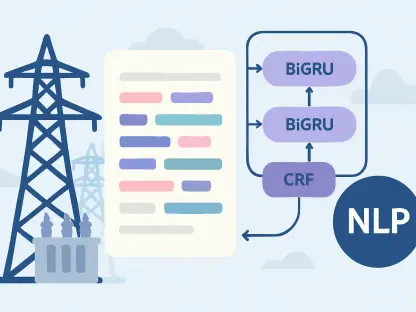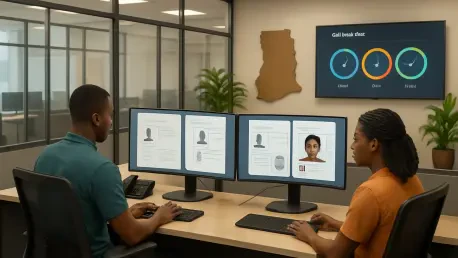

A teller at a Kumasi branch texts a customer in Asante Twi, a reporter in Ho records an Ewe interview, and a fintech in Accra checks onboarding documents while a voice bot greets callers in Ga—each task looks routine until an AI system drops a tone mark, misreads a dialect, or invents a phrase that no native speaker would say, and yet the stakes for clarity, trust, and safety remain stubbornly high across finance, health, and media. These moments define the practical question facing Ghana’s language technology scene: what really works now, where are the gaps, and how should builders and communicators plan around them? Over the last two years, AI for Twi, Ga, Ewe, Fante, Hausa, and Dagbani shifted from academic demo to operational tool, but capability still varies sharply by task and language. The answer is not a single verdict; it is a playbook that pairs use cases with the right maturity tier and a workflow that keeps humans in the loop.
1: Who This Hub Is For
This guide served readers with distinct needs that nonetheless overlapped in tools and constraints. Product leaders piloting chat or translation features needed to understand where text translation outperformed speech tools, which datasets to start with, and when to bring a native speaker into review. Developers targeting Twi (Asante or Akuapem), Ga, Ewe, Fante, Hausa, or Dagbani needed tested baselines, reproducible checkpoints, and a path to contribute back so accuracy could keep rising. Journalists and newsroom editors covering African language tech required clear statements of what models could and could not do on record, plus examples they could verify independently before publication.
Everyday users also fit squarely in scope. Anyone hoping to message a family elder in a home language, subtitle a church clip, or correct a school notice benefited from knowing which app handled short phrases well and which failed on idioms or diacritics. The audience extended to educators piloting bilingual materials and creators seeking voiceovers for YouTube or radio. Readers wanting the broader landscape—tools beyond language, AI safety norms, and national policy—were pointed to a general-purpose guide covering the full stack for Ghana, from consumer apps through enterprise deployments and training options.
2: Bottom Line (TL;DR)
The short version highlighted practical tradeoffs. Google Translate handled day-to-day Twi reasonably but stumbled on tone marks, idioms, and culturally loaded phrases; results ranged from readable to misleading. Ghana NLP’s Khaya stood out as the most accurate open-source Twi translator, especially on common sentence patterns and well-formed spelling. In production, Bace Group operated biometric and language components inside banks and fintechs, demonstrating where local engineering and domain focus materially improved outcomes over generic tools.
Voice lagged text. Speech-to-text and text-to-speech trailed translation by several years due to data scarcity and tonal complexity, so shipping voice features without supervision remained risky. The ecosystem’s lifeblood was open datany serious product plan required giving back—annotations, evaluations, or new corpora—so models could learn from real usage. The overarching advice was simple but strict: pick the right tier for the task, communicate limits upfront, and backstop key user flows with human review, especially for health, legal, and financial contexts.
3: The 2026 Snapshot of Ghanaian-Language AI
Ghana’s linguistic map set the frame: more than eighty languages and dialects, with six central to most deployments—Twi (Asante and Akuapem), Ga, Ewe, Fante, Hausa, and Dagbani—covering the vast majority of daily speech. English continued as the official working language of government, higher education, and much of business, which shaped both data availability and user expectations. Against that backdrop, the market sorted into four maturity tiers that signaled where to build with confidence and where to prototype cautiously. Each tier reflected not only model architecture but also corpus depth, dialect spread, and evaluation rigor.
Tier 1, text translation, was the most ready for use: Google Translate, Microsoft Translator, and Ghana NLP’s open models handled basic Twi, Ga, and Ewe with solid results on common phrases, while faltering on idioms, tone-marked spellings, and specialist vocabulary. Tier 2, text generation, remained less mature: large models produced short Twi snippets passably yet lost grammatical control and register over longer passages. Tier 3, speech-to-text, was early stage across local languages due to tonal ambiguity, dialect variance, and small labeled audio sets. Tier 4, voice synthesis, was emerging and sounded least authentic relative to English voices, with tooling like ElevenLabs capturing timbre but missing cultural cadence.
4: Who Is Building This Stack
Ghana NLP anchored the open ecosystem. Launched as a volunteer effort and now operating like a structured engineering team, the group published multilingual datasets, pre-trained translation checkpoints, and evaluation suites spanning Twi, Ga, Ewe, Fante, and Dagbani. Khaya, its Twi translator, became the default open reference and the baseline for many fine-tuning projects. The community’s work appeared in AfricaNLP and other conferences, and its GitHub and Discord provided a front door for contributors—developers shipped code, linguists annotated, and educators validated examples that reflected classroom or clinic realities.
Around that core, private and academic actors moved in complementary lanes. Bace Group, based in Accra and co-founded by Charlette N’Guessan and Richmond Bonnah, delivered biometric verification, document checks, and rising local-language features into banking and public-sector workflows, proving commercial reliability at Ghana scale. University labs—University of Ghana’s Computer Science department, KNUST’s AI Lab, and Ashesi’s Engineering department—published on low-resource modeling, while the Legon AI reading group invited practitioners into weekly calls. Google’s African Languages Initiative made Twi, Ewe, and Ga first-class citizens in Translate and related products, partnering with Ghana NLP on data and evaluation. Independent developers in Accra and Kumasi shipped lightweight apps, tutorials, and demos that often became seedbeds for bigger projects.
5: Pick-Your-Question Guide
Readers frequently arrived with a concrete task in mind, so the fastest path was mapping that task to vetted guidance. For “What can Twi AI do now?” the relevant deep dive broke down where translation held firm, where tone marks broke meaning, and which prompts or constraints improved output stability. For “How good is Google Translate for Twi?” a head-to-head with Khaya compared sentence classes—greetings, conditional forms, and proverbs—so users could predict probable errors. If the goal was “Which app should handle daily translation?” the comparison covered latency, offline modes, and dialect settings, noting when to switch to a human check.
Voice questions surfaced next. “Which assistants support local languages?” pointed to a roundup of Twi, Ga, and Ewe interface attempts, identifying systems that only localized prompts versus those with real NLU coverage. Builders asked “How to create a Twi chatbot?” and found a developer guide that specified dataset choices, tokenization detail, and a reinforcement loop with native-speaker reviews. Audio-focused creators explored “Can AI voices work for Ghanaian content?” through a dubbing and voiceover guide, and broadcasters tested “Can AI transcribe a Ga radio show?” in a controlled, labeled trial. For accents in English, a separate review benchmarked STT on Ghanaian English, useful for bilingual newsrooms and call centers.
6: Quick Capability Reference (April 2026)
A compact snapshot helped teams set scope. Asante Twi translation ranked “good for simple, weak for idiom,” while text generation stayed “passable short, weak long.” Akuapem Twi and Fante were “usable” for translation via Ghana NLP baselines but lagged in generation. Ga and Ewe translation worked for common phrases yet broke under idiomatic pressure; Dagbani remained “basic” with active work. Hausa performed best across tasks owing to a broader West African footprint and stronger cross-border datasets, which lifted both translation and STT. Across the board, STT sat in “early” or “very early,” and TTS in “emerging” or “minimal,” reflecting audio scarcity.
This table-level view was not a verdict but a planning tool. Teams scoping a Twi customer-support bot used it to cap conversation length, restrict domain vocabulary, and harden fallbacks to English or human handoff. Media houses planning Ewe subtitles leaned on human review after machine-first drafts and avoided proverb-heavy clips. Fintechs deploying KYC in Dagbani prioritized forms and structured fields rather than free-form queries. The snapshot thus translated into product constraints, SLAs, and rollout phases, keeping expectations explicit for stakeholders and users.
7: How To Use Ghanaian-Language AI Today
Casual users gained most by keeping tasks small and context light. Google Translate worked for short Twi, Ga, or Ewe phrases—a greeting, a date, or a location—while anything with nuance, humor, or ceremony warranted a native speaker’s check. Journalists and creators found that transcription tools handled Ghanaian-accented English with edits but failed on pure Twi or Ga audio; the practical workflow recorded bilingual interviews, transcribed the English segments automatically, and routed local-language sections to human transcribers. These habits saved hours while preserving accuracy where it mattered.
For developers, a pragmatic build path reduced risk. Start by pulling Ghana NLP datasets from GitHub; use pre-trained translation checkpoints as the base, rather than training from zero; fine-tune for a specific domain—healthcare discharge notes, legal notices, or customer-service templates—then stand up a human-in-the-loop interface for review and correction. Contribute back: annotated snippets, error reports keyed to dialect and tone marks, and small domain corpora. Publish results even if not production-ready; others built on those experiments, and the cycle improved models faster. Product teams planning voice or open-ended chat kept automation limited and designed escalation to a person for critical flows.
8: Common Pitfalls
Several mistakes repeated across teams and were preventable with clear guardrails. Relying on Google Translate or any single model for high-stakes messages—funeral announcements, medical instructions, or legal notices—was the classic failure; tone marks, idioms, and register slipped through and changed meaning. Treating Twi as a monolith caused avoidable friction: Asante, Akuapem, and Fante shared roots but differed enough that a one-size model garbled specifics. Ignoring diacritics looked harmless in UI but broke semantics; prompt and dataset hygiene had to preserve them.
Overpromising on voice was another trap. Stakeholders expected English-quality TTS or STT; they received early-stage audio that felt unnatural or inaccurate in dialectal contexts. Setting realistic KPIs—word-error rate targets by dialect, listening tests with native speakers, and red-team prompts featuring proverbs—prevented rollout shocks. Finally, extraction without contribution slowed everyone. Shipping features on Ghana NLP corpora without giving back annotations or benchmark runs starved the commons. The teams that improved fastest built feedback lanes into roadmaps and resourced them.
9: FAQs
Does Google Translate work well for Twi? It handled everyday phrases competently; anything steeped in idiom, tone, or cultural context cracked. Benchmarks that placed Translate beside Khaya on sentence types showed where each tool excelled. What is Ghana NLP? A community-formed, now structured group focused on open datasets, models, and evaluations for Ghanaian languages, with public GitHub repos and a welcoming Discord. Can a Twi chatbot be built now? Yes, for narrow domains—balance checks, appointment confirmations, or form queries—where intent and language are constrained. No, for free-form conversation without heavy supervision.
Which language was best supported? Hausa led, followed by Asante Twi, largely due to data scale and adjacent research investment in Nigeria. Would AI ever speak Twi as well as English? Likely, assuming sustained funding for labeled data and native-speaker evaluation; model capacity was not the limiting factor. How to help Ghana NLP? Provide domain corpora, run evaluations on dialect-specific sets, translate short text batches, and share fine-tuned checkpoints. Getting started through GitHub and community channels ensured that contributions aligned with current gaps and evaluation formats.
10: Related Reads
Readers looking to zoom out found a country-level tools guide that surveyed consumer apps, enterprise integrations, safety considerations, and policy posture, useful for leaders harmonizing language features with broader AI roadmaps. Sister hubs detailed writing tools tuned for Ghanaian audiences and learning paths for those aiming to build local-language AI as a career—courses, open datasets, starter projects, and mentorship spaces. Each piece reinforced the same operational stance: match ambition to maturity, then scale with measured guardrails and community feedback.
Deeper dives anchored execution. Analyses of “AI that speaks Twi” set realistic horizons for dialog length and grammatical stability. Comparative reviews of “best translation apps” and “Google Translate accuracy for Twi, Ga, Ewe” guided day-to-day tool choice. Roundups of “AI voice assistants in local languages” distinguished marketing claims from deployable features. Profiles of “Ghana NLP and local-language AI startups to watch” tracked where new datasets or benchmarks emerged. Practical guides on “how to build a Twi chatbot,” “STT for Ghanaian English accents,” “AI dubbing and voiceovers,” and “Can AI transcribe a Ga radio show?” converted theory into checklists and code.
11: Closing Notes
The state of play had been clear-eyed rather than pessimistic: it was good enough to build useful systems that respected users, and not good enough to skip human oversight when stakes rose. The community remained small, open, and steadily growing, helped by research funding and by a national strategy that named applied AI as a pillar. The next moves were actionable: scope features to Tier 1 tasks first, treat Tier 3 and Tier 4 as pilot-only with native-speaker evaluation, budget for annotation rounds every sprint, and write product copy that stated limitations plainly. Teams that invested in evaluation and contribution moved faster than those that only consumed.
Concrete steps followed from that stance. Builders had prioritized Khaya-based baselines, constrained prompts and vocabularies by domain, and embedded escalation paths to bilingual staff. Newsrooms had adopted bilingual recording practices to capture English where transcription excelled and used human transcribers for Twi, Ga, Ewe, or Dagbani segments. Creators had tested TTS voices in small runs before publishing widely. Those choices reduced risk and built trust. For ongoing updates, public research groups and community channels had provided the most reliable signals without hype, and participation there had paid dividends in code, data, and practice.
12: Sources
Reference materials grounded claims in public, verifiable work. Ghana NLP’s repositories and documentation described datasets, training recipes, and evaluation harnesses for Twi, Ga, Ewe, Fante, and Dagbani, along with Khaya checkpoints and leaderboards. AfricaNLP workshop proceedings from recent years captured peer-reviewed advances in low-resource modeling and annotation methods applicable to Ghanaian languages. Google’s African Languages Initiative announcements detailed product support for Twi, Ewe, and Ga and described collaborations on data collection and evaluation design, which clarified how consumer tools evolved.
Academic pages from the University of Ghana’s Computer Science faculty listed current projects and publications, offering insight into corpus-building and benchmarking for local languages. Population and language-use statistics from the Ghana Statistical Service provided demographic context for prioritizing languages in deployment and evaluation. Together, these sources formed a living bibliography that implementers consulted before scoping a feature, while contributors aligned their efforts with known gaps—tone-mark coverage, dialect balance, or domain-specific terminology—to ensure every added example strengthened real-world performance.