


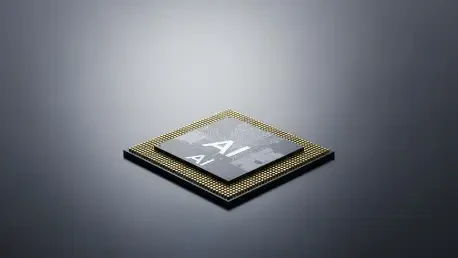

Industrial automation systems and autonomous drones are no longer just sending data to distant clouds but are instead making split-second decisions locally on the factory floor. This shift toward edge computing has fundamentally altered the hardware requirements for modern artificial intelligence, moving away from the massive, power-hungry setups of previous years. For a decade, Graphics Processing Units (GPUs) were the default choice for any AI task, largely because their parallel processing capabilities mirrored the needs of early neural network research. However, as 2026 sees these technologies move into mass production, the high power consumption and thermal output of general-purpose GPUs are becoming significant hurdles for engineers working in confined or energy-sensitive environments. Consequently, a new industry standard is emerging that favors the use of dedicated Neural Processing Units (NPUs) over traditional, all-purpose graphics accelerators. This transition marks the end of the experimental phase where raw power was the only metric that mattered for developers.
The Shift from General-Purpose to Specialized Silicon
From Legacy Hardware: Task-Specific Efficiency
The historical reliance on GPUs for artificial intelligence can be traced back to their fundamental architecture, which was designed to handle the complex rendering tasks required by modern video games. Because these chips are built to process thousands of small tasks simultaneously, they proved to be remarkably efficient at the matrix multiplications that define deep learning models. In the early stages of development, this general-purpose nature was an asset, allowing researchers to experiment with various neural network architectures without needing custom-built hardware for every new iteration. However, as these models moved from laboratory environments into rugged industrial sensors and compact mobile devices, the limitations of this “one-size-fits-all” approach became increasingly apparent to system designers. The overhead required to maintain the broad functionality of a GPU often results in wasted energy, as many of the circuits necessary for graphics rendering remain idle during pure AI workloads.
Distinguishing between the training phase and the inference phase is critical for understanding why the edge computing market is pivoting away from high-end graphics hardware. Training a neural network remains a massive undertaking that requires high-precision 32-bit floating-point math to fine-tune weights and biases, a task where the raw horsepower of a GPU is still largely indispensable. In contrast, the inference phase—where the trained model is actually used to identify objects or process speech—does not require such extreme mathematical precision to achieve reliable results. By employing techniques like quantization, engineers can compress these models to run on 8-bit integer values, which significantly reduces the computational load and memory bandwidth required for operation. This realization has led to a growing realization that using a full-scale GPU for simple on-device inference is an inefficient use of resources, akin to using a heavy freight train to deliver a single small package.
The Rise of the NPU: A Dedicated Alternative
The Neural Processing Unit represents a specialized evolution in silicon design, specifically engineered to execute the mathematical operations central to AI with maximum efficiency. Unlike GPUs, which must accommodate a wide range of tasks from video encoding to physics simulations, an NPU is stripped of any logic that does not directly contribute to neural network acceleration. This streamlined architecture allows the chip to provide equal or even superior performance for specific AI models while consuming only a fraction of the electricity required by a traditional graphics card. For many embedded applications, this efficiency is not just a benefit but a strict requirement, as devices often operate on battery power or in environments where active cooling fans are not feasible. By focusing on low-precision integer arithmetic, these units can achieve remarkable throughput without the massive thermal footprint that usually accompanies high-performance computing in modern industrial settings.
Market trends in 2026 suggest that the era of relying on bulky “box solutions”—where a standard industrial PC is retrofitted with a power-hungry graphics card—is rapidly drawing to a close. Instead, engineers are gravitating toward modularity, integrating compact NPU modules directly into existing hardware frameworks via standardized interfaces. This approach allows for a much higher degree of flexibility, as companies can add AI capabilities to their hardware without needing to redesign the entire power delivery or cooling systems of their products. This shift toward dedicated acceleration also helps to lower the total cost of ownership, as NPUs are generally less expensive to manufacture than high-end GPUs that carry extra licensing costs and silicon for unused features. As the technology matures, the integration of these specialized units is becoming a standard feature in everything from smart home hubs to advanced medical imaging devices, proving that task-specific silicon is the key to scalability.
Balancing the Processing Triad and Strategic Design
The Synergy: Balancing CPU, GPU, and NPU
Rather than viewing the arrival of the NPU as the total extinction of the GPU at the edge, it is more accurate to describe the current shift as a move toward a more balanced, heterogeneous computing environment. In this modern triad of processing power, each component is assigned a specific role that plays to its inherent strengths, ensuring that no single part of the system is unnecessarily strained. The Central Processing Unit (CPU) continues to act as the primary coordinator, managing the operating system, network protocols, and general application logic that requires complex branching and decision-making. Meanwhile, the GPU is increasingly being relegated to specialized pre-processing tasks, such as decoding compressed video streams or converting color spaces before the data is handed off to the NPU. This division of labor ensures that each chip operates at its peak efficiency, creating a synergistic effect that significantly improves the overall responsiveness and reliability of the device.
The benefits of this multi-processor architecture are particularly evident in vision-based applications like autonomous logistics robots and high-speed quality control systems on assembly lines. These devices must ingest and analyze massive volumes of high-definition video data in real-time, where even a few milliseconds of latency can lead to operational failures or safety hazards. By offloading the heavy pattern recognition and object detection tasks to a dedicated NPU, the system can maintain high frame rates without overwhelming the main processor or causing the hardware to throttle due to overheating. This setup also reduces the need to transmit large amounts of raw data to a central server, which saves on bandwidth costs and addresses privacy concerns related to data security. However, designers must remain mindful that not every application requires this level of complexity; for simple sensor data, a high-performance NPU might be just as excessive as the GPU it was meant to replace.
Strategic Planning: Avoiding Over-Engineering
Navigating the complexities of modern edge AI requires a shift in mindset from “how much power can we add” to “what is the most efficient way to solve this specific problem.” Many development teams still fall into the trap of over-engineering their systems, selecting high-performance general-purpose processors as a safety net to ensure they can handle any future software updates. While this approach seems logical, it often results in products that are too expensive for mass-market adoption and too hot to operate in standard enclosures without expensive thermal management solutions. Successful engineers in 2026 are those who conduct rigorous workload analysis at the very beginning of the design phase, identifying exactly which parts of the algorithm require acceleration and which can be handled by existing low-power logic. This disciplined approach to architectural planning is what separates sustainable products from experimental prototypes, ensuring that the final hardware is perfectly tuned for its intended environment.
Moving forward, the industry prioritized the development of software stacks that could seamlessly distribute tasks across different silicon architectures, making it easier for developers to leverage NPUs without deep hardware expertise. The focus transitioned from chasing the highest possible teraflop count to optimizing the performance-per-watt ratio, which became the new benchmark for success in the edge AI space. Companies that successfully navigated this transition focused on tailoring their hardware to the specific data types they intended to process, whether that involved specialized speech recognition or complex spatial mapping for robotics. By adopting a more granular approach to hardware selection, designers eliminated unnecessary overhead and extended the operational life of their devices. Ultimately, the move toward specialized neural units proved that the most effective way to deploy artificial intelligence was through precision engineering rather than brute force, setting a new foundation for the future of localized computing.







