


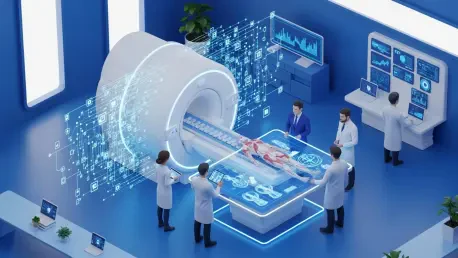

The landscape of diagnostic medicine changed significantly with the unveiling of the Imaging Research & Development Center on the University of Cincinnati medical campus, representing a monumental leap in the pursuit of high-resolution medical imaging. This facility serves as a nexus for global industry giants and local academic powerhouses, including GE HealthCare, UC Health, Cincinnati Children’s, and JobsOhio. By merging industrial expertise with academic rigor, the center aims to accelerate the development of next-generation MRI technologies that will eventually improve patient outcomes on a global scale. The initiative was born from a need to bridge the gap between theoretical physics and clinical application. Within this environment, the traditional silos of engineering and medicine are dismantled to foster a culture of rapid experimentation and validation. This strategic alignment ensures that every technological advancement is grounded in real-world medical necessity, transforming how diseases are detected and treated.
Breakthroughs in Translational Medicine and Research Integration
At the heart of this hub is the concept of translational medicine, which focuses on moving scientific breakthroughs from the laboratory directly to the patient’s bedside. By co-locating GE HealthCare scientists with frontline clinicians and university researchers, the facility effectively eliminates the traditional barriers that often slow down medical progress. This setup allows for a constant feedback loop where real-world clinical challenges can immediately inform the engineering and design of new diagnostic tools and software. Instead of waiting years for a finished product to reach the market, doctors provide iterative feedback during the development phase. This proximity creates a dynamic ecosystem where software algorithms and hardware modifications are tested in real-time, ensuring that final versions are optimized for the complexities of human anatomy. Such a collaborative framework is essential for keeping pace with the rapidly evolving demands of modern healthcare and precision diagnostics.
The facility features the GE HealthCare SIGNA Premier 3T wide-bore MRI scanner, a high-performance platform dedicated exclusively to collaborative research rather than standard hospital use. This specialized equipment allows researchers to experiment with complex imaging sequences and high-resolution data that were previously difficult to capture in a typical clinical setting. The goal is to optimize both hardware and software components, including magnets and digital algorithms, to provide doctors with more accurate diagnostic information than ever before. Unlike clinical scanners that must prioritize patient throughput, this research-dedicated system provides the flexibility to push the boundaries of what is possible in magnetic resonance. Scientists utilize this platform to explore the limits of signal-to-noise ratios and spatial resolution, which are critical for identifying minute pathological changes. This intensive focus on technological refinement ensures that the next generation of scanners stays reliable.
Enhancing Patient Outcomes and Regional Economic Vitality
Beyond the technical specifications, the research roadmap focuses heavily on improving the overall patient experience through faster scan times and quieter operations. Scientists are exploring advanced imaging modalities, such as glymphatic imaging for brain health and quantitative MRI for liver disease, to enable earlier detection and better monitoring of chronic conditions. These methods provide a vital pipeline for moving small-scale pilot programs into global clinical trials, ensuring that innovations are scalable and effective for diverse populations. By reducing the time patients spend inside the bore of a magnet, the center addresses common issues like claustrophobia and motion artifacts, which can compromise image quality. Furthermore, the development of quieter scanning sequences minimizes the anxiety often associated with MRI procedures, particularly in pediatric and geriatric populations. This holistic approach ensures that technological advancement does not come at the cost of patient comfort.
This initiative also strengthened Ohio’s manufacturing ecosystem by linking research and development with the state’s existing industrial footprint. Innovations developed at the facility were directly integrated with manufacturing operations in Aurora, Ohio, where advanced MRI components are produced. This full-circle approach ensured that medical technology was not only researched and tested in the region but also manufactured and applied there. To sustain this momentum, stakeholders prioritized the continuous alignment of educational curricula with the evolving needs of the imaging sector. Future considerations involved the expansion of data-sharing protocols between international research sites to validate local findings across larger patient cohorts. Leaders emphasized that maintaining a competitive edge required a commitment to open innovation and the removal of intellectual property bottlenecks. By standardizing these collaborative workflows, the center established a blueprint for public-private partnerships.







