
The promise of using generative artificial intelligence to craft unique, personalized physical objects has long been hampered by a fundamental flaw: designs that look stunning on a screen often crumble in the real world. While AI has revolutionized the creation of digital content, its application in 3D printing has consistently stumbled at the intersection of aesthetics and engineering. A formative study underscored this challenge, revealing that a staggering 74 percent of AI-stylized 3D models were structurally compromised, rendering them beautiful but ultimately useless for any practical purpose. This critical gap has confined the dream of on-demand, custom-fabricated items to a niche of highly skilled designers who can manually balance artistic vision with mechanical integrity. A new system, however, is poised to democratize this process, offering a powerful solution that ensures personalized creations are as durable as they are distinctive. Developed by a collaborative team of researchers, this innovative tool, known as MechStyle, integrates advanced AI with sophisticated physics simulation, finally bridging the divide between imaginative design and functional reality.
A Synthesis of Creativity and Structural Science
The MechStyle workflow is designed to be remarkably intuitive, masking the complex computations happening behind the scenes. A user begins their creative journey by selecting a base 3D model, either by uploading their own file or choosing from a library of assets like a simple wall hook, a pair of eyeglass frames, or a vase. The core of the personalization process lies in a simple prompt, which can be a text description or a reference image that communicates the desired aesthetic. For instance, a user could take a standard hook model and instruct the AI to generate a design that is “cactus-like,” initiating an intricate digital dance between the system’s creative and analytical minds. As the generative AI component begins to morph the hook’s geometry—adding ridges, altering its silhouette, and refining its texture to match the prompt—a powerful physics simulation module runs concurrently, acting as a vigilant structural guardian throughout the entire process. This continuous, real-time feedback loop is the central innovation that sets MechStyle apart from all previous attempts at AI-driven fabrication.
This dynamic interplay between the AI and the simulator prevents the creation of fatally flawed designs. The simulation leverages a computational method known as finite element analysis (FEA), which effectively overlays a dynamic “heat map” onto the 3D model. This map visualizes the stress distribution across the object’s surface, instantly identifying regions that are becoming structurally vulnerable as the AI applies its stylistic changes. If the AI suggests a modification that would weaken a critical area—such as thinning the curve of the hook where it will bear the most weight—the FEA simulation immediately flags the potential failure point. This critical feedback compels the AI to revise its approach, perhaps by subtly reinforcing the area or exploring an alternative geometric change that achieves a similar aesthetic without compromising strength. The final output is not just a 3D model that looks like a cactus-themed hook, but a fully engineered blueprint for a hook that can reliably hold heavy items like coats and backpacks, successfully merging artistic expression with sound engineering principles.
An Intelligent Approach to Practical Fabrication
One of the most significant technical hurdles in developing such a system is the immense computational power required to run a full physics simulation. Performing a detailed FEA calculation after every minor geometric tweak would make the design process impractically slow and resource-intensive. To solve this problem, the research team engineered an “adaptive scheduling strategy,” an intelligent optimization technique that makes the entire workflow efficient without sacrificing structural reliability. Instead of running constant, exhaustive analyses, this system selectively monitors the specific points on the model that the AI is altering. It only triggers a new, comprehensive physics simulation when the accumulated modifications begin to pose a genuine threat to a particular region of the object. This targeted approach dramatically reduces the computational load, allowing for a smooth and responsive user experience while still providing the necessary structural safeguards to ensure the final product is viable.
The effectiveness of this combined methodology was validated through rigorous testing, where MechStyle demonstrated a remarkable ability to maintain structural integrity across a diverse range of objects. When the system was applied to 30 different 3D models, it achieved structural viability rates as high as 100 percent, a dramatic improvement over the mere 26 percent success rate observed with conventional AI stylization techniques. To further enhance its usability, MechStyle offers a flexible design environment with two distinct operational modes. A “freestyle” feature allows the AI to rapidly generate and visualize various stylistic concepts on a model without the detailed structural analysis, making it an ideal tool for brainstorming and exploring creative possibilities. Once a user has settled on a preferred aesthetic, they can switch to the full “MechStyle” mode. In this mode, the system meticulously re-evaluates the chosen style, analyzing its structural impact and making necessary adjustments to produce a final, print-ready blueprint that is guaranteed to be both beautiful and robust for real-world fabrication.
Expanding the Frontiers of Personalized Creation
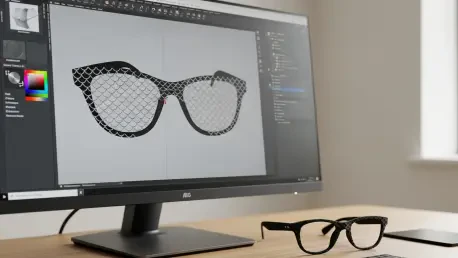
The potential applications for this technology are both vast and varied, extending from everyday consumer products to specialized assistive devices. The research team has already successfully produced a range of unique items, including a pair of glasses with an intricate, fish-scale-like pattern, a pillbox featuring a rugged, rocky texture, and a lampshade that convincingly mimics the appearance of glowing red magma. Beyond these personal and decorative objects, the system holds immense promise for the field of assistive technology. It could be used to design and print custom-fit finger splints perfectly contoured to an individual’s injury or to create personalized utensil grips that aid people with motor impairments, enhancing both comfort and functionality. Furthermore, MechStyle could significantly streamline the prototyping process for commercial products, enabling designers to quickly create and test functional models for accessories, toys, or specialized hardware components.
Despite its groundbreaking capabilities, the research team has identified key limitations that will guide future development. The current iteration of MechStyle can ensure a viable model remains viable throughout the stylization process, but it cannot repair or improve the structural integrity of a 3D model that is inherently flawed from the outset. A primary future goal is to enhance the system with the ability to actively identify and reinforce these initially weak designs. An even more ambitious long-term objective is to evolve MechStyle from a stylization tool into a full-fledged creation engine. The team envisioned a future where the generative AI could create entirely new, structurally sound 3D models from scratch based solely on a user’s text description. This advancement would make sophisticated fabrication accessible to an even broader audience, empowering individuals to bring their ideas to life without needing to find a suitable base model or possess advanced 3D modeling skills. This evolution marked a pivotal step in translating the abstract power of AI into the tangible reality of our physical world.