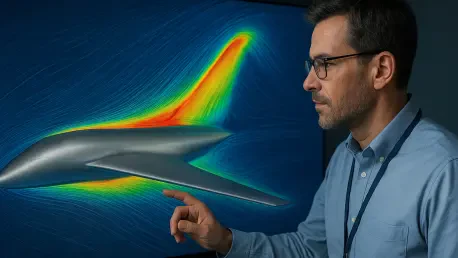

Rather than relying on fault-tolerant systems, researchers are focusing on incremental but provable structural advantages within quantum neural networks. As the demand for high-fidelity physical simulations grows in fields like aerospace engineering and climate science, traditional computational methods are increasingly hitting a wall. The complexity of modeling nonlinear systems requires massive resources, often pushing even the most advanced supercomputers to their limits. In response to these challenges, a research team from Shanghai Jiao Tong University has unveiled QuanONet, a sophisticated architecture designed to solve partial differential equations with remarkable efficiency. This system represents a significant pivot from trying to simulate entire quantum systems to using quantum principles as a tool for broader mathematical problem-solving. By leveraging the unique properties of quantum states, QuanONet addresses the inherent bottlenecks in scientific machine learning, offering a path forward that integrates seamlessly with existing hardware constraints while delivering superior performance in modeling dynamic and intricate physical processes.
Navigating the Challenges of the NISQ Era
Overcoming Noise in Intermediate-Scale Systems
The current state of quantum technology is defined by the Noisy Intermediate-Scale Quantum era, where hardware remains sensitive to environmental interference and internal errors. While these machines can perform tasks that surpass classical simulations, they are not yet capable of supporting the massive, error-corrected circuits required for many famous quantum algorithms. This limitation has historically discouraged the application of quantum computing to large-scale scientific problems. However, the rise of neural operators in the classical world has provided a new template for how to handle complex mathematical functions. Unlike standard neural networks that map one set of numbers to another, neural operators learn the relationships between infinite-dimensional function spaces. This is crucial for modeling fluid dynamics or heat transfer, where the input and output are continuous fields rather than discrete values. By adapting these operators to the quantum domain, researchers hope to utilize the inherent high-dimensional nature of quantum states to solve equations that are currently beyond the reach of conventional computers.
The Evolution of Classical Neural Operators
Previous attempts to implement quantum versions of successful classical frameworks, such as Fourier Neural Operators or DeepONet, have faced significant scaling hurdles. As the physical systems being modeled became more complex, the quantum resources needed to represent them tended to grow at an unsustainable rate. This made it difficult for early quantum neural networks to demonstrate any real practical benefit over classical alternatives. Furthermore, there was a persistent lack of theoretical proof that these quantum circuits could actually provide a representational advantage. Without a clear mathematical foundation, many researchers viewed quantum machine learning as a collection of heuristic experiments rather than a rigorous scientific discipline. QuanONet addresses these issues by introducing a structured approach that respects the current limitations of hardware while maximizing the learning potential of the qubits. This bridge between hardware engineering and functional analysis allows the architecture to handle complex datasets without succumbing to the noise levels that typically derail deep quantum circuits.
The Mathematical Foundation of Quantum Advantage
Universal Approximation in the Quantum Domain
The researchers at Shanghai Jiao Tong University established a significant theoretical breakthrough by extending the Universal Approximation Theorem to the quantum operator domain. This theorem is a fundamental pillar of neural network theory, stating that a network can approximate any continuous function given enough parameters. By proving that this applies to quantum circuits handling continuous nonlinear operators, the team provided the necessary mathematical legitimacy for their framework. This proof ensures that QuanONet is not just a specialized tool for specific problems but a versatile architecture capable of representing a wide variety of physical laws and mathematical operators. Beyond this existence proof, the team identified a unique structural benefit they call the quadratic expressivity edge. This stems from the way the quantum model utilizes its density matrix to construct a feature frame. This framework allows the model to map input data into a vastly more complex representation space than classical models, essentially providing a more efficient way to encode the underlying physics of a given problem.
The Mechanics of Quadratic Expressivity
The practical implication of this quadratic edge is a massive boost in how much information each parameter can represent. In a standard classical model, the complexity and capacity of the network typically scale linearly with the number of parameters. This means that to double the learning power, one might need to double the size of the network. In contrast, the research team demonstrated that the capacity of QuanONet scales quadratically relative to its parameters. This means that a quantum model with a relatively small number of qubits and parameters can match or exceed the performance of a much larger classical network. This lean design is perfectly suited for the constraints of today’s processors, as it allows for high-precision modeling with shallower circuit depths and fewer operations. By squeezing more representational power out of every available qubit, QuanONet circumvents the need for the large-scale, fault-tolerant systems that are still under development. This efficiency represents a credible quantum advantage that can be measured and utilized in current scientific computing workflows without waiting for future breakthroughs.
Overcoming Technical Hurdles in Frequency Mapping
Solving the Persistent Spectrum Alignment Problem
One of the most difficult aspects of solving partial differential equations is the requirement to capture a wide range of frequencies within the data. For example, in fluid flow simulations, a model must understand both the overall movement of the liquid and the sharp, high-frequency gradients that occur during turbulence. Traditional quantum models often struggle with this spectrum alignment problem. To capture high-frequency components, these models typically require extremely deep circuits that use many layers of gates. However, in the current landscape of quantum hardware, every additional layer of gates increases the likelihood of decoherence and error, making deep circuits nearly impossible to run reliably. This creates a paradox where the most interesting physical phenomena are the hardest for quantum computers to simulate accurately. The research team recognized that a new approach was needed to handle these high-frequency details without increasing the depth of the circuits. They sought a way to make the quantum circuits more flexible and responsive to the specific characteristics of the data being processed.
Dynamic Feature Learning Through Modulation
The solution to this problem was the development of TF-QuanONet, which incorporates an adaptive frequency-modulation strategy. Instead of using a fixed method for encoding data into quantum states, this architecture allows the base frequencies of the encoding process to be learned and adjusted during the training phase. This means the network can dynamically prioritize different parts of the frequency spectrum based on what is most important for a specific equation. By shifting the focus of the encoding, the model can capture rapid oscillations and sharp transitions using relatively simple quantum circuits. This trainable-frequency approach essentially allows the model to do more with less, as it focuses its limited resources on the most critical parts of the mathematical problem. It ensures that the architecture remains robust across diverse dynamical systems, from simple wave propagation to complex advection-diffusion scenarios. This innovation provides a necessary layer of versatility, allowing the quantum neural operator to stay accurate even when faced with the erratic and high-frequency data patterns common in real-world physics and engineering.
Validation Through Empirical Testing and Hardware
Benchmarking Against Classical Fluid Dynamics
To verify the effectiveness of their new architecture, the research team conducted extensive empirical tests across several difficult computational problems. They focused on benchmarks like Darcy flow, which models fluid moving through porous media, and advection equations, which describe how substances are transported by a moving fluid. A critical part of their testing strategy involved using matched-parameter conditions to ensure a fair comparison with classical models. By giving both the quantum and classical systems the exact same number of parameters, the researchers could isolate the performance benefits provided by the quantum architecture itself. The results across these tests were consistently positive, showing that the quantum neural operator was able to reach high levels of accuracy that rivaled or exceeded state-of-the-art classical frameworks. Perhaps more importantly, the quantum model demonstrated superior stability in high-dimensional scenarios. While classical models often suffered from high variance or failed to converge during training as the problem complexity increased, QuanONet remained steady and reliable in its optimization.
Real-World Performance on Physical Processors
The final phase of the research involved testing QuanONet on actual hardware, specifically using the ibm_fez device to see how the architecture handled real-world noise. Even with the gate errors and decoherence that characterize physical qubits, the system demonstrated remarkable functional resilience and produced predictions that aligned closely with the known ground-truth solutions. This successful deployment proved that the theoretical advantages of the quadratic feature frame could translate into tangible performance on current machines. Moving forward, the integration of these quantum operators into broader simulation toolkits could revolutionize how engineers design everything from aircraft wings to more efficient heat exchangers. By providing a bridge between advanced functional analysis and the engineering realities of quantum hardware, the research established a foundation for future developments in scientific computing. The researchers recommended that upcoming efforts should focus on scaling these operators to handle even larger three-dimensional datasets and exploring their application in real-time climate modeling where traditional methods remained computationally expensive.