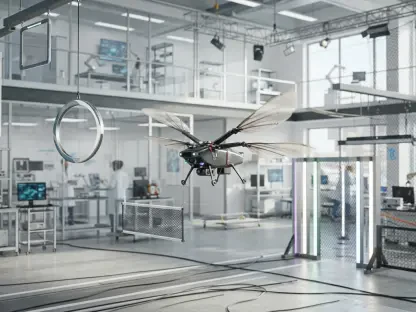

The convergence of advanced mechanical engineering and neural network architectures has officially entered a transformative era as Shanghai Electric introduces its sophisticated suite of humanoid robots designed to navigate the complexities of modern industrial environments with unprecedented autonomy and precision. This landmark unveiling signifies a departure from traditional robotic arms and static automation systems, pivoting instead toward versatile platforms that mimic human kinematics while leveraging the cognitive power of embodied artificial intelligence. By integrating sensory perception directly into the physical structure of these machines, the company has managed to overcome the latency issues that previously hindered the deployment of humanoid units in fast-paced factory settings. These robots are not merely programmed to perform repetitive tasks but are instead trained through reinforcement learning to adapt to variable conditions, such as shifting assembly lines or uneven terrain. This shift represents a broader movement within the global manufacturing sector to replace rigid infrastructure with fluid, adaptable workers that can scale production efficiently.
Technological Foundations: The Rise of Embodied Intelligence
The hardware architecture underpinning these humanoid units showcases a remarkable leap in actuator technology and weight distribution strategies. Shanghai Electric has implemented high-density lithium-sulfur batteries that provide extended operational cycles, allowing these machines to function for a full eight-hour shift without requiring a recharge. Furthermore, the use of lightweight carbon-fiber composites in the skeletal framework ensures that the robots maintain structural integrity while minimizing the energy required for rapid limb movement. Precision strain-wave gearing and custom-designed servo motors allow for fine motor skills, such as handling delicate electronic components or tightening bolts with specific torque requirements. This level of physical dexterity is complemented by a sophisticated tactile feedback system embedded in the fingertips, which allows the robot to feel textures and resistance. This sensory loop ensures that the machine can distinguish between a sturdy steel rod and a fragile glass tube without manual recalibration.
Beyond the mechanical extremities, the core processing unit acts as a localized hub for embodied intelligence, processing petabytes of environmental data in real-time. By utilizing edge computing solutions, the robots can make split-second decisions without relying on a constant connection to a centralized cloud server, which is critical for maintaining safety standards in shared human-robot workspaces. The integration of multi-modal sensors, including LiDAR and high-resolution stereoscopic cameras, enables these humanoid models to construct three-dimensional maps of their surroundings instantly. This spatial awareness is vital for navigating cluttered warehouse floors where obstacles are frequently moved or where human colleagues may cross paths unexpectedly. The software stack employs a transformer-based architecture optimized for physical interactions, allowing the AI to predict the trajectory of falling objects or the force required to catch a moving part. This synergy between hardware and software defines the current state of industrial AI.
Industrial Integration: Bridging the Gap in Manufacturing
The implementation of humanoid robotics within large-scale production facilities offers a solution to the persistent labor shortages and rising operational costs currently facing the heavy industry sector. Unlike specialized machinery that requires expensive retooling for every product iteration, these humanoid platforms can be retrained for different roles through simple software updates and digital twin simulations. A robot that spent the morning performing quality control inspections can be redeployed in the afternoon to assist with palletizing finished goods or conducting routine maintenance on stationary equipment. This versatility effectively future-proofs the investment made by manufacturers, as the hardware remains relevant even as product designs evolve. Additionally, the ability of these machines to operate in hazardous conditions, such as extreme temperatures or chemical exposure, significantly reduces the safety risks for human workers. By delegating dangerous or ergonomically taxing duties to robots, companies can prioritize human talent for complex problem-solving.
Economic feasibility remains a central point of discussion as the cost of entry for embodied AI technology continues to stabilize through improved supply chain logistics for specialized components. Shanghai Electric has focused on a modular design approach that allows for easier maintenance and component replacement, thereby lowering the total cost of ownership over the robot’s lifecycle. Industry analysts suggest that the deployment of these humanoid units will lead to a significant increase in throughput, as the machines can maintain a consistent pace without the fatigue-related errors that often occur during late-night shifts. Furthermore, the data collected by these robots during their daily operations provides invaluable insights into factory floor efficiency, identifying bottlenecks that were previously invisible to human supervisors. This data-driven approach to manufacturing allows for continuous optimization of workflows, ensuring that every movement made by the robot contributes to the overall productivity of the facility while reducing waste.
Strategic Implementation: Actionable Steps for Technological Adoption
Organizations that successfully integrated these advanced robotic systems focused on establishing a robust infrastructure for data management and human-machine collaboration. It became evident that the transition required a strategic re-evaluation of existing safety protocols to ensure that human operators could work alongside autonomous humanoid units without the need for physical barriers or safety cages. Leaders in the field invested in specialized training programs to upskill their workforce, transforming traditional assembly line workers into robot supervisors and maintenance technicians. The decision to adopt embodied AI was driven by a need for long-term scalability rather than immediate cost-cutting, leading to a more sustainable growth model from 2026 to 2030. Companies also prioritized the standardization of communication protocols to allow robots from different manufacturers to interact seamlessly within a single ecosystem. These steps ensured that the introduction of humanoid technology was not a disruptive event but a structured evolution of the modern industrial landscape.
To maximize the benefits of this technology, enterprise leaders began by identifying high-impact pilot projects where the versatility of embodied AI could be tested in real-world scenarios. This phased approach allowed for the collection of performance metrics and the refinement of AI models before a full-scale rollout across multiple facilities. The collaboration between engineers and floor managers proved essential in fine-tuning the interaction between humanoid robots and existing automated systems, such as conveyor belts and autonomous mobile robots. By fostering a culture of innovation and transparency, these organizations minimized resistance to change and created an environment where technology served to enhance human capability. The long-term success of these initiatives depended on a commitment to continuous learning, as the AI systems improved their efficiency through daily interactions with the physical world. This strategic foresight positioned early adopters at the forefront of the next industrial revolution, where the line between digital intelligence and physical labor continues to blur.