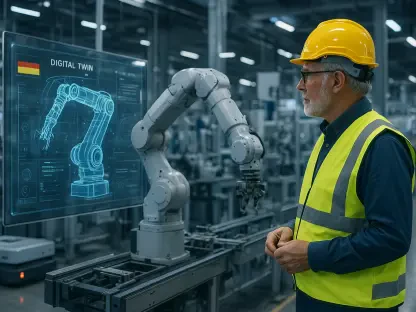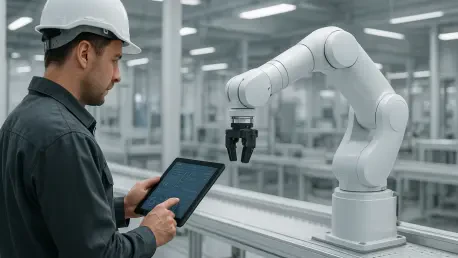

Global giants like Coca-Cola and Philips are partnering with the AI Centre of Excellence for Manufacturing to apply technological solutions to industrial challenges. The Singaporean government is currently accelerating this momentum by launching a $45 million investment fund specifically aimed at small and medium-sized enterprises. Announced by Gan Siow Huang, the Minister of State for Energy, Trade and Industry, at the Industrial Transformation Asia-Pacific event, this three-year initiative seeks to democratize advanced technology across the factory floor. The primary objective is to lower the barrier to entry for smaller firms, ensuring that high-level technical advantages are not reserved solely for multinational corporations. This funding serves as a vital component of the updated National AI Strategy, which prioritizes the integration of intelligence into existing workflows. By addressing the financial constraints that often hinder digital adoption, the state is positioning its industrial base to maintain a competitive edge. It is a decisive move toward a future where local manufacturers can leverage data as effectively as their larger counterparts, fostering an environment of continuous improvement and innovation.
Streamlining Production through the Catalytic AI Solutions Initiative
The core of this strategic push is the “Catalytic AI Solutions” program, managed by Enterprise Singapore in collaboration with various trade associations and qualified technology vendors. This initiative provides SMEs with access to ready-to-deploy AI tools designed to optimize product design, streamline production scheduling, and implement predictive maintenance. These tools allow manufacturers to move beyond manual processes, reducing the risk of human error while significantly increasing throughput. To encourage widespread participation, EnterpriseSG provides co-funding for adoption costs, making these advanced systems financially viable for local businesses. This approach recognizes that the initial capital expenditure is often the biggest hurdle for smaller manufacturers. By subsidizing these costs, the government is essentially de-risking the innovation process, allowing firms to focus on integrating the software into their daily operations and achieving immediate productivity gains. This funding is not just a subsidy but a catalyst for long-term digital maturity within the local manufacturing ecosystem.
Looking at the broader economic landscape, the government intends to scale this successful model beyond the manufacturing sector into the logistics and wholesale trade industries. This expansion reflects a comprehensive vision for a digital-first economy where data-driven decision-making becomes the standard across all commercial interactions. Manufacturing currently represents 20% of the national GDP and 12% of the total workforce, making it a critical anchor for this technological evolution. However, the industry faces persistent headwinds, including tightening labor markets and supply chain disruptions caused by shifting geopolitical dynamics. By embedding AI into the core of industrial operations, manufacturers can improve quality control and unlock new revenue streams through faster product innovation. This integration is designed to help local firms navigate an increasingly complex international environment where speed and precision are the primary determinants of market share. Ultimately, the goal is to create a seamless, data-driven network that enhances the nation’s overall resilience against global economic volatility.
Empowering the Workforce through Strategic Ecosystem Partnerships
This initiative is part of a larger, high-level framework led by the National AI Council, which is chaired by Prime Minister Lawrence Wong. The council oversees specific mission-oriented goals in sectors like healthcare and finance, but the advanced manufacturing mission remains central to growing industrial output. A key driver in this mission is the AI Centre of Excellence for Manufacturing, a joint venture between the Agency for Science, Technology and Research and the Ministry of Trade and Industry. Since its inception, the center has partnered with over 30 manufacturers, including local specialists such as Sunningdale Tech, to complete dozens of projects. These projects apply sophisticated algorithms to real-world industrial problems, such as identifying defects in micro-components or optimizing energy consumption. By fostering a collaborative environment where researchers and practitioners work side-by-side, the nation is creating a unique ecosystem that accelerates the journey from laboratory concepts to factory-ready solutions that are scalable and effective.
The focus eventually moved toward securing the human element of these industrial shifts to ensure that no worker was left behind during the transition. The Singapore Manufacturing Federation addressed this challenge by launching the Manufacturing and Talent Connection Hub, which served as a dedicated portal to match jobseekers with roles in the new technology-driven landscape. This strategic move successfully aligned the workforce’s skills with the requirements of automated environments, turning potential labor shortages into opportunities for high-value employment. Leaders prioritized actionable steps, such as establishing standardized data protocols and encouraging peer-to-peer learning between early adopters and latecomers. These measures allowed the industrial base to transform into a highly competitive powerhouse that exported its locally developed AI solutions to global markets. By grounding every technological advancement in practical utility and human development, the nation solidified its position as a critical node in the advanced manufacturing world and prepared its firms for future market shifts.