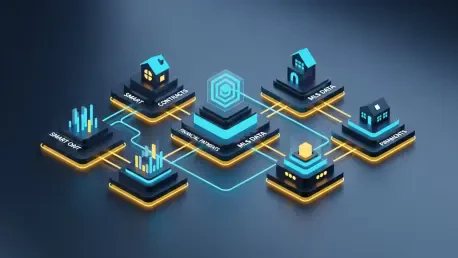

The modern American property market no longer moves at the speed of a handshake, but rather at the velocity of digital data packets streaming across integrated PropTech ecosystems. Building a successful application in this high-stakes environment requires a developer to navigate a labyrinth of fragmented Multiple Listing Service (MLS) feeds, rigorous financial regulations, and the constant demand for instant user gratification. This roundup explores the specialized landscape of US-based development firms that have mastered these complexities, offering a roadmap for stakeholders who need to bridge the gap between a visionary concept and a functional, market-ready digital platform.
Navigating the Complexities of Modern PropTech Development
As the real estate industry matures, the baseline for what constitutes a “good” application has shifted from simple aesthetics to deep functional intelligence. Sophisticated developers emphasize that a platform’s true value is found in its back-end architecture—the invisible pipes that ensure property listings remain synchronized across thousands of regional databases. In the current market, a developer who focuses solely on the user interface without accounting for the volatility of data flows is essentially building a beautiful facade on a crumbling foundation. Success requires a proactive approach to technical debt, ensuring that integrations with financial and regulatory systems are durable enough to handle high-volume transactions from day one.
The regulatory environment also dictates a significant portion of the development strategy, as mishandling sensitive tenant data or failing to provide proper legal disclosures can result in catastrophic liability. Top-tier US firms address these risks by embedding compliance into the code itself, utilizing identity verification and credit reporting tools that meet the strict standards of the Fair Credit Reporting Act (FCRA). Furthermore, the integration of automated document management and e-signature workflows has become a non-negotiable requirement for reducing the time it takes to move a lead from initial interest to a signed lease or purchase agreement.
The Technical Backbone: Why Integrations Dictate Project Success
Mastering the High-Stakes World of MLS and Financial Data Flows
A real estate application is fundamentally a connector, and its utility depends entirely on how effectively it communicates with external data sources. Leading developers prioritize the RESO Web API and IDX feeds to maintain accuracy across regional borders, but the challenge goes deeper than mere data retrieval. Managing the nuances of high-volume rent payments or investment flows requires a sophisticated understanding of financial protocols. For instance, a developer must be able to handle ACH return codes and escrow account management, moving far beyond the capabilities of a basic payment gateway to ensure that funds are moved securely and transparently.
Beyond simple transactions, the integration of banking partners and fund administration tools is essential for modern investment platforms. Developers who possess this expertise can build systems that automatically reconcile financial data with back-office accounting software like QuickBooks Online or AppFolio. This level of technical maturity prevents the fragmentation that often occurs when a platform’s front-end transactions are disconnected from its financial reality. By treating accounting as a core feature rather than an afterthought, specialized firms provide a more cohesive product that supports long-term operational stability.
Security and Compliance in Tenant Screening and Document Management
Developing a platform that handles personal and financial data requires a deep commitment to privacy and security standards. Professional development teams integrate robust identity verification tools—such as those provided by TransUnion or Experian—while ensuring that every step of the user journey includes the necessary legal disclosures. This technical layer is crucial for maintaining trust between the platform and its users. Moreover, the ability to automate the generation of multi-state disclosure packs and map them to digital signature services like DocuSign can significantly accelerate the onboarding process for both renters and buyers.
The security infrastructure must also extend to document storage and the preservation of audit trails. Leading US firms design their systems with encryption at rest and in transit, ensuring that sensitive documents remain protected against unauthorized access. This focus on security is not just about technical implementation; it is about understanding the broader legal landscape and building a system that can adapt to changing regional privacy laws. By prioritizing these elements during the initial build, developers help their clients avoid the costly re-engineering projects that often plague platforms that neglect compliance in their early stages.
Enhancing User Experience Through Geo-Spatial and Reporting Tools
Modern users demand a highly interactive experience, which has pushed developers to integrate advanced mapping layers from Mapbox and 3D virtual tours from Matterport. However, the technical challenge lies in ensuring these heavy visual assets perform flawlessly across different device types. High-frame-rate rendering and smooth navigation are essential for maintaining user engagement, especially for high-end property listings. Developers with a deep understanding of mobile optimization know how to prevent performance drops on mid-tier hardware, ensuring a consistent experience for a wide audience.
In addition to visual tools, a robust real estate application must serve as a reliable bridge to agent-side CRM systems. This requires more than a simple one-way push of lead data; it necessitates a sophisticated two-way synchronization that can handle webhooks and resolve data conflicts in real time. Systems that integrate seamlessly with platforms like Salesforce or Follow Up Boss allow agents to manage their pipelines more effectively, turning raw user data into actionable business intelligence. This level of integration is what separates a basic listing directory from a professional-grade business tool.
The Hidden Infrastructure of Real Estate Back-Office Systems
One of the most frequent mistakes in PropTech development is the failure to account for the administrative and accounting needs of the property manager. Specialized firms avoid this pitfall by building dedicated modules for Net Asset Value (NAV) calculations and custody partner management. These tools are vital for platforms that handle complex investment structures or large-scale property portfolios. By ensuring that the software can “talk” to established property management suites, developers eliminate the need for manual data entry and reduce the likelihood of human error in financial reporting.
Furthermore, a well-designed back-office layer allows for better reporting and transparency, which is increasingly demanded by institutional investors and regulatory bodies. Developers who offer custom-built reporting engines provide their clients with a significant competitive advantage, enabling them to analyze market trends and portfolio performance with precision. This focus on internal efficiency ensures that as a platform grows, its administrative overhead does not become a bottleneck for expansion. Consequently, the choice of developer directly impacts the long-term scalability and profitability of the real estate venture.
Leading US Firms Specializing in Real Estate Software Delivery
High-Growth Startups and AI-Driven Architecture: The LITSLINK Approach
LITSLINK has established itself as a premier partner for funded startups by utilizing AI-assisted development to accelerate the creation of complex PropTech products. Their experience in overhauling massive condo marketplaces demonstrates an ability to handle high-traffic environments and significant revenue-generating features. With a large in-house team, they offer a comprehensive suite of services that spans from initial architectural design to daily engineering commits. Their approach is particularly effective for clients who need to rapidly modernize legacy systems while maintaining high levels of performance and security.
The firm’s success is highlighted by their ability to replace aging front-end technologies with modern frameworks like React.js, all while building custom targeting tools tailored to the needs of real estate agents. This blend of technical prowess and market-specific knowledge allows them to deliver products that not only look modern but also perform at an enterprise level. By focusing on rapid delivery cycles and high-quality output, they cater to a wide range of projects, providing a flexible model that can adapt to the shifting priorities of a growing real estate brand.
Scaling and Modernization for Established Real Estate Brands
For organizations that need to optimize existing digital assets or build new, task-heavy applications, firms like Code District and Empat offer deep expertise in digital transformation. Code District is particularly well-regarded for its disciplined DevOps practices, which have helped clients significantly reduce cloud operating costs while securing substantial venture funding. Their focus on database architecture and clean user experience makes them a strong choice for projects that require complex task management and calendar functionality.
Empat, on the other hand, brings a vast technical stack and global experience to the table, handling everything from system architecture to quality assurance for major international brands. Their ability to deliver user-friendly property management tools that remain stable under enterprise-grade loads is a testament to their engineering rigor. Both firms emphasize a collaborative approach, working closely with stakeholders to ensure that every technical decision aligns with the broader business goals. This focus on strategic alignment ensures that the final product serves as a durable asset for the organization.
Specialized Niche Solutions for Long-Term Property Management Platforms
Companies such as Helpful Insight and DBB Software focus on providing longevity and rapid deployment through specialized, modular solutions. Helpful Insight has a proven track record of creating dedicated convention and lead management apps that remain operational for years, reflecting a commitment to building sustainable software. Their work in integrating property listings with scheduling and document ordering tools has helped developers streamline their on-site operations and improve overall efficiency for stakeholders.
DBB Software utilizes a structural advantage by maintaining a library of pre-built solution blocks, which can cut development time by as much as half. This modular approach is ideal for clients who need to launch cross-platform applications quickly without sacrificing quality. By focusing on automated CI/CD pipelines and robust quality assurance cycles, they ensure that every release is stable and secure. This efficiency is particularly valuable for companies that need to manage a large portfolio of branded versions of their software across various markets and devices.
From Blueprint to Launch: The 5-Phase Implementation Roadmap
Strategy and Architecture: Setting the Foundation for Compliance
The initial phase of development is focused on securing the project’s budget and timeline through detailed discovery and integration mapping. This period is dedicated to identifying every external system the app will interact with and creating a clear cloud topology that ensures data residency and encryption standards are met. By establishing a signed compliance checklist early on, the team ensures that the project adheres to all relevant housing and privacy regulations. This proactive planning prevents the costly mid-project pivots that often occur when legal requirements are treated as an afterthought.
Once the technical foundation is set, the focus shifts to wireframing and defining the priority user flows. This architectural blueprint serves as the single source of truth for the development team, ensuring that every line of code serves a specific business objective. During this time, the team also establishes the audit trail design and security protocols that will protect the platform’s data throughout its lifecycle. This phase is critical for building a system that is not only functional but also resilient enough to pass the rigorous security audits required by enterprise clients and institutional partners.
The MVP Build and User Testing: Validating the Product in Real Markets
The core construction of the application follows a prioritized order, focusing first on identity and listing modules before moving to payment systems and notification engines. This phased build allows for continuous testing and feedback, ensuring that the most critical features are perfected before the full product is launched. Following the initial build, a controlled beta launch with a small group of real-world agents and buyers provides invaluable data on how the software performs in a live environment. Tracking metrics like listing-to-lead rates and payment success allows the team to identify and resolve any failure modes before a national rollout.
This testing window is essential for refining the user experience and ensuring that the platform meets the practical needs of its target audience. Developers use this time to gather feedback on navigation, performance, and feature utility, making adjustments that will improve long-term adoption rates. By treating the MVP as a learning tool rather than a finished product, firms can make data-driven decisions that enhance the final version of the software. This iterative process reduces the risk of market rejection and ensures that the platform is ready for the demands of high-volume use.
Scaling and Support: Managing the Critical Hypercare Window
The transition from a beta environment to full production involves a staged regional rollout and the establishment of a dedicated hypercare window. During this 90-day period, the development team provides intensive support, including on-call rotations and weekly reviews of any defects that arise. This phase is designed to ensure that the system meets strict service level objectives for uptime and latency as it scales to handle a larger user base. The focus is on stabilizing the platform and ensuring that all integration credentials and runbooks are properly documented for future maintenance.
The process concludes with a formal support handoff, where the development team transfers full ownership of the system to the client’s internal staff or a long-term maintenance partner. This handoff includes a comprehensive library of documentation covering everything from alert thresholds to API credentials, ensuring the client has the resources needed to manage the platform independently. This structured approach to post-launch support ensures a smooth transition and provides the foundation for continuous improvement and feature expansion in the years to come.
Strategic Recommendations for Future-Proofing Your Real Estate App
Selecting the right development partner was a decision that required a deep evaluation of a firm’s history with MLS data and financial integrations. Those who prioritized technical rigor over simple visual appeal were able to build platforms that stood the test of time, adapting to new regulations and market shifts without requiring a total rebuild. Stakeholders found that investing in a robust discovery phase and a structured implementation roadmap significantly reduced long-term maintenance costs. The most successful projects were those that treated compliance and security as core features rather than administrative hurdles.
As the industry moved toward greater transparency and automated transactions, the ability to maintain a resilient and secure digital infrastructure became a primary competitive advantage. Decision-makers learned to look for teams that offered not just coding expertise, but also a strategic understanding of the PropTech ecosystem. Future considerations for any real estate platform should include the potential for AI-driven analytics and the integration of emerging financial technologies that can further streamline the transaction process. By remaining focused on these core technical and strategic principles, real estate firms positioned themselves to lead in an increasingly digital and data-driven marketplace.