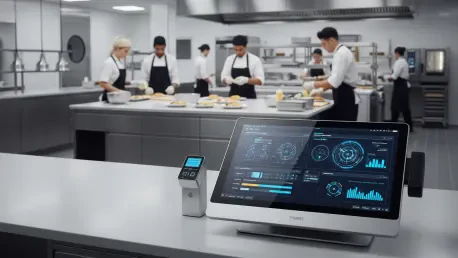

The drive-thru speaker has evolved from a simple conduit for communication into the sophisticated front line of a digital revolution that is fundamentally reshaping the global hospitality landscape. As labor shortages persist and rising operational costs continue to squeeze profit margins, the fast-food industry is pivoting toward artificial intelligence to secure its long-term viability. This shift represents a transition from human-centric service to a data-driven ecosystem where efficiency and speed are paramount. The following analysis explores the growth of restaurant automation, examines the groundbreaking “ArchIQ” pilot at McDonald’s, and evaluates the resulting impact on the modern dining experience.
The Digital Transformation of Quick-Service Dining
Current market dynamics reveal a massive shift toward digital-first revenue models. In the modern landscape, loyalty programs have become the backbone of the industry, with McDonald’s reporting roughly $37 billion in systemwide loyalty sales and managing a base of 210 million active users. This massive digital footprint provides the raw data necessary to train advanced algorithms. As traditional drive-thru traffic faces steady declines, brands are desperate for technology that can increase throughput speed and accuracy without adding to the payroll.
Market Trajectory and Industry Adoption Statistics
Pilot programs suggest that the industry is ready for wide-scale deployment of these technologies. Automated systems have demonstrated a 90% success rate in managing transactions without human intervention, proving that the tech is no longer an experimental novelty. This level of reliability allows restaurant managers to focus on quality control rather than routine order entry. Consequently, the push for automation has moved from a desire for innovation to a fundamental requirement for operational survival across the entire quick-service sector.
Furthermore, the integration of these systems has directly addressed the issue of throughput efficiency. Data suggests that AI-managed lanes can handle a higher volume of cars during peak hours compared to traditional human-operated stations. This increase in capacity is essential for maintaining revenue as consumer expectations for instantaneous service grow. By streamlining the ordering process, restaurants are successfully mitigating the impact of shrinking physical footprints and labor pools.
Real-World Implementation: The Rise of ArchIQ
At the heart of this transformation is the “ArchIQ” system, a sophisticated AI platform developed through a collaboration between McDonald’s and Google Edge Cloud. Nicknamed “Archy,” this system represents a significant step forward from earlier attempts at voice recognition. By utilizing edge computing, the system processes data locally to ensure lightning-fast response times. This partnership signifies a broader trend of fast-food giants aligning with major tech leaders to solve complex logistical challenges.
The system offers capabilities that far exceed basic voice-to-text conversion. ArchIQ is fully bilingual, allowing it to process orders in English and Spanish seamlessly, while also handling complex menu modifications and special requests. Most notably, it integrates with loyalty data to recognize repeat customers and suggest their preferred items. This level of personalization creates a digital rapport that aims to mimic the familiarity of a local diner experience through an automated interface.
Expert Perspectives on the Automation Pivot
CEO Chris Kempczinski has offered a nuanced perspective on this transition, acknowledging that a more automated journey reduces the frequency of “human touch” points. When these interactions do occur, the stakes for hospitality are significantly higher. This shift places a premium on the quality of staff engagement during the few moments a customer actually speaks to a person. The goal is to ensure that while the transaction is digital, the brand still maintains a sense of personal connection.
From the perspective of the franchisee, automation serves as a vital tool to reduce the chaotic environment of a busy kitchen. By automating order-taking, the system alleviates crew member stress and minimizes the background noise that often leads to costly errors. However, consumer skepticism remains a hurdle, as many diners still demand a balance between digital efficiency and authentic service. Public perception will likely dictate how quickly these systems are rolled out to the general population.
The Future of the AI-Integrated Restaurant Ecosystem
The “McDonald’s > NEXT” strategy is expected to set a new standard for competitors like Wendy’s and Taco Bell. Predictive analytics will play an even larger role in personalizing the customer journey and optimizing unit economics through the coming years. By analyzing vast amounts of transaction data, restaurants can anticipate demand and adjust inventory or staffing levels with surgical precision. This proactive approach marks a departure from the reactive management styles of the past.
The broader implications for the workforce involve a transition of roles rather than simple displacement. While the task of order-taking is being phased out, roles in specialized hospitality management and technical maintenance are becoming more critical. This evolution requires a new type of crew member who is comfortable navigating digital tools while maintaining a focus on guest satisfaction. The challenge for the industry lies in training current employees for this more technical environment.
Conclusion: Navigating the New Era of Fast Food
AI-driven automation moved from an experimental novelty to a central pillar of restaurant operations. The industry reached a definitive point where the efficiency gained through digital systems became indispensable for survival. Successful pilots showed that customers valued speed and accuracy above all else in a quick-service environment. Leaders realized that the survival of the traditional fast-food model depended on this integration. Ultimately, the pivot to AI-driven service defined the next generation of global hospitality and established a new baseline for the industry.