
A significant breakthrough in computer vision addresses the persistent problem of target localization by ensuring AI understands exactly which parts of an image to modify. While the previous several years focused on the raw ability to generate high-fidelity visuals from text, the current technological landscape in 2026 emphasizes the “surgical” manipulation of existing content. Modern users require the ability to adjust specific elements of a photograph without disturbing the background or unrelated objects, yet many standard diffusion models continue to struggle with this level of granularity. When given a command like “change the color of the car on the left,” these systems often fail to isolate the correct vehicle or inadvertently alter the entire scene’s color palette. To bridge this gap, researchers at the University of Kashan developed the Guided-Grounded-InstructPix2Pix (GGIP2P) framework. This sophisticated system introduces a modular pipeline designed to resolve the inherent ambiguity of human language before the pixel-level synthesis begins. By prioritizing grounding and linguistic disambiguation, the framework ensures that every instruction translates into a precise spatial action, effectively moving beyond the trial-and-error nature of earlier generative tools. This transition marks a major step toward intuitive, conversational image editing where the machine truly understands the context and intent behind every requested modification.
Mastering Linguistic Precision: The Role of Specialized Detection
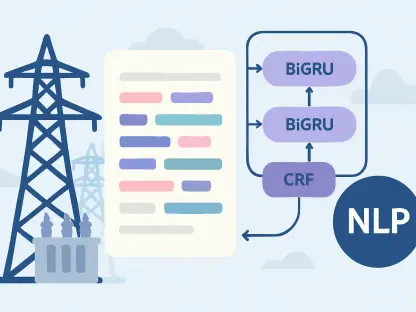
To ensure that the artificial intelligence identifies the correct subject within a complex visual scene, the GGIP2P architecture treats the initial target identification as a Named Entity Recognition (NER) task. This approach represents a departure from standard computer vision techniques that rely on generic noun-phrase extractors, which often fail to distinguish between active subjects and passive objects in an instruction. The system utilizes a BERT language model that has been meticulously fine-tuned using Low-Rank Adaptation (LoRA). This technical choice is particularly significant because it creates a highly specialized component that is incredibly efficient, requiring only about 10 megabytes of memory to operate. Because this module is fine-tuned specifically for image editing instructions, it can identify which specific words in a sentence serve as the primary editing target, even when the prompt uses indirect phrasing or nested clauses. By isolating the linguistic core of the instruction at the outset, the system avoids the “global error” problem where a model might apply a change to everything in the frame simply because it could not pinpoint the specific noun the user intended to modify.
Beyond the initial identification of words, the GGIP2P system employs a series of sophisticated reasoning filters to eliminate potential confusion before any generative work commences. One of the most critical components is the pronoun resolution module, which actively rewrites user instructions to replace vague terms like “it,” “that,” or “them” with explicit nouns derived from the context of the interaction. This ensures that the grounding mechanism has a clear, unambiguous objective to follow. Additionally, the system features a plurality-aware filter that determines whether a requested change should apply to a single instance of an object or an entire category within the photograph. For example, if a user asks to “make the bird blue” in a scene containing a dozen birds, the system must decide which specific bird is the focus based on the surrounding text cues. These preprocessing steps act as a cognitive filter, ensuring that the heavy-duty generative engine receives a clarified and specific prompt. By reducing the noise at the linguistic level, the framework significantly minimizes the likelihood of accidental background alterations, thereby maintaining the integrity of the original image while executing precise modifications.
Navigating Spatial Logic: Handling Directions and New Objects
Spatial awareness is a foundational requirement for surgical precision, and GGIP2P achieves this through its dedicated Spatial Reasoning Unit. This unit is designed to translate human directional cues into precise mathematical coordinates on an image grid. While traditional models often struggle with relative positioning—such as understanding what it means for one object to be “next to the chair” or “behind the tree”—the Spatial Reasoning Unit maps these linguistic descriptors directly onto the visual landscape. This capability is vital for solving the “distractor object” problem, where a scene contains multiple similar-looking items that could be mistaken for the target. By creating a precise spatial mask based on these directional interpretations, the system ensures that the modification is confined to the exact area specified by the user. This level of localization allows for complex edits, such as changing the shirt color of only one person in a large crowd, a task that previously required manual masking or repetitive prompting. The integration of this unit ensures that the AI’s “eye” is always aligned with the user’s verbal instructions, creating a seamless link between language and location.
The framework also addresses the unique challenge of “targetless” editing, which occurs when a user wants to add a completely new element to an existing image. In these scenarios, there is no existing object to ground the edit, so the system must predict both the location and the appropriate scale for the new addition. The researchers developed a size-prediction model that analyzes the context of the surrounding scene to estimate the most realistic dimensions for the new object. To prevent the generation of distorted or overly small artifacts, they implemented a strategic “clamping” mechanism. This ensures that any predicted mask maintains a minimum resolution of 50 pixels, providing the underlying diffusion model with a large enough canvas to render a clear and recognizable object. This proactive approach to spatial management means that even when the AI is creating something from nothing, it does so with a sense of perspective and proportion that matches the original photograph. By handling these complex spatial calculations automatically, the system allows users to engage in creative composition without needing to worry about the technicalities of perspective or placement.
Evaluating Performance: Benchmarks and Practical Efficiency
The effectiveness of the GGIP2P system is validated through extensive quantitative testing using the Intersection-over-Union (IoU) metric, which calculates the accuracy of the overlap between the predicted edit area and the user’s intended target. The data gathered during these tests indicates that the specialized NER-based detector is a fundamental driver of performance. When this module was replaced with a standard noun-phrase extractor in controlled tests, the IoU scores dropped significantly, demonstrating that simply identifying nouns is not enough for high-precision editing. Furthermore, the inclusion of pronoun-replacement and spatial logic modules showed a marked improvement in the system’s ability to handle complex, multi-object scenarios. These benchmarks provide empirical evidence that the system’s internal “reasoning” about the text directly translates into more accurate visual outcomes. This rigorous evaluation ensures that the framework is not just capable of producing aesthetic changes, but is also reliable enough for professional environments where accuracy and consistency are paramount for the final output.
Computational efficiency remained a primary focus throughout the development of the framework, as the practical utility of AI tools often depends on their speed and hardware requirements. When tested on standard NVIDIA T4 hardware, the GGIP2P system demonstrated superior performance compared to traditional baseline models by delivering significantly faster end-to-end latency and lower VRAM consumption. By resolving the identification of target entities within the text domain using the lightweight BERT+LoRA module, the system avoids the heavy computational burdens associated with the iterative, multi-stage processes used by some competing models. This optimization allows the system to generate precise edits in a fraction of the time required by more resource-intensive architectures. This balance of surgical precision and operational efficiency makes the GGIP2P framework particularly suitable for a wide range of applications, from high-end professional design software to consumer-facing mobile photo editing apps. The ability to perform complex, localized edits on standard hardware represents a significant democratization of advanced computer vision technology, making professional-grade tools accessible to a broader audience of creators and enthusiasts.
Shifting Toward Intelligent Scaffolding: The Future of Creative AI
The success of the GGIP2P framework suggests that the future of digital image manipulation does not solely depend on the development of larger or more data-heavy generative models. Instead, the most effective path forward involves “intelligent scaffolding,” which refers to the implementation of specialized, lightweight modules that manage specific cognitive tasks such as language reasoning and spatial logic. By wrapping these specialized layers around existing diffusion backbones, developers can achieve a level of accuracy and control that massive, brute-force models struggle to replicate. This modular design philosophy allows for greater flexibility, as individual components can be updated or fine-tuned without requiring a complete overhaul of the entire system. It also permits the AI to function more like a collaborator that understands the nuances of human communication, rather than a black-box generator that produces unpredictable results. This shift toward modularity and specialized reasoning marks a major transition in the field, prioritizing the quality of the interaction and the precision of the output over the sheer scale of the training data.
The integration of these specialized modules allowed the research team to demonstrate a functional reality where AI truly understands user intent. The findings illustrated that by solving the linguistic and spatial grounding problems first, the generative engine was free to focus entirely on visual fidelity, leading to more realistic and contextually appropriate edits. Developers were encouraged to adopt this modular approach to create more intuitive creative tools that reduce the technical barriers to entry for non-experts. Looking forward, the principles established by this research provided a robust foundation for the next generation of conversational design systems. The shift toward intelligent scaffolding ensured that future developments in computer vision would prioritize the fine-grained control necessary for professional workflows. As these technologies continued to evolve throughout 2026, they offered a clearer vision of a future where natural language serves as a precise and powerful brush for the digital artist. Practical next steps for the industry involved the further refinement of these lightweight reasoning units to handle even more complex semantic tasks, ensuring that the bridge between human imagination and digital reality remained both narrow and accurate.