


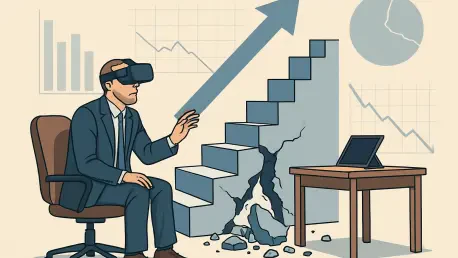

The sheer cinematic brilliance of a modern augmented reality demonstration often masks the profound logistical complexities that prevent these immersive tools from becoming permanent fixtures on the contemporary factory floor or in the corporate boardroom. While the adoption of Extended Reality (XR) has accelerated significantly through 2026, a persistent gap remains between the enthusiastic reception of initial proof-of-concept trials and the actual implementation of large-scale, enterprise-wide deployments. This phenomenon, frequently described as “pilot purgatory,” occurs when a technology demonstrates undeniable potential in a controlled setting but lacks the foundational infrastructure to survive the rigorous demands of a high-pressure production environment. The industry has reached a point where the hardware is no longer the primary bottleneck; rather, the failure to scale stems from a systemic misalignment between innovation goals and the daily operational realities of global business. Without a clear path toward governance and repeatable service models, these visionary projects often remain isolated experiments that eventually lose funding once the initial novelty of the “wow factor” fades into the background of more pressing corporate priorities.
The Operational Disconnect: Bridging Showmanship and Utility
The primary reason why most XR initiatives falter after a successful trial is a fundamental focus on showmanship over the long-term utility of the service. During the initial pilot phase, organizations typically design their experiments to answer a simple, experience-based question regarding whether the technology is compelling or visually impressive. In a curated environment, the answer is almost universally positive because the visuals are sharp, the hardware feels futuristic, and the immediate utility for a specific, isolated task is easy to demonstrate to stakeholders. However, this success is often an artifact of “clean room” conditions that do not reflect the grit and unpredictability of a real workplace. Pilots frequently run on the strongest possible Wi-Fi signals in a head office rather than the patchy, interference-heavy networks found in a sprawling shipyard or a deep-storage warehouse. When these programs are eventually pushed into the field, they often collapse under the weight of connectivity issues that were never accounted for during the demo phase, leading to a loss of trust among the very workers the technology was supposed to assist.
To move beyond the mirage of a successful pilot, companies must pivot their focus from the fidelity of the experience to the reliability of the deployment mechanism. A truly scalable XR program must be able to function as a governed, repeatable workplace service that does not require constant manual intervention from a dedicated innovation team. Many pilots succeed only because a “hero user” or a highly motivated project manager manually troubleshoots every glitch and guides every participant through the login process. This level of hand-holding is impossible to sustain when the fleet grows from ten headsets to two thousand across multiple continents. If an organization cannot prove that the XR experience can be managed through standard IT service desks and automated software update cycles, the project will likely be viewed as a liability rather than an asset. The transition to scale requires a shift in mindset where the “boring” aspects of technology management, such as automated provisioning and network resilience, are given the same priority as the immersive content itself.
The Infrastructure Crisis: Ownership and the Content Trap
A significant breaking point for scaling XR is the lack of clear ownership and cross-functional accountability within the corporate hierarchy. During a pilot, immersive initiatives usually reside within isolated innovation hubs or specific business units that operate with a degree of autonomy and specialized funding. However, a full-scale rollout demands a sophisticated ownership model that involves IT for device management, Security for data permissions, and HR for training compliance. If these departments are not integrated into the project from the beginning, the initiative becomes a “ghost ship” that lacks the institutional support necessary to navigate the complexities of a global organization. Without a clear structure for who owns the hardware lifecycle or who is responsible for troubleshooting hardware failures at 3:00 AM on a Tuesday, the program will inevitably lose its momentum. The lack of a defined support ecosystem means that the first major technical hurdle often becomes the final resting place for what was once a promising technological transformation.
Furthermore, the “content maintenance trap” represents a silent killer of enterprise XR programs that many organizations fail to anticipate during the initial planning stages. While building a single, high-quality training module for a pilot is a manageable expense, maintaining that content in a dynamic production environment is a continuous and costly undertaking. In the fast-moving industrial landscape of 2026, equipment specifications change, safety regulations evolve, and operational procedures are updated with increasing frequency. If updating an XR training module requires a massive, complex software release cycle or the rehiring of an external agency every time a small change is made, the system becomes a functional bottleneck. To scale effectively, businesses must develop an internal content pipeline that allows for rapid, seamless updates across the entire device fleet. Without a sustainable way to keep digital information aligned with physical reality, the XR solution quickly becomes obsolete, leading to a situation where workers are being trained on outdated procedures that could compromise safety or efficiency.
Human-Centric Constraints: Tackling Workplace Friction and Security
Technology adoption does not fail in the executive boardroom; it fails during a frantic shift change when an employee is looking for the path of least resistance to finish their tasks. If an XR headset takes three minutes to boot up, calibrate, and log in, but a traditional paper manual or a handheld tablet takes only thirty seconds to access, the worker will naturally choose the older, more efficient method. For immersive tools to be successful at scale, they must actively reduce the friction of a task rather than adding new layers of technical complexity. Many pilots fail to account for the physical discomfort of wearing a headset for a full four-hour shift or the environmental challenges of high ambient noise that can render voice-command interfaces useless. If the technology makes the user’s job harder, slower, or more physically taxing, the workforce will reject it, regardless of how much the management team believes in the digital transformation. Success in the field is measured by “time-to-competency” and ease of use, not by the depth of the immersion.
Security and identity management also pose substantial hurdles that frequently halt a rollout just as it gains traction. Most XR pilots sidestep these issues by using dedicated devices for single users, but a real-world industrial environment typically relies on shared devices across multiple shifts. This introduces a complex dilemmhow does a worker wearing heavy protective gloves and safety goggles log in securely and quickly without compromising corporate data? Many enterprise security teams will rightfully halt a rollout if the XR devices cannot integrate with existing identity providers or if they lack the ability to track who accessed specific sensitive data. If an organization cannot ensure that a shared headset is wiped of personal data between shifts or that it follows strict network protocols, it remains a security vulnerability. Bridging this gap requires deep collaboration with cybersecurity experts to create biometric or proximity-based login solutions that are both secure enough for a 2026 corporate network and fast enough for a busy assembly line worker.
Integration Strategies: Moving from Standalone Apps to Embedded Workflows
A recurring theme in the history of failed XR programs is that the technology often sits “beside” the work as a standalone application rather than being integrated “inside” the existing digital workflow. For immersive tools to achieve long-term sustainability, they must be deeply connected to the systems that the company already uses for its daily operations, such as Learning Management Systems (LMS) or Enterprise Resource Planning (ERP) databases. When a worker can use a headset to pull up real-time repair histories from an asset management database or log a safety incident directly into a corporate ticketing system, the technology becomes a vital tool rather than a novelty. Vendors like TeamViewer and Vuzix have recognized this necessity by shifting their focus toward “workflow delivery,” positioning XR as a sophisticated interface for existing data rather than just a platform for 3D visuals. This integration ensures that the data generated within the XR environment is captured, analyzed, and used to drive broader business decisions, providing a clear and quantifiable return on investment.
To move from a “magic trick” to a repeatable business capability, organizations must adopt a model that prioritizes operational reliability and strict device governance. This means treating XR headsets with the same level of discipline as managed laptops or smartphones, utilizing automated provisioning, remote policy enforcement, and clear escalation paths for technical support. A successful scaling strategy avoids the temptation of the “heroic effort” and instead builds a “boring” but highly efficient operating model that can be replicated across different departments and geographic locations. By focusing on the infrastructure that supports the device, rather than just the device itself, companies can ensure that their XR investment survives the transition from a novel experiment to a foundational utility. The goal is to create an environment where the technology is so well-integrated and reliable that it eventually becomes an invisible part of the workforce’s daily routine, providing the right information at the right time without the need for constant oversight.
Future Recommendations: Establishing the Foundation for Permanent Success
The historical analysis of XR implementation throughout 2026 demonstrated that the most significant barrier to success was rarely the hardware itself, but rather a lack of organizational readiness. Companies that successfully transitioned from pilots to full-scale rollouts were those that established robust governance models early in the process and treated immersive tools as an extension of their existing IT infrastructure. They recognized that the value of XR was not found in the novelty of the experience, but in its ability to reduce errors, shorten training cycles, and provide hands-free access to critical data in high-stakes environments. These organizations moved away from the cinematic demos of the past and embraced a more pragmatic approach that prioritized system reliability, data security, and user comfort above all else. By the time the technology reached the broader workforce, it had already been vetted for its ability to withstand the physical and digital rigors of the modern industrial landscape, ensuring that it provided immediate and tangible value to the end user.
The path forward for enterprises looking to capitalize on the benefits of XR involves a commitment to building a sustainable ecosystem that supports continuous content updates and seamless device management. Decision-makers must move beyond the pilot phase by demanding that XR solutions integrate directly with established corporate software stacks and security protocols. This approach ensures that immersive technology is not an isolated silo of information, but a connected component of the broader digital transformation strategy. Future initiatives should focus on creating “minimum viable deployments” that address specific, high-value pain points while remaining flexible enough to adapt to changing business needs. By focusing on the reduction of user friction and the establishment of clear ownership across departments, organizations can finally bridge the gap between a successful pilot and a transformative capability. The transition from a “wow” moment to a standard operating procedure was the ultimate hallmark of the most successful industrial players as they integrated XR into the very fabric of their operational reality.







