

Security teams are currently drowning in a sea of false positives, with thousands of vulnerability alerts often flagging code that is never actually executed. This overwhelming volume of noise stems from a fundamental transition in how software is built, moving away from traditional manual coding
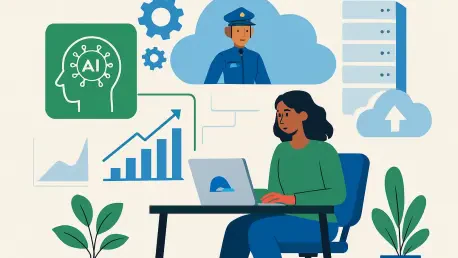
Internal productivity metrics show that support teams using AI guidance are now resolving cases 7.5 hours faster than traditional manual methods allowed. This efficiency gain marks a significant milestone for Smarsh, a company specializing in digital communications and compliance for the world’s

The rapid deployment of autonomous AI agents has created a precarious landscape where operational efficiency often collides with severe data governance vulnerabilities. OpenClaw 2.0 aims to mitigate the risks of unintended access by restructuring its core to support complex automations within

The sheer velocity of data production in contemporary laboratories and global observation networks has pushed human cognitive capacity to its absolute limit, necessitating a new paradigm for discovery. The launch of the EOSC AIssistant on September 1, 2026, marks a critical strategic pivot toward

Granting indefinite permissions creates a structural flaw that malicious actors exploit, necessitating a move toward strictly time-limited and least-privilege access models. As we navigate the complex digital environment of 2026, the traditional notion of a static network perimeter has become

Introduction Transitioning from a traditional regional lender reliant on external contractors to a digital-first powerhouse represents one of the most aggressive technological pivots in modern American banking history. This evolution centers on the total integration of artificial intelligence

Filmmakers can now bridge the gap between a written screenplay and edit-ready assets by using a platform that tracks every creative decision. This fundamental shift ensures that the nuances of a script are not lost in the translation to visual media, providing a level of continuity that was

Civil liberties advocates and biometrics commissioners warn that the current regulatory gap leaves public privacy vulnerable during the rollout of AI tracking tools. This expansion is not just a technical upgrade but a major shift in how the Metropolitan Police Service monitors the city’s busiest

Data centers already account for over 4% of the nation's total electricity usage, leading to significant concerns regarding the long-term reliability of the existing electrical grid. This massive digital footprint represents the physical manifestation of an artificial intelligence revolution that
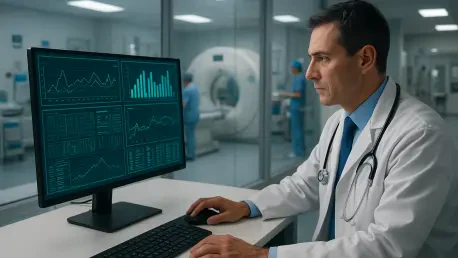
Ensuring that medical resources are allocated only to patients with the most critical diagnostic needs is essential for maintaining hospital efficiency during peak hours. In the chaotic environment of a modern emergency department, physicians must make split-second decisions that significantly


