


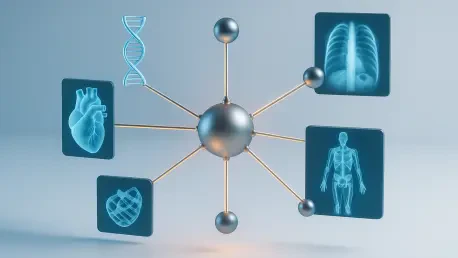

The staggering volume of medical data generated every second in modern hospitals has far outpaced the human capacity for manual analysis, creating a bottleneck that delays life-saving interventions. Unlike traditional ‘one model per disease’ approaches, the new Joint Lab focuses on creating foundational models that can be adapted for specific clinical tasks in months rather than years. Formally established as the PolyU – DIAGENS Joint Laboratory for Artificial General Intelligence and Medical Applications on September 2, 2026, this collaboration signals a definitive move away from passive diagnostic aids toward proactive AI agents. By situating this initiative within the Hong Kong Polytechnic University, the partnership creates a localized epicenter for global health breakthroughs, where the primary objective is to redesign the scientific method itself. This is not merely an incremental update to existing software but a fundamental re-engineering of how medical research is conceived and executed, utilizing artificial intelligence to navigate the vast sea of clinical variables that define human biology. The laboratory serves as a bridge, ensuring that high-level computational theories are no longer confined to academic journals but are instead rapidly deployed into clinical environments where they are most needed.
The Convergence of Academic Rigor and Industrial Scale
Integrating Scientific Theory: The AI4S Framework
The structural backbone of this partnership rests on the “AI for Science” (AI4S) framework, which positions artificial intelligence as a core investigative engine rather than a peripheral tool. By adopting this perspective, the laboratory treats machine learning as an essential component of the modern scientific method, allowing researchers to decode the hidden patterns within human health with unprecedented precision. This shift enables a more systematic, data-driven methodology where complex biological interactions are modeled in real-time, providing a clearer path toward early disease diagnosis and personalized prevention strategies. Instead of relying on isolated observations, the AI4S approach synthesizes vast datasets to provide a unified understanding of medical phenomena, effectively turning the laboratory into a high-speed engine for clinical discovery. This methodology ensures that every research project is grounded in a robust theoretical framework that accounts for the multifaceted nature of contemporary medicine, from genomic sequencing to population-level health trends.
The collaboration focuses specifically on advancing medical image analysis through the development of foundational models that can interpret everything from standard radiographs to complex three-dimensional scans. These models are designed to recognize subtle anomalies that might be missed by the human eye, thereby increasing the accuracy of initial screenings and reducing the workload on overburdened radiologists. By integrating these advanced algorithms into the daily workflow of clinical researchers, the lab provides a platform where theory and application exist in a constant state of mutual reinforcement. The goal is to move beyond static software programs toward dynamic systems that learn and adapt as they encounter new types of clinical data. This integration ensures that the laboratory remains at the cutting edge of both computational science and clinical practice, creating a feedback loop where industrial insights inform academic research and academic breakthroughs drive industrial innovation. The resulting ecosystem is one where the boundaries between the university and the hospital are increasingly blurred for the benefit of patient care.
Capitalizing on Institutional Strengths: Talent and Reach
The Hong Kong Polytechnic University contributes a deep reservoir of intellectual capital to the venture, having consistently secured its position as a global leader in artificial intelligence research. This academic prowess provides the Joint Lab with a steady influx of high-tier talent and a theoretical foundation that is essential for overcoming the complex mathematical challenges associated with large-scale medical modeling. By leveraging its global ranking and extensive research facilities, PolyU ensures that the laboratory is equipped to handle the rigorous demands of developing next-generation AI agents. This academic environment fosters a culture of original innovation, where researchers are encouraged to push the boundaries of what is possible in computer vision and natural language processing. The university’s involvement guarantees that the lab’s outputs are not only technologically advanced but also scientifically sound, meeting the high standards required for peer-reviewed validation and clinical adoption across international health networks.
On the industrial side, Diagens Technology brings a massive operational footprint that includes established collaborations with nearly 100 hospitals and a comprehensive value chain for AI production. This industrial scale is critical for transforming laboratory prototypes into scalable medical solutions that can be deployed across diverse healthcare settings. Diagens provides the necessary infrastructure for data acquisition, processing, and the eventual mass production of diagnostic tools, ensuring that the innovations developed at the Joint Lab have a direct path to the market. This partnership aligns seamlessly with national health initiatives that prioritize the modernization of medical services through technological integration. By combining PolyU’s research excellence with Diagens’ commercial reach, the Joint Lab functions as a critical intermediary that bridges the gap between the initial spark of an idea and the delivery of a finished medical product. This synergy allows for the rapid scaling of AI solutions, making advanced medical intelligence accessible to a broader range of healthcare providers and their patients.
Mapping the Evolution of Medical Intelligence Frameworks
Transitioning the Industry: From Small Models to Foundational Systems
Historically, the development of medical AI was defined by what experts call the “Small-Model Phase,” a period characterized by the creation of highly specialized tools designed for single diseases or specific diagnostic tasks. These legacy systems often required years of manual data labeling and custom programming, making them expensive to produce and difficult to adapt to new clinical contexts. In contrast, the current “Large-Model Phase” utilizes foundational systems like iMedImage® to create a base of knowledge that can be quickly refined for various medical specialties. This transition has revolutionized the timeline of medical software development, reducing the period required to bring new diagnostic tools to fruition from years to just a few months. By using a single, robust model as a starting point, developers can pivot between different clinical needs with minimal friction, effectively industrializing the production of artificial intelligence and significantly lowering the barriers to entry for specialized medical applications.
The shift toward foundational models also addresses the significant financial burden that previously hindered the widespread adoption of AI in healthcare. By streamlining the development process, the Joint Lab reduces the cost of producing high-quality diagnostic software, making it feasible for smaller clinics and regional hospitals to implement advanced technological solutions. This democratization of AI technology is a direct result of the shift toward a more efficient, modular approach to software architecture. The foundational models act as a versatile substrate that can be trained on a variety of data types, allowing for a level of flexibility that was impossible under the old paradigm. As the laboratory continues to refine these systems, the focus is on creating a standard of interoperability that allows different medical tools to communicate and share insights. This evolution represents a move toward a more integrated healthcare environment where AI serves as a universal language for interpreting complex medical data across different regions and specialties.
Entering the Age of AI Agents: The Future of Autonomous Discovery
The ultimate vision of the Joint Lab is to move beyond the current model-centric approach and enter the “Age of AI Agents,” where human researchers transition from building tools to training autonomous systems. These AI agents are designed to function as intelligent collaborators capable of interpreting complex research prompts, identifying the necessary computational tools, and executing experimental plans without constant human oversight. This autonomy represents a significant leap forward in laboratory productivity, as it allows human scientists to focus on high-level strategy and hypothesis generation while the AI manages the technical execution and data processing. These agents can iterate on experimental designs in real-time, learning from each trial to refine their approach and uncover medical truths that might remain hidden in traditional research workflows. This transition effectively lowers the technical barrier for conducting sophisticated medical studies, empowering a broader range of clinicians to participate in original scientific discovery.
Furthermore, the implementation of AI agents promises to unlock a level of productivity that was previously unattainable in a traditional laboratory setting. By automating the more repetitive and data-intensive aspects of research, these systems can work around the clock to analyze clinical trends and suggest potential breakthroughs. The agents are equipped to handle multimodal data integration, allowing them to look at a patient’s medical history, genetic profile, and imaging results simultaneously to provide a holistic view of their health. This capability ensures that research is not conducted in a vacuum but is instead informed by a comprehensive understanding of the patient’s unique biological context. As these systems become more sophisticated, they will be able to manage entire research pipelines, from initial data collection to the final analysis, creating a new standard for efficiency in the medical field. The goal is to create a future where the AI agent is as much a part of the research team as the human scientist, working in tandem to accelerate the pace of medical innovation.
Implementing a New Paradigm for Medical Research
Synchronizing Multimodal DatThe Four Pillars of AI Integration
To realize its ambitious objectives, the Joint Lab has established a research ecosystem built upon four integrated technological pillars: foundational models, specialized annotation platforms, multimodal data integration, and autonomous agents. The foundational models provide the core intelligence, while the annotation platforms ensure that data is labeled with the precision required for clinical accuracy. Multimodal integration allows the system to synthesize diverse data types, such as electronic health records and high-resolution medical images, into a coherent diagnostic picture. This holistic approach is essential for modern medicine, where a single data point is rarely enough to provide a complete understanding of a patient’s condition. By combining these pillars into a single, unified workflow, the laboratory reduces the need for human intervention at every stage of the process, allowing the AI to manage the intricacies of research and development with minimal friction.
The integration of multimodal data is particularly significant because it reflects the reality of clinical practice, where doctors must weigh information from various sources before making a diagnosis. The laboratory’s platform can ingest and analyze structured data like lab results alongside unstructured data like clinical notes and imaging files, providing a comprehensive overview that improves the reliability of AI-supported decisions. This synchronization ensures that the AI’s outputs are grounded in a deep understanding of the patient’s clinical history, leading to more accurate and personalized care. By automating the data integration process, the lab also frees up valuable time for medical professionals, allowing them to focus on patient interaction rather than data management. This ecosystem creates a scalable framework for medical research that can be adapted to any number of clinical scenarios, providing a versatile toolset for healthcare providers looking to modernize their diagnostic capabilities and improve patient outcomes through the power of integrated artificial intelligence.
Scaling Global Impact: From Local Innovation to International Standards
The laboratory serves as a strategic hub that connects the vast clinical datasets available in the Chinese medical system with international innovation networks, ensuring that breakthroughs made in Hong Kong have a global impact. This connectivity is vital for validating AI models across different populations and ensuring that they are robust enough for international deployment. By streamlining the path from academic inquiry to clinical application, the lab addresses the global shortage of medical expertise by providing AI-supported diagnostic tools that can be used in regions with limited access to specialists. This scalability ensures that innovations are not just theoretical exercises but are grounded in actual clinical needs, providing immediate practical value to healthcare providers worldwide. The laboratory’s focus on international standards also facilitates the easier integration of its tools into existing global health infrastructures, promoting a more collaborative approach to medical innovation that transcends geographic boundaries.
In the final assessment, the partnership between PolyU and Diagens established a modern productivity framework that successfully fused original innovation with industrial delivery. The collaboration moved beyond the experimental phase to create a systematic and replicable model for medical research that empowered AI agents to assist humans in uncovering complex medical truths. This initiative did not just produce new software; it redefined the international standard for healthcare by making medical intelligence more accessible, efficient, and scalable. By prioritizing the development of autonomous systems and multimodal integration, the Joint Lab provided a blueprint for future endeavors in the field of medical technology. The success of this venture demonstrated that when academic rigor is paired with industrial capability, the resulting innovations can transform the global healthcare landscape. Moving forward, the focus remained on refining these autonomous agents to ensure they continued to meet the evolving challenges of modern medicine, providing a sustainable and forward-looking solution for the next generation of patient care.







