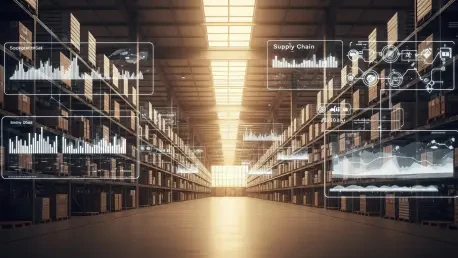

Modern global trade networks now function within a landscape of perpetual volatility where a single maritime delay or a sudden geopolitical shift can trigger a cascading failure across entire continents within hours. This departure from a predictable baseline requires a complete transformation of logistical strategy, as the luxury of responding to crises after they occur has effectively vanished. Organizations that continue to rely on traditional, reactive management find themselves perpetually trailing behind events, struggling to mitigate losses that could have been avoided with better foresight. The current environment of constant disruption across land, sea, and air routes demands a move toward resilience built on speed and autonomy. To remain competitive, it is no longer sufficient to simply have a backup plan; companies must possess the technological infrastructure to detect and neutralize threats as they manifest. Transitioning from static models to dynamic systems is the only way to safeguard margins in a complex global economy.
Assessing Global Logistical Chokepoints
Global Trade: Physical and Geopolitical Barriers
Strategic waterways such as the Strait of Hormuz continue to be vital conduits for global commodities, yet their vulnerability remains a primary concern for international trade stability. These maritime corridors facilitate the movement of essential energy resources and agricultural supplies, meaning any blockage has immediate repercussions for both industrial production and basic food security. For instance, when fertilizers are delayed during critical planting seasons, the impact is felt months later in the form of reduced crop yields and surging food prices. This interconnectedness ensures that a localized incident in a distant strait quickly becomes a global economic crisis, affecting everything from manufacturing costs to consumer inflation. Businesses must now account for these geopolitical risks by mapping out alternative routes and diversifying their supplier bases to avoid being caught in a single point of failure. The fragility of these passages highlights the urgent need for better situational awareness and flexible planning.
Beyond the energy and agricultural sectors, the flow of rare gases and specialized materials like helium remains critical for the survival of high-tech manufacturing and global healthcare services. Helium is indispensable for the cooling of magnets in medical imaging equipment and is a fundamental component in the fabrication of advanced semiconductors. A disruption in the supply of these materials does not just slow down production; it can lead to long-term damage to medical infrastructure and stall the rollout of new consumer electronics. As trade routes become more congested and politically sensitive, the risk of losing access to these specialized commodities increases significantly. This reality forces logistics managers to move away from just-in-time inventory models toward more strategic stockpiling and real-time monitoring of sensitive cargo. Ensuring the steady arrival of these components is a matter of both economic survival and maintaining public health standards, requiring a high degree of precision in global tracking.
Transportation Challenges: Overcoming Network Overload
Terrestrial and aerial corridors are facing a unique set of challenges as major airports and land crossings become increasingly strained by regional conflicts and extreme weather patterns. When a primary hub faces a sudden closure, the pressure on secondary transportation nodes increases exponentially, often leading to a total logistical breakdown. These bottlenecks are not isolated incidents but rather compounding effects where a delay in one region quickly exhausts the capacity of alternative hubs, leading to an overload across the entire network. This creates a situation where even the most well-planned routes can become unusable in a matter of hours, leaving shipments stranded and increasing the cost of emergency transport. To manage this, logistics providers must develop a more nuanced understanding of how local disruptions affect the broader network. The ability to pivot between different modes of transport, such as shifting from air to rail or sea, is becoming a necessary skill for maintaining continuity.
Compounding these physical limitations are sudden shifts in trade policy and the introduction of new tariffs that can fundamentally alter the cost-benefit analysis of a specific route overnight. These policy-driven disruptions create a state of uncertainty that makes long-term planning difficult for even the most established organizations. When a new trade barrier is erected, the sudden rush to move goods before the policy takes effect can lead to massive congestion at ports and border crossings. This logistical overload further strains an already fragile system, making it nearly impossible to maintain predictable delivery schedules. To thrive in this environment, businesses are forced to embrace technologies that can simulate the impact of these policy changes in real time. By understanding the potential financial and operational consequences of a new tariff before it is fully implemented, companies can adjust their procurement and shipping strategies to minimize the impact on their bottom line and ensure that their goods move efficiently.
Integrating Real-Time Data Solutions
Technological Shift: Building an Event-Driven Framework
The primary obstacle to achieving operational resilience remains the outdated reliance on batch-based data processing, which leaves organizations blind to immediate logistical changes. When a company waits hours or even days for an inventory update or a shipment status report, it loses the window of opportunity to take corrective action before a minor delay becomes a major loss. To address this, many organizations are now adopting event-driven platforms that prioritize the movement of live data across the entire supply chain. Unlike static databases that simply store information for later review, these modern systems treat every logistical change—such as a vessel changing its estimated time of arrival—as a trigger for an immediate automated response. This ensures that the entire supply chain stays synchronized with the actual conditions on the ground. By moving toward a model where data flows as quickly as the goods themselves, businesses can finally close the gap between information and action.
Implementing an event-driven framework allows for a level of responsiveness that was previously impossible to achieve with manual systems or periodic reporting. These platforms enable a business to monitor every aspect of its operations, from the warehouse floor to the final mile of delivery, in a single, unified view. This transparency is crucial when dealing with the sudden disruptions that have become common in modern trade, as it allows managers to identify the root cause of a problem the moment it occurs. Moreover, an event-driven approach facilitates better communication with customers and partners, as everyone in the network has access to the most current information. This reduction in data lag not only improves the accuracy of delivery estimates but also allows for better resource allocation and cost management. As the volume of data generated by sensors and tracking devices continues to grow, having a system that can process and act on this information in real time is the only way to maintain a competitive edge.
Operational Efficiency: Eliminating Silos for Unified Visibility
Achieving true resilience requires the total elimination of the data silos that traditionally separate warehousing, finance, and transport management within an organization. When these departments operate in isolation, it becomes nearly impossible to understand the full impact of a disruption on the business as a whole. By creating a unified stream of information, decision-makers can gain a holistic view of their operations and perform instant analysis on how a single delay might affect their cash flow or production schedules. This level of transparency ensures that every part of the business is working with the same data, reducing the risk of conflicting strategies or wasted resources. When a shipment is delayed, the finance department can immediately adjust its projections, and the warehouse can reschedule its labor force, all without the need for manual data entry. This seamless integration of information is the foundation upon which more advanced autonomous technologies can be built.
Furthermore, a unified data environment allows for more sophisticated “what-if” modeling, enabling companies to test different responses to potential disruptions before they actually happen. This capability is essential for managing the structural exposure that comes with a global supply chain, as it allows organizations to identify where they are most vulnerable. By simulating various scenarios, such as the closure of a major port or a sudden spike in fuel prices, businesses can develop more robust contingency plans that are based on data rather than intuition. This proactive approach helps to stabilize sales projections and ensures that the company remains profitable even during periods of extreme market volatility. The ability to see the entire supply chain in real time also improves vendor management, as businesses can hold their partners accountable for delays and performance issues. Ultimately, breaking down these internal and external barriers is about creating a more agile and responsive organization that can thrive in any environment.
Transforming Operations with Autonomous AI
Agentic Intelligence: Resilient Orchestration in Action
Agentic AI represents a significant leap forward in the evolution of supply chain technology by moving beyond simple data analysis to autonomous execution. Unlike standard AI tools that require constant human input to generate insights, agentic systems can independently model alternative shipping scenarios and execute re-routing plans without manual intervention. This capability ensures that the supply chain can adapt to sudden closures or disruptions in real time, often resolving issues before a human operator is even aware they exist. For example, if a major highway is closed due to a weather event, an agentic system can automatically reassign deliveries to different carriers or adjust the sequence of stops to ensure that the most critical goods are still delivered on time. This level of autonomy is necessary for managing the complexity of modern logistics, where the sheer volume of decisions that need to be made exceeds the capacity of even the largest human teams.
By harnessing agentic intelligence, organizations can transform their supply chains from a series of reactive steps into a cohesive and self-healing strategy. These systems are designed to constantly monitor the environment and make micro-adjustments that optimize the entire network for both speed and cost. This resilient orchestration allows businesses to maintain a high level of service even when faced with significant external pressures, as the AI is always looking for the most efficient path forward. Moreover, agentic AI can be trained to recognize patterns and predict disruptions before they manifest, allowing companies to secure transportation capacity or shift inventory in advance. This transition from human-led decision-making to autonomous orchestration is not just about efficiency; it is about building a system that is inherently more durable and capable of navigating the unpredictable nature of global commerce. As these technologies become more integrated, the role of the logistics manager will shift toward high-level strategy.
Scalable Solutions: Implementing Decentralized Agent Meshes
A sophisticated agent mesh allows these AI systems to coordinate complex logistics across a decentralized network, providing a level of granular visibility that was previously unattainable. By monitoring the status and contents of individual containers, these agents can make micro-decisions to prioritize high-value shipments over less urgent goods during periods of extreme congestion. This ensures that the most critical products reach their destination on time, even when the broader network is struggling with delays. The decentralized nature of this mesh means that there is no single point of failure, making the entire system more robust against both technical glitches and physical disruptions. Each agent within the network can communicate with others to share information about route conditions or carrier performance, creating a collective intelligence that benefits the entire organization. This collaborative approach allows for a more flexible and scalable supply chain that can grow alongside the business.
Implementing a decentralized agent mesh also facilitates better integration with third-party logistics providers and international partners, as information can be shared securely and instantly across different platforms. This level of coordination is essential for managing the intricacies of global trade, where goods must pass through multiple jurisdictions and hands before reaching the final customer. By having a network of autonomous agents that can track and manage these transitions, businesses can reduce the risk of errors and improve the overall efficiency of their operations. Furthermore, the granular visibility provided by these systems allows for more accurate tracking of carbon emissions and other environmental metrics, helping companies to meet their sustainability goals. This technological evolution is the only sustainable way to manage the complexities of modern global trade and ensure that the flow of commerce remains uninterrupted. As the global landscape continues to shift, those who have invested in these scalable and autonomous solutions will be best positioned to lead their industries.
Strategic Evolution: Finalizing the Resilient Framework
Decision-makers who prioritized these advancements ensured that their organizations possessed the tools to thrive despite constant disruptions. They moved toward a strategy that emphasized the deployment of autonomous systems capable of managing complex logistical trade-offs without human oversight. These leaders adopted a policy of continuous investment in data infrastructure to maintain a permanent advantage over less agile competitors. By standardizing the use of real-time event triggers, they replaced the outdated reliance on periodic reports with a model of constant operational readiness. The successful implementation of these measures demonstrated that the path forward required a commitment to total transparency across all segments of the supply chain. These organizations paved the way for a future where adaptability was the core metric of success, proving that technological integration was the most effective safeguard against global volatility. Future-proofing required this shift in perspective.