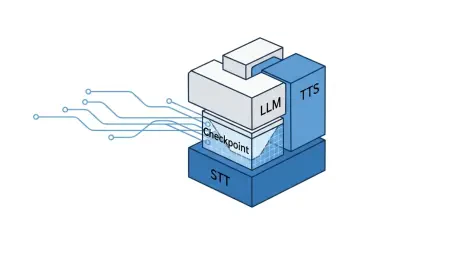
From Model Performance to Architectural Imperative: A New Era in Voice AI The rapid evolution of voice AI has reached a critical inflection point. For years, the primary benchmark for success was model quality—how accurately an AI could transcribe, how intelligently it could reason, and how

The intricate web of modern business operations is rapidly approaching a ceiling of complexity that human oversight and traditional automation can no longer efficiently manage. In this landscape, a new technological wave is not just promising incremental improvements but a complete re-architecting

The promise sold to executive boards was a future where autonomous AI agents would build and maintain complex software systems with minimal human oversight, yet developers on the front lines are discovering a starkly different and more challenging reality. While large language models (LLMs) have

A quiet but profound transformation is unfolding within the walls of global enterprises, standing in stark contrast to the volatile public discourse surrounding the future of artificial intelligence. While financial markets and tech pundits furiously debate the sustainability of an AI investment

A New Era of Inherent Risk: The Unsolvable AI Security Problem A landmark admission from OpenAI has officially shifted the landscape of artificial intelligence security, confirming a reality that practitioners have long suspected: prompt injection is a fundamental, permanent, and likely unsolvable

The prevailing wisdom in the artificial intelligence sector has rapidly coalesced around a simple, powerful ideto solve more complex problems, one merely needs to deploy more AI agents. This "more is better" philosophy has driven the development of vast multi-agent systems, yet groundbreaking