


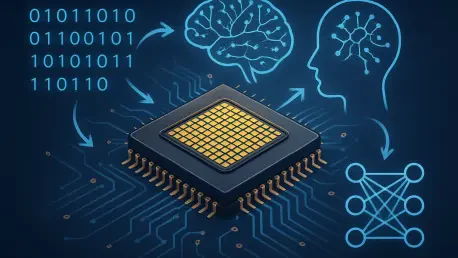

The sudden and pervasive dominance of the Graphics Processing Unit in the realm of artificial intelligence was not a matter of pure chance or a singular lucky break, but rather the culmination of a thirty-year evolution that required immense foresight and high-stakes architectural pivots. As we navigate the complex landscape of 2026, it is clear that the journey from rendering frames for video games to powering the most advanced neural networks in existence involved bold strategic maneuvers by industry giants like Nvidia, AMD, and Intel. This transformation was driven by the discovery that the specialized mathematical operations required to light a pixel on a screen are fundamentally identical to those needed to train a machine learning model. This historical alignment allowed the GPU to step into a void where traditional central processors struggled, effectively turning what was once a niche gaming component into the foundational infrastructure of the modern global economy. By tracing this progression through three distinct eras—from general-purpose computing to dedicated AI silicon and finally to integrated mobile units—we can see how the architecture of the chip itself dictated the trajectory of human innovation.
The Genesis of General-Purpose Computing
Breaking the Graphics Barrier with CUDA
Before the pivotal developments of 2006, the potential of the GPU was strictly confined to the rendering of three-dimensional environments, leaving developers who wanted to use parallel processing for other tasks in a state of constant frustration. To utilize a graphics card for non-visual mathematics, researchers were forced to “trick” the hardware by disguising their complex equations as graphics-related data, such as textures or vertex colors, and passing them through restricted application programming interfaces like OpenGL. This cumbersome process acted as a significant barrier to entry, ensuring that only the most dedicated computer scientists could tap into the latent power of parallelized hardware. The landscape changed permanently when Nvidia introduced the Tesla architecture alongside the CUDA platform, which provided a streamlined way for programmers to write C-based code that could communicate directly with the chip’s underlying hardware. By bypassing the traditional graphics pipeline, CUDA allowed the world to see the GPU not just as a gaming tool, but as a versatile engine for any scientific or numerical calculation that could be broken down into simultaneous tasks.
The hardware milestone that truly solidified this shift was the release of the GeForce 8800 GTX, which was built upon the groundbreaking G80 architecture. Unlike its predecessors, which featured separate, rigid pipelines for handling different visual elements like pixels and vertices, the G80 introduced the concept of “unified shaders.” This architectural innovation created a single, flexible pool of programmable processors that could be dynamically assigned to any task, whether it was shading a polygon or solving a complex matrix multiplication. This versatility meant that the hardware was no longer a specialized instrument with a narrow focus but a legitimate general-purpose tool capable of handling arbitrary compute workloads. Nvidia quickly recognized the enterprise value of this flexibility and launched the Tesla line of products specifically for data centers. By removing display outputs and focusing entirely on raw computational throughput, the company established a new category of enterprise silicon that would serve as the primary revenue engine for the hardware industry as it pivoted toward the burgeoning demands of large-scale machine learning research.
The Validation of the GPU via AlexNet
While the architectural groundwork for general-purpose computing was laid in the mid-2000s, the machine learning community required a definitive proof of concept before it would fully commit to a GPU-centric future. This validation arrived in 2012 during the ImageNet Large Scale Visual Recognition Challenge, a competition that had long been dominated by traditional computer vision algorithms running on standard central processors. A small team from the University of Toronto entered the competition with a deep convolutional neural network known as AlexNet, which was trained using two consumer-grade Nvidia GTX 580 graphics cards. The results were nothing short of a seismic shift in the field; AlexNet achieved an error rate that was ten percentage points lower than its closest rival, demonstrating a level of accuracy that had previously been considered impossible. This victory proved that the massive parallelization inherent in GPU architecture was the perfect match for the matrix-intensive calculations required to train deep neural networks, effectively ending the era of CPU-dominant research in artificial intelligence.
The aftermath of the AlexNet victory saw an immediate and total shift in how global research institutions approached hardware procurement and software development. Almost overnight, the focus moved away from optimizing complex, single-threaded algorithms to designing architectures that could scale across thousands of parallel cores. This transition forced a rewrite of the academic and corporate playbooks, as developers realized that the bottleneck for AI progress was no longer just the ingenuity of the code, but the sheer amount of computational throughput available. This period also marked the beginning of a virtuous cycle where increased demand for high-performance GPUs led to more investment in their development, which in turn enabled even larger and more complex neural networks to be created. By the time the industry reached the middle of the decade, the GPU had transitioned from an experimental accelerator to the essential oxygen of the AI industry, setting the stage for the massive scaling efforts that would eventually lead to the generative models that define the current technological era.
Strategic Failures and the Power of Ecosystems
The Lesson of the Intel Xeon Phi
The history of high-performance silicon is littered with ambitious projects that failed to find their footing, and few serve as a more poignant cautionary tale than Intel’s Xeon Phi. Born from the ashes of a canceled consumer graphics project known as Larrabee, the Xeon Phi was an attempt by the world’s largest processor manufacturer to leverage the familiar x86 architecture for massive parallel workloads. Intel’s strategy was to provide a many-core processor that developers could program using the same tools they used for traditional server applications, theoretically reducing the learning curve associated with specialized hardware. However, the architecture relied heavily on 512-bit vector instructions through Vector Processing Units, which were highly effective for traditional scientific simulations like weather modeling but lacked the specific optimizations needed for the burgeoning field of deep learning. This architectural mismatch meant that even though the chips were theoretically powerful, they could not compete with the specialized throughput offered by their graphics-oriented rivals.
Furthermore, Intel’s struggle highlighted the fact that hardware specifications alone are insufficient to win a market if the surrounding software ecosystem is not equally robust. By the time the most advanced iterations of the Xeon Phi, such as the Knights Mill chip, reached the market in 2017, the AI community had already standardized its workflows around other platforms. The primary failure of the Xeon Phi was its inability to offer a compelling reason for researchers to abandon the highly optimized libraries and frameworks they had already spent years perfecting. While the Xeon Phi offered impressive performance in specific high-performance computing niches, it remained an outsider in the AI space. Intel eventually retired the product line in 2020, signaling a retreat that underscored a fundamental truth: in the world of high-stakes technology, being “good enough” with a familiar architecture is no substitute for being the absolute best at a specialized task. This experience forced Intel to re-evaluate its entire approach to AI silicon, eventually leading to a more diversified strategy that included dedicated accelerators.
The Software Moat and Framework Integration
The dominance of a hardware platform is often determined more by the lines of code written for it than by the transistors etched onto its surface, a concept commonly referred to as a “software moat.” In the decade leading up to 2026, the industry saw the emergence of a massive divide between companies that provided only hardware and those that provided a complete development environment. The CUDA platform, which had been maturing since 2006, became the bedrock upon which the most popular AI frameworks, such as TensorFlow and PyTorch, were built. Because these frameworks were natively optimized for CUDA, any researcher or developer using them received an immediate performance boost that was difficult to replicate on any other architecture. This created a situation where the cost of switching to a different hardware provider was not just the price of the new chips, but the hundreds of hours required to rewrite code, debug libraries, and optimize performance for a less-supported environment.
This deep integration between software and hardware meant that even when competitors released chips with superior raw performance on paper, they often struggled to gain significant market share. The friction of porting complex AI models to new proprietary libraries was a barrier that many organizations were simply unwilling to cross, especially when the speed of development was the most critical factor for success. This dynamic reinforced the market’s consolidation, as the platform with the most users attracted the most software support, which in turn attracted even more users. To compete in this environment, other players had to invest billions of dollars into open-source initiatives like ROCm and OneAPI, attempting to provide a translation layer that could bridge the gap between different hardware architectures. These efforts have slowly started to bear fruit, but they also serve as a reminder that the true engine of the AI revolution is not just the silicon itself, but the vast, interconnected ecosystem of developers and tools that make that silicon usable for the world’s most complex tasks.
The Specialization of Modern AI Hardware
The Introduction of the Tensor Core
The year 2017 marked the beginning of a second major shift in the architectural history of the GPU with the introduction of the Volta architecture and its defining feature: the Tensor Core. Prior to this point, GPUs relied on general-purpose CUDA cores to handle the mathematical heavy lifting of neural networks. While these cores were significantly more efficient than standard central processors, they were still designed to be flexible enough for a wide variety of tasks. The Tensor Core, by contrast, was a specialized hardware block designed for the sole purpose of accelerating matrix multiply-accumulate operations, which are the fundamental building blocks of AI training and inference. By dedicating specific areas of the silicon to these operations, manufacturers were able to achieve a massive leap in throughput that general-purpose designs could not match. A single Tensor Core could perform operations in a single cycle that would have taken dozens of cycles on previous generations, effectively decoupling AI performance from general graphics performance.
This move toward extreme specialization allowed the industry to keep pace with the exponential growth of model sizes that defined the early 2020s. As neural networks grew from millions to trillions of parameters, the efficiency gains provided by Tensor Cores became the only way to keep training times within reasonable limits. Each subsequent generation of hardware improved upon this design, adding support for new data formats and increasing the density of the cores on the chip. This specialization also allowed for the creation of more energy-efficient data centers, as the hardware could process more information per watt of electricity consumed. By 2026, the presence of these specialized matrix engines has become a mandatory requirement for any chip intended for AI workloads, whether it is a high-end server GPU or a mobile processor. The era of general-purpose parallelization has effectively given way to an era of hyper-specialized matrix acceleration, where the design of the hardware is dictated entirely by the specific mathematical needs of the latest neural network architectures.
Precision and the Drive Toward Quantization
As the computational demands of artificial intelligence continued to scale, the industry realized that maintaining high levels of mathematical precision was often unnecessary for achieving accurate results in deep learning. Historically, scientific computing relied on 32-bit floating-point math to ensure the highest possible accuracy, but researchers discovered that neural networks are surprisingly resilient to the noise introduced by lower-precision calculations. This realization led to the widespread adoption of “quantization,” a process where the numbers used in a model are compressed into smaller formats, such as 16-bit, 8-bit, or even 4-bit integers. By reducing the precision of the math, hardware manufacturers could fit more operations into the same silicon area and significantly reduce the amount of memory bandwidth required to move data. This trend has been a critical factor in the democratization of AI, as it allows massive models that previously required an entire server rack to run on much smaller and more affordable hardware.
The transition toward lower precision has also had a profound impact on the design of the chips themselves, leading to the development of new data formats like BF16 and FP8 that are specifically tailored for AI training. These formats offer a middle ground between the high range of traditional floating-point math and the efficiency of low-bit integers. In the most recent hardware releases leading up to 2026, we have seen the introduction of sophisticated logic that can dynamically adjust the precision of a calculation based on the needs of the model at that specific moment. This flexibility ensures that the hardware can maximize performance during less critical parts of the training process while maintaining precision when it matters most. As memory and power constraints continue to be the primary bottlenecks for the next generation of large language models, the drive toward even lower levels of precision remains one of the most active areas of research and development in the hardware industry, enabling a new wave of efficiency across the entire stack.
The Diversification of the Global Market
Competition from AMD and Intel
While the early years of the AI boom were dominated by a single major player, the mid-2020s have seen the emergence of a much more diverse and competitive hardware landscape as AMD and Intel have successfully brought their own specialized architectures to market. AMD made a critical strategic decision to bifurcate its development efforts, creating the RDNA architecture for its consumer gaming products and the CDNA architecture specifically for high-performance computing and AI. This split allowed AMD to strip away the legacy hardware required for graphics rendering—such as rasterizers and display engines—from its data center chips, freeing up valuable silicon space for their “Matrix Core Engines.” This focus resulted in the MI300 series, which has become a significant competitor in the enterprise space by offering massive amounts of high-bandwidth memory and competitive performance on the most demanding training tasks, providing a much-needed alternative for organizations looking to diversify their infrastructure.
Intel has similarly found its footing after the setbacks of the Xeon Phi era by pursuing a multi-track strategy that addresses different segments of the market. Through its acquisition of Habana Labs, Intel launched the Gaudi line of processors, which are designed from the ground up to be cost-effective and highly scalable alternatives for AI training. These chips focus on integrated networking capabilities, allowing large clusters of processors to communicate with minimal latency, which is essential for the massive distributed training runs required by modern frontier models. Simultaneously, Intel’s Max Series GPUs have targeted the high-performance computing sector, providing the power behind some of the world’s fastest supercomputers. This diversification of the market in 2026 has been a net positive for the industry, as it has driven down costs and accelerated the pace of innovation, forcing every manufacturer to continuously improve their designs to maintain their competitive edge in a rapidly evolving technological environment.
The Shift Toward Heterogeneous Computing
One of the most significant architectural trends of the current era is the movement away from discrete components and toward integrated, heterogeneous systems that combine different types of processors on a single package. The traditional model of a computer, where a CPU communicates with a GPU over a relatively slow PCIe bus, has become a major bottleneck for AI workloads that require the movement of massive amounts of data. To solve this, manufacturers have begun creating Accelerated Processing Units that integrate CPU cores, GPU cores, and high-bandwidth memory into a single, unified architecture. This approach, pioneered by AMD with the MI300A and later adopted in various forms by other players, allows for much faster communication between different parts of the chip and eliminates the need to constantly move data across the motherboard. This not only increases performance but also significantly reduces the total power consumption of the system.
This shift toward integration is also being driven by the need for massive amounts of memory to support the latest generation of large language models. By placing high-bandwidth memory directly on the same package as the processors, manufacturers can provide the extreme levels of throughput required to keep the cores fed with data. This unified memory architecture ensures that the entire pool of memory is accessible to both the CPU and the GPU, simplifying the programming model and allowing for more efficient use of resources. As we move deeper into 2026, these integrated systems are becoming the standard for high-end AI servers, as they offer a level of efficiency and scalability that discrete components simply cannot match. This architectural evolution represents a fundamental change in how we think about computer design, moving away from a collection of separate parts and toward a single, cohesive engine designed specifically for the demands of modern computation.
Bringing AI to Local Devices
The Rise of the Neural Processing Unit
While the most powerful AI models continue to be trained in massive data centers, a parallel revolution has been taking place in the world of consumer electronics with the rise of the Neural Processing Unit. This movement was born out of the unique constraints of mobile devices, where battery life and thermal management are far more critical than raw throughput. Apple and Huawei were among the first to recognize that using a general-purpose GPU for tasks like face recognition or photo enhancement would drain a smartphone’s battery in a matter of hours. To solve this, they introduced dedicated NPUs—specialized blocks of silicon designed to handle AI tasks at extremely low power levels, often measured in milliwatts. These units are optimized for the specific types of math used in mobile AI, such as low-precision integer operations, allowing them to remain always-on without impacting the user’s experience or the device’s longevity.
By 2026, the NPU has become a standard feature in virtually every smartphone and tablet on the market, enabling a wide array of “smart” features that were once the exclusive domain of the cloud. From real-time language translation to advanced video editing, these local processors allow devices to handle complex tasks without the need to send private data to a remote server. This has significant implications for user privacy and security, as it ensures that sensitive information never leaves the device. The success of the mobile NPU has also served as a blueprint for the broader technology industry, proving that specialization is the key to bringing artificial intelligence to the masses. As these units have become more powerful, they have enabled a new generation of mobile applications that can interact with the physical world in real-time, further blurring the line between local and cloud-based computation.
The PC Transition and New Architectural Standards
The personal computer market is currently undergoing its most significant architectural shift in decades as the industry moves to integrate NPU capabilities into standard laptop and desktop processors. Driven by initiatives like the Copilot+ specification, hardware manufacturers are now required to include an NPU capable of at least 40 trillion operations per second to meet the standards for modern AI-enhanced software. This ensures that the PC can handle always-on tasks—such as live video background removal, real-time transcription, and predictive text—without engaging the power-hungry GPU or slowing down the main central processor. This transition marks the end of the era where AI was something that happened “elsewhere” and the beginning of an era where it is a fundamental background utility integrated into every aspect of the operating system.
This widespread adoption of local AI hardware has led to a major change in how software developers approach their work. Rather than designing applications that rely entirely on internet connectivity, developers are now creating “hybrid” models that split the workload between local NPUs and powerful cloud servers. This approach offers the best of both worlds: the low latency and privacy of local processing combined with the massive power of the data center for more complex tasks. As we look at the hardware landscape in 2026, it is clear that the integration of the NPU has transformed the PC from a simple productivity tool into a proactive assistant that can anticipate and respond to the user’s needs in real-time. This architectural evolution is not just about performance; it is about fundamentally changing the relationship between humans and their machines, making technology more intuitive and responsive than ever before.
Evolution of the Computational Landscape
The journey of the GPU from its origins as a niche tool for gaming to its current role as the engine of the AI revolution was characterized by a constant process of reinvention and architectural refinement. Looking back from the vantage point of 2026, the industry moved past the stage where hardware improvements were simply a matter of adding more transistors. Instead, the focus shifted toward a heterogeneous model where specialized silicon was designed to meet the exact mathematical demands of the software it was intended to run. This era was defined by the transition from general-purpose parallelization to the hyper-specialization of Tensor Cores and NPUs, as well as the critical move toward lower mathematical precision to ensure economic sustainability. The massive investment in both hardware and the accompanying software ecosystems created a formidable barrier to entry, but it also fostered a diverse marketplace where competitors were forced to innovate at an unprecedented pace to remain relevant.
To navigate the next phase of this technological evolution, the focus must now shift toward making these powerful tools accessible and sustainable for a broader range of applications. The current trajectory suggests that success was achieved by prioritizing unified memory architectures and extreme energy efficiency, which have become the primary benchmarks for modern performance. Organizations and developers should continue to invest in cross-platform tools and open-source frameworks to ensure that the industry does not become locked into a single proprietary ecosystem, which would limit long-term innovation. The history of the AI GPU demonstrated that the most successful hardware was that which was built with a deep understanding of the software it would support. As models continue to grow in complexity and move closer to the edge of the network, the industry must remain committed to an integrated approach where the design of the chip and the design of the algorithm are treated as two halves of the same problem.







