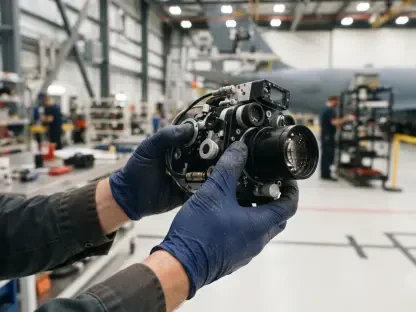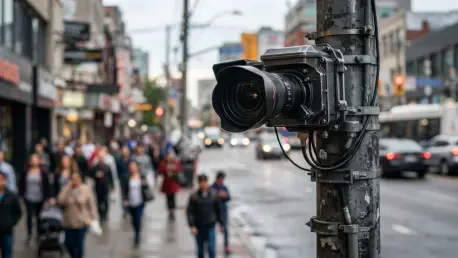

Modern surveillance strategies increasingly rely on the synthesis of visual data across disparate sources to create a comprehensive multi-domain intelligence profile. This paradigm shift represents a fundamental departure from the era of manual monitoring, where security personnel were tasked with observing endless hours of video feeds with limited technological assistance. Today, the integration of artificial intelligence allows for the rapid identification of weapons, narcotics, and suspicious behaviors that were previously obscured within massive, unstructured datasets. By leveraging neural networks, agencies can now move beyond mere observation to a state of proactive intelligence gathering. This transition addresses the critical limitations of human attention spans and legacy computer vision systems, providing a more robust framework for public safety. As organizations face an explosion of digital evidence, the move toward automated analysis ensures that no detail is lost in the noise, fundamentally changing how threats are detected and neutralized in real-time environments.
Advancing from Traditional Vision to Deep Learning
Early iterations of visual recognition software relied on rigid, rule-based definitions that often failed when confronted with real-world variables. These brittle systems frequently generated high rates of false positives, forcing analysts to spend excessive time manually verifying alerts and neutralizing the intended efficiency gains. For example, a change in lighting or a slightly obscured angle could trigger an alarm or cause a system to miss a clear threat entirely. This legacy approach was largely reactive, struggling to maintain accuracy in dynamic environments where visual conditions are rarely ideal or consistent. Because these older models could not learn from experience, they required constant manual tuning, which became unsustainable as the volume of surveillance cameras grew. The inability of these systems to differentiate between a harmless object and a concealed weapon under difficult shadows highlighted a significant gap in operational security that necessitated a more sophisticated approach.
In contrast, contemporary deep learning models utilize millions of reference examples to interpret complex scenes with significant nuance and reliability. This evolution allows the technology to identify objects even when they are partially concealed or captured from unusual camera angles that would have baffled previous software. By shifting from simple batch-oriented processing to sophisticated real-time interpretation, modern AI provides a more resilient source of operational insight that can adapt to the unpredictable nature of field operations. These systems are trained on diverse datasets that include various weather conditions, resolutions, and perspectives, enabling them to perform reliably in the field. The capability to recognize the subtle features of a firearm or the specific packaging of illegal substances allows for a level of precision that was previously unattainable. This transition to deep learning has effectively turned visual data into a dynamic asset that provides constant monitoring across urban landscapes.
Scaling Investigative Capacity and Operational Efficiency
One of the most significant advantages of AI-driven recognition is the ability to scale investigative efforts without a proportional increase in human headcount. Modern investigations often involve tens of thousands of images and hundreds of hours of video footage, a volume that makes human review both error-prone and physically exhausting. AI automates these rote tasks, filtering out visual noise and highlighting only the most relevant data for further inspection by qualified analysts. By processing massive amounts of data in seconds, these algorithms allow agencies to maintain a broad surveillance net that would otherwise be impossible to manage. This efficiency is particularly critical for state and local agencies that must operate under strict budget constraints while managing an ever-increasing flow of digital evidence. The software serves as a relentless digital assistant, scanning through terabytes of data to find the proverbial needle in the haystack while maintaining a high level of vigilance.
By identifying significant details that a fatigued human observer might overlook, AI serves as a powerful force multiplier for agencies facing resource constraints. This automation allows human analysts to shift their focus away from tedious scanning and toward higher-level tasks, such as hypothesis testing and complex evidence interpretation. Consequently, investigators can achieve faster results and maintain a higher standard of accuracy across expansive digital footprints. The reduction in time spent on manual review means that critical leads are followed up on in hours rather than weeks, which is often the difference between a successful apprehension and a cold trail. Furthermore, the systematic nature of AI-driven analysis provides a clear audit trail of what was scanned and what was flagged, ensuring a higher degree of accountability in the investigative process. This strategic reallocation of human expertise toward decision-making marks a new era of efficiency in modern law enforcement.
Enhancing Contextual Awareness and Identity Correlation
Beyond the simple identification of objects, modern AI emphasizes contextual awareness to distinguish between normal behavior and suspicious events. For example, anomaly detection algorithms can flag an unattended parcel in a high-security zone or recognize recurring items linked across multiple distinct scenes. This capability enables the system to understand the environment, providing alerts based on the unexpected presence of items rather than just their visual characteristics. By analyzing the normal patterns of a specific location, such as a transit hub, the AI can detect deviations that might indicate a security breach or a potential threat. This context-sensitive approach reduces the number of irrelevant alerts, as the system can differentiate between a bag left momentarily by a traveler and an object placed intentionally in a restricted area. The intelligence of these systems lies in their ability to understand not just what an object is, but why its presence is significant.
This cross-domain correlation is vital for mapping networks and movements that might otherwise remain disconnected. The ability to follow a visual signature across different platforms allows agencies to build stronger cases by establishing clear patterns of association. As a result, law enforcement can develop a more holistic view of a suspect’s activities, bridging the gap between isolated incidents and broader criminal operations. By correlating objects found in social media posts with those seen in surveillance footage, investigators can verify the presence of a suspect at a specific time and place with high confidence. This synthesis of data from public, private, and social sources provides a much more complete picture of criminal activity, allowing for the dismantling of entire networks rather than just the arrest of a single individual. The power of AI lies in its ability to find these connections across vast datasets, transforming isolated information into a comprehensive and actionable map.
Strengthening Public Safety Through Strategic Integration
The implementation of advanced visual intelligence systems proved to be a turning point in the management of complex security threats. By moving away from manual observation, agencies successfully reduced the time required to process digital evidence, which directly led to faster intervention and a more efficient allocation of resources. This shift allowed for a more comprehensive understanding of visual data, where objects and environments were analyzed with a level of precision that was previously impossible. In addition to operational gains, the technology provided a humanitarian benefit by shielding analysts from direct exposure to traumatic content through automated triage. These systems also added a sophisticated layer to location intelligence, where solar angles and architectural patterns were used to pinpoint geographic origins with extreme accuracy. This multifaceted approach ensured that investigators could confirm the validity of evidence while maintaining high standards for the protection of personnel.
Agencies must now prioritize the establishment of rigorous frameworks for the ethical use of these tools, ensuring that transparency and accountability are built into every automated process. To maximize future effectiveness, organizations should focus on integrating environmental inference data more deeply into their geolocation workflows to counter the rise of sophisticated digital manipulation. It is essential to maintain a continuous training loop for both the neural models and the human operators to keep pace with evolving criminal tactics and hardware improvements. By investing in multimodal data integration, public safety officials positioned themselves to react with greater speed and accuracy, turning visual insights into a cornerstone of modern investigative strategy. The ultimate objective remains the creation of a seamless link between individuals, objects, and locations to provide a cohesive, real-time understanding of public safety threats in an increasingly digital world.