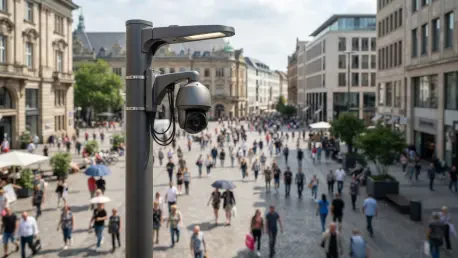

Western Australia Police utilized prominent signage and online schedules to maintain the overt nature of their trial and mitigate fears of clandestine monitoring. This strategic decision was part of a larger pilot program designed to evaluate the effectiveness of Overt Live Facial Recognition in high-pressure urban environments. By deploying these scanners, the agency sought to bridge the gap between traditional manual patrols and high-tech automated identification systems. The trial effectively forced a national conversation regarding the trade-offs between community safety and the inherent right to privacy in a digital-first society. As urban centers become increasingly dense, the ability to rapidly identify dangerous individuals or find missing persons has become a primary goal for modern law enforcement agencies globally. However, the introduction of biometric scanning also highlights a growing divide between technical capability and public comfort levels. This tension suggests that while the tools are undeniably powerful, their long-term viability depends heavily on the establishment of clear ethical boundaries and public trust.
The Operational Impact: Assessing Efficiency and Data Security
Assessing Efficiency: Technical Accuracy of Biometric Scanning
The pilot program in Western Australia provided a significant data set that demonstrated the raw processing power and reliability of current biometric systems. Over the ninety-day evaluation period, the facial recognition technology analyzed nearly one million individuals as they moved through designated public sectors. This high-volume scanning operation produced over two hundred specific alerts, which were then validated by human operators to confirm the system’s findings and ensure accuracy. Most notably, the technology successfully identified 114 registered sex offenders, directly contributing to 79 arrests for various offenses during the trial. Police leadership highlighted these metrics as clear evidence of the technology’s ability to augment traditional investigative techniques and provide a faster response to public safety threats. By automating the identification process, law enforcement was able to maintain a high level of vigilance without requiring an unsustainable increase in manual patrols or human surveillance.
In addition to its high success rate, the trial addressed one of the most critical metrics in biometric surveillance: the rate of false positives. During the evaluation window, only eight alerts were determined to be incorrect identifications, suggesting that the underlying algorithms have reached a level of sophistication that minimizes the risk of wrongful detention. To further address privacy concerns, the authorities implemented a strict data-cleansing protocol. This policy ensured that any image which did not trigger a specific alert was deleted almost instantly from the system’s temporary storage. By preventing the creation of a permanent database containing the biometric data of the general public, the agency aimed to demonstrate that security can be enhanced without necessitating the indefinite storage of sensitive personal information. This hit-only approach served as a foundational principle for the overt trial, establishing a blueprint for how future deployments might balance operational needs with civil liberties.
Understanding Vulnerabilities: The Permanent Nature of Biometric Information
Unlike traditional security measures like passwords or identification numbers, facial geometry represents a permanent and unchangeable form of personal identification. This unique characteristic makes the potential compromise of biometric data a high-risk scenario for any individual. The Office of the Information Commissioner has classified this type of information as sensitive, noting that once a biometric template is stolen or misused, the victim cannot simply reset their identity. This permanence creates a point of no return for individual privacy, as the geometry of one’s face remains constant throughout their adult life. Consequently, the storage and handling of such data require a level of security that exceeds standard digital protection protocols. As police departments integrate these systems into their daily operations, the responsibility to safeguard this unchangeable data becomes a paramount concern for civil liberty advocates who fear the long-term consequences of biometric data breaches.
The growing awareness of these risks has led to a significant surge in public anxiety regarding the ubiquity of facial recognition technology. Recent survey data indicates that nearly half of the population now identifies biometric scanning as the primary threat to their personal privacy, a sharp increase from previous years. This shift in public sentiment highlights a widening gap between the government’s pursuit of technological efficiency and the public’s desire to remain anonymous while navigating the digital age. Many citizens feel that the convenience of automated policing does not outweigh the potential for state-sponsored surveillance to become a permanent fixture of urban life. This skepticism is not merely a reaction to the technology itself, but rather a reflection of the deep-seated fear that personal movements and social interactions are being tracked without explicit consent. Reconciling these concerns is essential if law enforcement hopes to maintain the social license necessary for biometric tools.
The Legislative Vacuum: Proposed Safeguards and Psychological Impact
Navigating Gaps: The Absence of Specific Regulatory Oversight
A primary challenge in the deployment of facial recognition is the current absence of specific laws tailored to its unique capabilities and risks. In the current legal landscape, law enforcement agencies often operate under broad privacy exemptions that were drafted long before the advent of real-time biometric scanning. Legal scholars warn that without clear and enforceable guardrails, there is a heightened risk of mission creep, where technology intended for serious crime might eventually be used for minor infractions. This regulatory void creates a situation where the protection of civil liberties relies more on internal departmental policy than on the robust protections of statutory law. Without a clear legislative framework, the potential for overreach remains a constant threat, as there are few mechanisms to hold agencies accountable for how they deploy these powerful tools. Establishing a dedicated legal structure is therefore a critical step in ensuring that surveillance remains proportional.
To prevent the rise of a pervasive surveillance state, many experts advocate for the implementation of a minimum seriousness threshold. Such a framework would restrict the use of biometric tracking to high-stakes cases, such as the investigation of violent crimes or the search for missing children, rather than allowing it to be used for general public monitoring. Proposed model laws also suggest an outright ban on facial analysis techniques that attempt to interpret human emotions or psychological states using artificial intelligence. These applications are often deemed highly subjective and prone to significant algorithmic bias, posing a direct threat to the right of individuals to move through public spaces without being psychologically profiled by a machine. By setting these boundaries, policymakers can ensure that facial recognition remains a targeted tool for justice rather than a broad instrument for universal social control and constant behavioral monitoring.
Hidden Impacts: How Monitoring Alters Human Behavior and Trust
Research into the sociological impact of continuous biometric surveillance suggests that the awareness of being monitored by sophisticated artificial intelligence can trigger a primitive risk response in the brain. This phenomenon, often identified by psychologists as a state of low-level hyper-vigilance, can lead to increased anxiety and paranoia among individuals who have committed no crimes. When people realize that their unique facial features are being constantly analyzed and compared against criminal databases, it can manifest as a physiological stress reaction similar to the fight or flight mechanism. The University of Technology Sydney has investigated these effects, noting that the feeling of being watched by an unblinking machine changes the fundamental relationship between the citizen and the state. This mental burden is often invisible but profoundly impacts how people experience public squares and city centers. Over time, the psychological toll of ubiquitous scanning may reshape the collective well-being of the population.
In an effort to mitigate this chilling effect, law enforcement agencies have prioritized a policy of overt operation, using clear signage and public schedules to inform the populace of active scanning zones. By moving away from clandestine surveillance, authorities hope to maintain a level of transparency that respects the public’s right to be informed about the tools used in their communities. However, the long-term acceptance of such technology will likely depend on whether the state can prove that it can protect the massive amounts of data it collects. Transparency alone is not enough to build lasting trust; there must also be a demonstrated commitment to accountability and the ethical use of information. As these systems become more integrated into the infrastructure of modern cities, the challenge will be to ensure that the traditional public square remains a space for genuine community interaction rather than a stage for monitored performance under the watchful eye of biometric algorithms.
Sustaining Liberty in a Monitored Society
The successful conclusion of the facial recognition trial in Western Australia eventually led to a robust national strategy that balanced technical oversight with the preservation of personal liberties. It was determined that the most effective way to proceed was through the implementation of a specific, legally binding framework that restricted the use of biometric scanning to cases of severe public danger. Lawmakers recognized that the social license required for such surveillance was dependent on absolute transparency and the total exclusion of emotional analysis from the police toolkit. Instead of allowing automated systems to operate in a vacuum, the state established independent audit committees to ensure that data management protocols were strictly followed at all times. This proactive approach allowed the legal system to evolve alongside the technology, ensuring that security enhancements did not come at the cost of the fundamental right to anonymity. These measures successfully secured a future where innovation and privacy coexisted harmoniously.