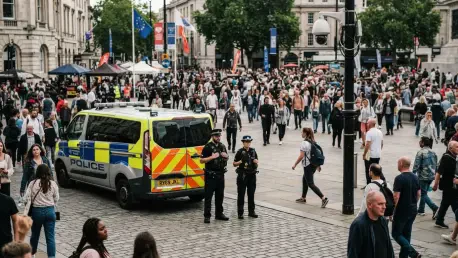

When a camera flags someone on an alert list at a crowded event, live facial recognition gives nearby officers a way to respond. Cameras scanned 1.3 million faces during a five-month trial in Western Australia, with police reporting more than 120 arrests. Any decision on another deployment needs to weigh those results against incorrect alerts, privacy protections and the effects on people using public spaces.
Trial at a Glance
- Police reported 292 alerts across 100 deployments, with nine alerts identified as incorrect.
- A controlled alert list provided the reference for face checks; automatic pixelation applied to images that triggered no alert, and those images weren’t retained.
- A police review will assess operational performance, community impact and compliance before government considers the findings.
A Crowded Event Puts Recognition Into Operational Context
The Perth Royal Show provided a concrete test of biometric recognition in a busy public setting. More than 223,700 faces were scanned over three uses of the technology at the show. Police made three arrests and identified seven alleged sex offenders during those deployments, which generated 15 alerts.
Each figure captures a different step in the police workflow. A scan is an opportunity to compare a face with the alert list. A possible match generates an alert; an arrest comes later as a policing outcome. Combining those measures would make the system’s contribution harder to judge.
Assessing the operation means tracing how officers used a camera-generated alert to find someone and respond appropriately. The event results offer evidence of that connection, but the arrest total alone doesn’t explain every alert or its resolution.
The Deployment Model Paired Cameras With Nearby Police
The wider trial ran between June and October at 43 locations across Western Australia, taking in regional and metropolitan areas. Designated public spaces hosted the deployments, with marked police vehicles nearby.
A controlled alert list served as the comparison reference for faces detected by the cameras as people passed through view. Police said the system supported searches for wanted individuals and responses to welfare concerns, as well as efforts to protect children and vulnerable people from dangerous individuals, including sex offenders.
For people sought over offences or outstanding warrants, Police Minister Reece Whitby said the technology had helped police find them. Whitby also described recognition of missing or lost people and those experiencing health issues, which helped police reassure their relatives.
Arrests account for only part of the operational purpose of those uses. Welfare interventions and how the system supported officers dealing with them also need to be examined in the assessment.
Incorrect Alerts and Image Handling Shape the Assessment
Police reported nine incorrect alerts among the 292 generated during the trial. That is an important operational measure, but it doesn’t establish the system’s overall recognition accuracy. The figures provided don’t show how many people on the alert list passed a camera without being recognised.
Image handling is another part of the deployment model. Automatic pixelation applied whenever an image triggered no alert, and the image was not saved. This safeguard addresses retention for non-alerting images; it doesn’t, by itself, resolve every question surrounding public-space surveillance.
The review therefore needs to consider both the matching process and what happened after an alert. For people moving through a monitored area, the practical consequences of an incorrect match are part of the system’s performance, alongside its ability to find a wanted or vulnerable person.
The Review Will Determine the Path Beyond the Trial
Technical performance, community effects and support for frontline officers would all be examined in the evaluation, Police Commissioner Col Blanch said. He also said police would review safeguards and whether deployment requirements had been met.
Whitby strongly supported the results but said government would consider the matter further once the police review returned.
For any wider rollout, the implementation question is whether the trial’s operating model can support responsible routine use. The reported arrests and welfare outcomes give reason to examine that possibility. The next decision should draw on the review’s findings about how officers handled alerts, which safeguards applied and how communities experienced the cameras operating in their areas.