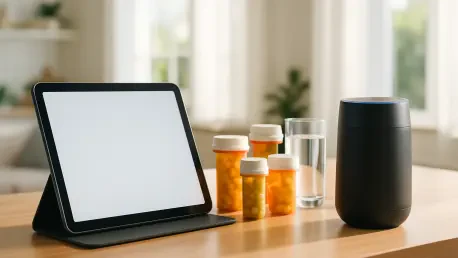

The rapid integration of artificial intelligence into the modern healthcare sector has created unprecedented opportunities for patient support, yet the actual accessibility of these tools for older populations remains a significant point of concern for clinicians and policymakers alike. As the demographic shift toward an aging society continues to accelerate through 2026, the necessity for reliable, hands-free technological assistance has never been more urgent. Recent research conducted by the Auckland University of Technology has put common voice-activated assistants to the test to see if they can safely guide seniors through the complexities of daily medication management. By evaluating Apple’s Siri, Google Assistant, and Amazon’s Alexa, the study aims to determine which of these digital tools provides the most reliable pharmacological advice for an aging demographic that often manages multiple prescriptions simultaneously. This investigation is particularly timely as more seniors seek to maintain their independence while navigating increasingly complex health regimens.
Older adults frequently face a steep digital divide characterized by complex security protocols, small font sizes that challenge declining vision, and a general hesitation toward handling expensive electronic hardware. These barriers often lead to a retreat from digital health resources, leaving many seniors to manage their health without the benefit of modern information tools that their younger counterparts take for granted. Voice-activated technology offers a potential solution to these hurdles, providing a hands-free, intuitive interface that bypasses the need for tactile precision or visual clarity, making it a promising candidate for home-based health support. Since their introduction, voice assistants have moved beyond simple tasks like checking the weather or setting kitchen timers to become potential health management companions. As these systems evolve with generative AI capabilities, they are increasingly being viewed as a first line of defense for those who need quick answers about their medications in a domestic setting.
Methodology and Performance Metrics
Testing Accuracy: Clinical Standards and Protocols
To provide a rigorous assessment of these tools, a research team including a registered nurse and a pharmacist developed a list of 50 health-related questions focused on common senior concerns. These queries specifically targeted ten popular natural health products, such as turmeric, fish oil, and St. John’s wort, to see how the voice assistants handled information regarding their use and therapeutic benefits. The researchers used a specialized scoring algorithm to grade each response on its clarity, the quality of the evidence provided, and how well it identified potential dangers for specific populations. This systematic approach allowed for a direct comparison between the AI responses and the high standards required in clinical practice. By simulating the types of questions an older adult might realistically ask at home, the study was able to uncover the practical limitations of each device when faced with the nuanced reality of geriatric pharmacology.
The evaluation process also focused heavily on interaction safety, specifically looking for warnings regarding common prescriptions like blood thinners or blood pressure medications. To ensure the highest clinical standard, every answer provided by the AI was cross-referenced with the New Zealand Formulary, which is considered a gold standard for medication safety and prescribing accuracy. This comparison allowed the researchers to assign a numerical score to each device based on how closely their advice matched the official recommendations used by professional healthcare providers in clinical settings. Beyond just factual correctness, the study analyzed the source of the information, distinguishing between evidence-based medical databases and less reliable commercial websites. This level of scrutiny was necessary to determine if a voice assistant could truly be trusted as a safe intermediary for patients who might not have the medical literacy to distinguish between high-quality health advice and marketing-driven content.
Analyzing Reliability: Data Consistency and Safety
Once the baseline for accuracy was established, the researchers looked into the consistency of the information across different phrasing of the same medical questions. It was observed that the internal logic of these systems often depended on the specific terminology used by the speaker, which presents a challenge for seniors who may not use formal medical jargon. For instance, questions regarding therapeutic appropriateness, such as using cranberry for urinary tract infections, required the AI to not only identify the supplement but also understand its clinical application. Each assistant was rated on a six-point scale that prioritized the comprehension of the user’s intent alongside the clinical accuracy of the final output. This dual-focus metric ensured that the study did not just measure what the AI knew, but how effectively it could communicate that knowledge to a non-expert user who might be experiencing physical or cognitive limitations.
The results of this rigorous testing indicated that the underlying data sets used by the top-performing assistants were generally robust and aligned with contemporary medical guidelines. When the assistants successfully retrieved information, they frequently cited credible, non-commercial sources, which is a vital component of digital health safety. Over half of the sources identified during the study were classified as expert-level with a low risk of bias, suggesting that the search algorithms have been refined to prioritize academic and institutional health portals over anecdotal blogs. This finding provides some level of reassurance to healthcare providers that the “brain” of the AI is becoming more sophisticated. However, the study also highlighted that the path from a user’s spoken question to the correct database entry remains fraught with potential errors, particularly when the voice interface fails to bridge the gap between human speech and technical data.
Assessing Comprehension and Reliability
Disparities: Understanding Medical Language and Terminology
The study revealed a significant gap in how well each assistant could actually understand the user’s voice when complex medical terms were introduced into the conversation. Siri emerged as the leader in this category, correctly interpreting 96% of the spoken questions, followed closely by Google Assistant, which demonstrated a high level of linguistic flexibility. In contrast, Amazon’s Alexa struggled immensely, failing to understand over half of the queries presented by the research team. This failure was largely attributed to Alexa’s inability to process medical terminology and the specific names of supplements, which poses a serious safety risk if a user is seeking advice on a critical drug interaction. For an older adult living alone, a voice assistant that cannot recognize the name of their medication is not merely inconvenient; it is a dangerous barrier that could lead to the omission of life-saving information.
One of the most alarming findings involved the recognition of the common blood thinner warfarin, a medication that is notoriously sensitive to interactions with herbal supplements and other drugs. None of the three voice assistants were able to recognize the word “warfarin” when spoken clearly, which is a major concern given the drug’s high risk for dangerous interactions that can lead to internal bleeding or therapeutic failure. This “knowledge-action gap” suggests that while the AI may have access to the correct medical data in its cloud-based memory, the speech recognition software is not yet fine-tuned enough to handle the specific vocabulary that patients and doctors use every day. This disconnect highlights a critical area for improvement in the development of healthcare AI, as the ability to recognize specific drug names is the foundational step in providing any form of safe pharmacological guidance to the public.
The Impact of Phonetic Recognition: Safety Implications
The inability of these devices to process phonetic variations of drug names is a hurdle that could have dire consequences in a real-world setting. When a device fails to recognize a word like “warfarin,” it often defaults to a generic search or simply states that it does not understand, leaving the user without any warning regarding potential contraindications. In the study, when the researchers simplified their language to use the more general term “blood thinners,” the comprehension rates for Siri and Google Assistant improved dramatically. However, this requires the user to have a certain level of health literacy to know that “warfarin” belongs to the category of “blood thinners.” Many seniors may only know their medications by their specific brand or generic names, and if the AI cannot meet them at that level of specificity, the safety net that these tools are supposed to provide effectively disappears.
Furthermore, the research noted that the acoustic environment and the clarity of the speaker’s voice played a role in how well the assistants performed. For the geriatric population, changes in speech patterns, volume, or clarity due to age-related conditions can further complicate this interaction. The failure of Alexa to recognize basic supplement names like “glucosamine” or “echinacea” during the trials suggests that some platforms are currently optimized for consumer tasks rather than health-specific inquiries. Until these systems can reliably map a wide range of spoken medical terms to their corresponding entries in a clinical database, they cannot be considered a dependable resource for medication management. The disparity in performance between the three major platforms also suggests that the industry lacks a unified standard for medical voice recognition, leaving users to guess which device might offer the most accurate help.
Integrating AI into Senior Care
Professional Guidance: Bridging the Patient Education Gap
Once the barrier of speech recognition was cleared, the quality of the information provided by Siri and Google Assistant was remarkably high and technically sound. The AI models tended to pull from credible, non-commercial sources and provided accurate warnings about drug-supplement interactions that matched professional medical databases almost perfectly. This indicates that the internal logic of these systems is sound, provided they can accurately capture the user’s initial question without any phonetic error. For the nursing and medical professions, these results highlight an immediate need for proactive patient education regarding the use of home technology. Since many seniors are already using voice assistants to self-educate, clinicians should guide them on the specific limitations of these tools, such as the need to use simpler terms when a specific drug name is not understood by the device.
By teaching patients how to interact with AI more effectively, healthcare providers can help minimize the risk of a dangerous misunderstanding while benefiting from the convenience these tools offer. Nurses can play a pivotal role in this transition by reviewing a patient’s digital health habits during routine check-ups and suggesting ways to verify AI-generated advice. This approach acknowledges that while the technology is not yet a replacement for a pharmacist or a doctor, it is a tool that is already in many homes and will continue to be used. The goal is to move toward a collaborative model where the voice assistant acts as a prompt for further discussion with a professional, rather than the final word on medication safety. This shift requires healthcare systems to integrate technology literacy into their standard patient care plans, ensuring that the digital divide does not become a permanent barrier to safe aging.
Future Considerations: User-Centered Design and Clinical Oversight
The future of voice-integrated AI must look toward a more user-centered design that can accommodate the nuances of aging voices and the specific linguistic requirements of the medical field. As the industry moves toward more sophisticated language models that promise better integration, the current technology serves best as a supplementary resource rather than a replacement for professional medical advice. There is a clear need for developers to collaborate more closely with medical experts to ensure that drug databases and speech recognition modules are synchronized. This would allow for a seamless transition from a user’s spoken request to a clinically validated response. As these digital assistants become more common in the home, the focus must remain on ensuring they serve as a safe and reliable bridge to better health outcomes for the elderly, rather than a source of confusion or unrecognized risk.
Actionable steps for the near future include the development of “medical modes” for voice assistants that use specialized speech recognition algorithms trained on pharmacological data. Such a feature could be toggled on when a user is asking health-related questions, ensuring a higher level of scrutiny and a more refined understanding of drug names. Additionally, healthcare organizations could partner with tech companies to create branded “skills” or “apps” that link directly to local health databases, providing a more localized and accurate experience. For the users themselves, the best practice remains a policy of verification. While asking a voice assistant for information is a convenient starting point, any advice regarding changes in medication or the introduction of supplements should be confirmed with a qualified clinician. The AUT study proved that while the technology was impressive, the human element of clinical oversight remained the most critical component of geriatric safety.